12 minutes ago
Russian soldiers in Ukraine without radio binding
Periskopi(4 years ago)
(4 years ago)We don't have any communication. We have no radio. Nothing”, a Russian soldier tells those who question him. This is how it becomes known through a new video published on YouTube this month by Ukrainian defenders. During the first four weeks of the war, such statements, along with wiretapped conversations, equipment [...]
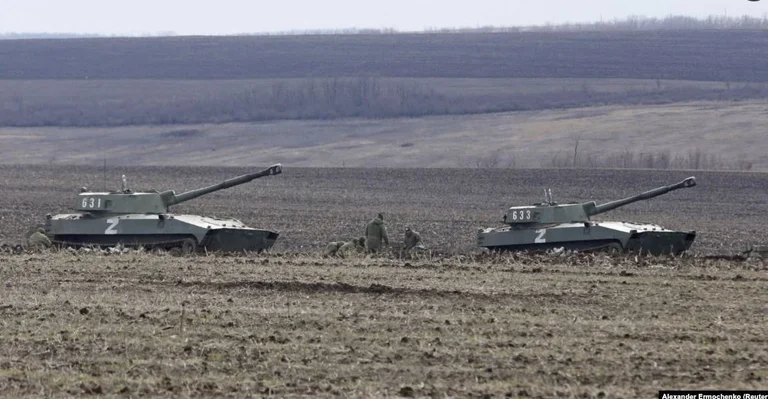
In the first four weeks of the war, such statements, along with wiretaps, caught equipment and photos of cheap radio connections suggest that the inability to communicate in the chain of command and along the Russian Army branches are hampering Moscow's war plans.
While the fate of an army can quickly fluctuate, even in major offensives like that launched by Russian President Vladimir Putin, on February 24th to “chilitarized” and kneeled Ukraine, many Western military experts suggest the Kremlin and its planners failed in key aspects in the first weeks of the occupation.
In Russia's case, the difficult situation has surfaced during the first 24 days of this war, based on statements by captured soldiers, bugged conversations and other data published by Ukrainian intelligence or others eager to expose the weaknesses of invading forces that are greater in number. Also, there are reports suggesting a call made through uncertain channels that may have helped Ukrainian forces target one of the Russian generals killed in the conflict. So far, Ukraine has claimed to have killed five Russian generals and a senior Navy officer.
The data suggests that some of the roots of communication errors on the Russian side remain in poor procurement processes for purchasing equipment as military tactical radios, untrained specialists and the challenges of operating in a foreign land, where the enemy controls not only mobile networks but also wire communication that often serve as a reliable reserve channel.
One of the results has been different complexity among systems used by voice communication and data communications, multiplying challenges, as they include mixed air, land and sea forces. In such cases troops are forced to use a more common system for a less advanced part of the army.
“If you form a mixed formation and parts of that formation are made up of cars such as those of the 90 [Tank Watchers] 90th division”, as are those that have been seen recently approaching Kiev, said Stanimir Dober, an independent military expert specialising in telecommunications, “you must lead to the lowest denominator”.
In other words, mixing so - called open and encrypted systems makes them as strong as their worst link.
Some of the oldest devices of the Russian forces, said Dobrev “could be deciphered almost in real time, and so there is no need to add additional layers of complexity to operate with these devices, which do not bring much benefit to”.
He said these and other potential factors show why Russia's ground offensive has stalled and air operations become less effective over time, as the identified targets the Russians first communicated with, the Russian Air Force, have just moved.
“/Success/ex1>
Russia's five-day struggle in Georgia in 2008 for the two breakaway Georgian regions, which Moscow has since occupied, highlighted some of the most urgent problems in the battlefield of the Russian armed forces: tactical communication.
A unit was unable to communicate with the command structure, mobile phones, and even “poros across couriers” were used instead of military radios, and in an extreme example, an Air Force officer flew by helicopter to give his orders personally.
A deputy chief of the Russian General Staff, Yevgeny Maychik, in 2009 responded through an announcement that at the order of then Russian President Dmitry Medvedev, the Defence Ministry would thoroughly review its approach to the military command and control system “and especially communication systems”.
He pledged that “by the end of 2011, we plan to bring in a radio station for every military, for any fighter vehicle”.
But while the Meychik's plan presupposed the use of the main military-level radio system then known as Akvedu, the Defence Ministry chose to develop a completely new system of the sixth generation known as Azart. A young producer, Anastrem, one of whose owners had been Medvedev's adviser, was chosen for the project of developing this system.
Early in 2012, boasting that Russia had used the NATO concept of “lessons learned”, Deputy Prime Minister Dmitry Rogozin appeared with one of the Azariah devices and said: “This connection works!”
After years of promises and many incomplete deadlines for handing over telephones, which troops call the “the green chrocods”, due to their two-foot-long antennas, were used at the 2014 Winter Olympics in Sochi.
Thirteen years later, despite repeated promises, thousands of Azariah phones are in the hands of Russian troops.
But this process is hard to call successful.
This process has been subject to several criminal investigations, including one that is continuing and focusing on a deputy chief of the Russian General Staff, General Khalil Arslanov.
Reviews at radio forums like Radioscanner.ru, although it is impossible to verify independently, appear to suggest that Azariah is not popular among Russian troops.
Military expert Vladimir Orlov told of the use of Caesart phones among Russian troops deployed in Syria and said that “outside Russian armed forces bases all used mobile phones and Chinese Macbalalaika”, a reference to civil radio connections produced by China's company Baofeng.
Moreover, the most generous assessment of the total number of Aztec equipment in use is about 60,000, based on 18 billion rubles (171m dollars) divided for their purchase and based on the cost of 300,000 rubles, is estimated to cost an equipment. That figure accounts for about a third of the number of Russian troops, which NATO believes have been deployed to Ukraine.
Copying Communications
Analyst Dobrev said the Russian Army's failure to secure modern and secure channels of communication are the main obstacles.
But he stressed the importance of the impact of such a problem, poor co-ordination between different land, sea and air forces involved in the invasion of the wide scale in Ukraine.
He said the Russian Army's failure to implement a moderate system of command and control, which would be automated, is another problem.
“by 2020 it was scheduled for 45 brigades of Russian Land Forces to be equipped with such equipment, but Russia has failed to meet this task”, Dobrev said. “The situation is even worse in terms of co-ordination between land forces and air forces”, which he said operate with its command and control systems.
Problems that arise in co-ordination present another problem, said Dobrev, who, according to him, is also emerging on the battlefield. At the start of the war, the Russian Air Force acted very successfully because the enemy positions were known for them”, he said. But this doesn't always work”.
He stressed that documents seem to indicate that Russia's Air Force is operating by conducting flights to targets set out with little or no ability to communicate with ground forces, which, for example, may require a change of objectives or air support.
Dobrev, too, said details in the early days of the war seemed to have exceeded their support of communication.
“The tactical groups of the Russian battalions immediately went to a much larger distance from the border and at the same time, we did not see devices that could provide safe communication with the commanding post”, Dobrev said.
He said communications towers should be installed along the road, and their deployment requires experienced operators. The “indirectly shows that the Russian offensive groups did not expect to stay in Ukraine for a long time”, Dobrev said.
He and other observers have also suggested that there are clear signals of surveillance of communications between Russian special services and new troops that would have to communicate on encrypted communications channels.
Christo Grozev, from the research group Bellingcats, mentioned that a highly expensive super cryptophonic system --” presented in Russia in 2021 -- apparently was tapped because this system requires 3G or 4G mobile network to function.
“cells are still controlled by Ukraine, which means that for the Ukrainian Army they remain a relatively secure means of communications, avoiding wiretapping”, Dobrev said.
The surveillance course is not for the Russians, who use the same Ukrainian networks or networks.
“In a lack of specific and secure communications, many soldiers and officers do not resist the temptation to use ordinary phones and they simply remove Ukrainian SIM folders and call to Russia, allowing the Ukrainian Army and intelligence, not only to listen to these conversations, but also to determine the location of the person who initiated the” conversation, Dobrev said.
In the early days of the war, The BBC reported that audio messages allegedly involved Chechen leader Ramzan Cadyron. These messages suggested that a commander of his guard was traveling to Moscow on the eve of the war to get “SIM Ukraine's clean cards”, which has likely made communications with those vulnerable surveillance devices from Ukrainian intelligence.
Recently, The New York Times quoted American Army sources as saying that many Russian generals speak through insecure phones and radios and, on at least one occasion, Ukrainians, based on phone calls, have found the location of the Russian general and have killed him. / REL