11 minutes ago
Putin's actions in Ukraine unite the West as never before
Periskopi(4 years ago)
(4 years ago)Within days, Russian President Vladimir Putin has achieved what had not been accomplished for many decades, the unity of the European Union for purchasing and sending weapons to a war zone, as well as restoring transatlantic unity. For years, the Russian president could take long - range separation cases in the West, beginning [...]
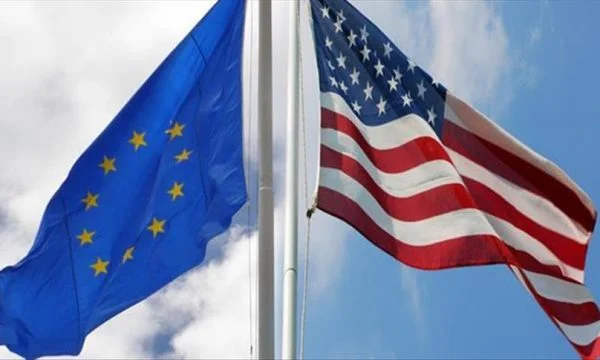
Within days, Russian President Vladimir Putin has achieved what had not been accomplished for many decades, the unity of the European Union for purchasing and sending weapons to a war zone, as well as restoring transatlantic unity.
For years, the Russian president could take far-reaching cases of partitions in the West, starting from Britain's release from the EU in 2016, Hungary's long antipathy to the EU, and the division created by former President Donald Trump, which has not been completely exceeded under the administration of President Joe Biden.
Mr. Putin may have seemed the perfect moment for aggression against Ukraine, thinking that this could create further divisions in the West, with a war on the continent ending the diplomatic calm of all EU countries.
“Vladimir Putin thought he would destroy European unity, but he did exactly the opposite”, European Council President Charles Michel said in an interview with a small group of journalists Monday.
The co-operation is very strong”, he said. This is what the circumstances of history require, that none of us could imagine”, Mr. Michel added.
On Monday, President Biden conducted another videoconference with the EU, Britain and other Western leaders to strengthen a joint package of strong sanctions and to strengthen unity. Over the weekend, Brussels and Washington announced financial sanctions within minutes of each other, which targeted the Russian central bank, removing Russia from most of the international financial transactions system, SWIFT.
Together they closed their airspace to Russian aircraft and agreed to the list of Russian oligarchs to which sanctions were imposed. Seeing the unity of the West, President Putin continued on Monday with his old language against the West, used during the Cold War period by the Soviet Union and the Warsaw Pact.
Focusing his anger on Washington, he described Western allies as the <x0-satelites of the United States”.
So it is fair to say that the entire Western bloc formed by the United States, according to their wishes, represents an empire of lies”, Mr. Putin said.
A unity of these sizes did not exist among Western powers before President Putin made the decision to gather troops at Russia's border with Ukraine.
Especially was the position within the 27 EU nations important, making detailed changes that were met with little disagreement.
“This is a crucial moment”, European Commission President Ursula von der Leenen said Sunday about the EU's decision on “s financed the purchase and delivery of other weapons and equipment to a country under attack”.
It is the same European Union, based on a post-World War II peace project that abandoned weapons to create economic co-operation that created a continent of unprecedented prosperity and wealth. It is the same European Union that received the Nobel Peace Prize 10 years ago for what it could achieve without the use of weapons.
It was also the same block that for years has highlighted the values of what it calls soft power, diplomacy, aid and cultural exchanges instead of the power of weapons.
All this change in just one week. Now Mr. Michel says: There is no space for weakness and we must show a determination. ”
The change has been more pronounced than anywhere in Germany, the main economic power of the EU, but also a country that has been reluctant to invest heavily in military power, mainly because of its militant past, which resulted in the horror of World War II.
Germany has faced constant criticism over the past years for failing to meet NATO's goal of spending at 2% level of gross domestic production in the field of defence. However on Sunday, Chancellor Olaf Scholz announced that Germany would create a 100 billion-euro special fund for its armed forces and increase defence spending to the 2% level of gross domestic production “now, from year to year”.
Chancellor Scholz has also challenged Germany's earlier refusal to export weapons to conflict zones, pledging to send antitank weapons and land-air missiles to Ukraine.
“If our world is different, then our policy should be different”, said German Foreign Minister Annalena Backbox. The major policy twist was executed by a government led by centre-left Social Democrats, often criticised for the tenderness he has shown towards Russia and the Green Party, which has a pacifist legacy.
The world also changed for Hungarian Prime Minister Viktor Orban, who was often seen as an Ottoman EU leader, as did President Putin. For years, he has criticised the EU, was friendly with the Russian president, and was seen as someone who could break the bloc from within.
This was thought to be possible because EU sanctions against Russia require unanimity among the 27 member states. Within days, however, Hungary agreed, just as other EU countries agreed on imposing sanctions on Russia.
I've spoken to Victor Orban right away when we faced this new situation and I can tell you that it was less difficult than expected to receive the support of Hungary”, European Council President Charles Michel said.
Now, however, are the first days of war and may come more difficult times with even bigger decisions, especially since the Russian president and his circle have had time for many years to prepare for any event.
“They have the ability to continue for some time despite the consequences currently suffering”, Amanda Paul from the European Policy Centre said. “So this means that the West will have to be very committed and very determined to continue pressure”, she added. / VOA/