6 minutes ago
INT PLOSE ERVIE: Shkodran Ramadani
Periskopi(4 years ago)
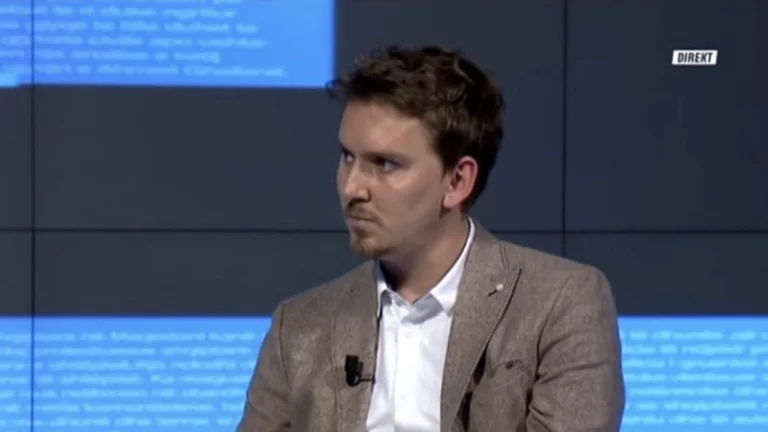
(4 years ago)Analyst Shkodran Ramadani in a brief interview given to the Periscopi Journal has talked about the stances of the Kurti Government under new international circumstances. He has commented on Kosovo Prime Minister Albin Kurti's statements about the risk the Western Balkans may face, about accelerated NATO membership efforts by Government Kurti as [...]
Analyst Shkodran Ramadani in a brief interview given to the Periscopi Journal has talked about the stances of the Kurti Government under new international circumstances. He has commented on Kosovo Prime Minister Albin Kurti's statements about the danger the Western Balkans may face, about accelerated NATO membership efforts by the Kurti Government, as well as the future of Kosovo-Serbia dialogue, now under new international dynamics.
Periscope: Kosovo Prime Minister Albin Kurti is constantly declaring to local and international media about the war in Ukraine, stressing that the Western Balkans are in danger, how do you assess these statements?
Shkodran Ramadani:
Kurti's statements about fighting in Ukraine, as well as the possibility of conflict in the Western Balkans, show that Albin Kurti is trying to accelerate the dynamics of dialogue as well as seek greater attention from the United States of America and the European Union, since they have directed all their capacities to Ukraine and thus jeopardises Kosovo and the Balkans to remain on the agenda of the US, EU and NATO.
But this can produce another effect, because at the moment that it claims to have a state of emergency, a war climate in the Balkans, then normally a chaos occurs on the inside, as was the oil issue, rising other prices, and so on.
Periscope: Do you think Kurti Government's campaign for accelerated NATO membership will be successful?
Shkodran Ramadani: No. This is nothing more than an enthusiasm of the moment. This is a process that takes many years. Accelerated procedure membership is very difficult especially for a country like Kosovo, which is not recognised by some NATO member states, which would not accept Kosovo's membership there without first recognising Kosovo as a state, and to recognise it, Kosovo should complete the dialogue with Serbia. But dialogue is not expected to end even a few years or so soon, so NATO will not be expecting Kosovo with open hands. Both EU membership and NATO and other international organisations are envisioned as taking place after the end of the Kosovo-Serbia dialogue.
Periscope: How do you see the future of Kosovo-Serbia dialogue, now under new international circumstances?
Shkodran Ramadani: There will be no quick agreement that resolves the matter of recognition. There may be agreements but not one that ends with recognition, and the faster it will be, the more inconsistent and the harder it will be to find a formula that resolves the conflict between Kosovo and Serbia, and especially now that it seems that Kosovo is paying off the acceleration of dialogue, but not Serbia. I believe that because of the Russian influence it has, Serbia will wait for the completion of developments in Ukraine because if Russia wins the war then Serbia's position in dialogue will be strengthened and if it loses it then it will weaken. So it is not in Serbia's interest to rush into this process, but it remains to be seen how it goes away.
Interviewed: Badalli Center