12 minutes ago
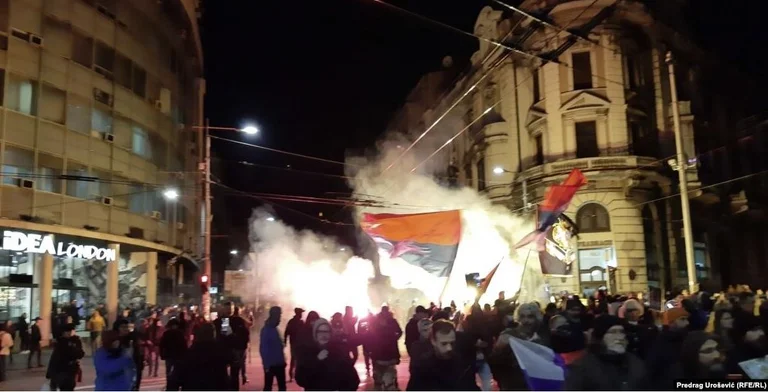
March held in Serbia in support of Russia
Periskopi(4 years ago)
(4 years ago)Serbian citizens have marched in Belgrade on Friday, waving Russian flags and holding photographs of President Vladimir Putin, in a rare display of public support for Moscow following its attack on Ukraine. Serbia is performing a delicate balancing act between its European aspirations, partnership with NATO and its alliance [...]
Serbia is performing a delicate balancing act between its European aspirations, partnership with NATO and its centuries-old religious, ethnic and political alliance with Russia.
For many ordinary Serbs, remembering NATO bombings on strategic targets in Serbia to end the Balkan wars of the 1990s is still very fresh -- a move that was strongly opposed by Russia to the UN Security Council, REL reports.
Serbian President Aleksandar Vuciq, who faces elections next month, in which she must preserve the support of Russian-minded citizens, has also repeatedly stressed Moscow's long-standing support in the United Nations, where she has refused to recognise Kosovo's independence.
Before the start of the march, about 2,000 people gathered near the presidency building in central Belgrade, installing Russian and Serbian anthems and greeting both countries as brothers nations before a monument to Russian Carit Nikola II.
Among them were local members of Russia's “Motorcycle Club Russia's VMROx1>, known for close ties to Putin, and with a history of fighting in Ukraine on the side of pro-Russian separatists during the crime crisis in 2014 and the war on the Donbas region.
The political views of many people in Serbia have been formed by the drawings close to Vuciqi, which have echoed Moscow's view of war in Ukraine, with one of the titles saying “Ukraine attacked Russia! ” on the first day of occupation.
But there is also support for Ukraine, with dozens protesting against the Russian invasion before its embassy earlier this week and more events expected over the weekend.
Russia calls its actions a special operation designed not to invade territories but to destroy its neighbour's military capabilities and capture what she considers dangerous nationalists.
Earlier Friday, Vucic told Ukraine's ambassador to Serbia that Belgrade respects the international law and the territorial integrity of Ukraine and is willing to offer humanitarian aid and accept refugees.
Serbia, which relies on Moscow for its energy needs, also joined the condemnation of Russia's attack by the UN General Assembly, but has refused to impose sanctions against Moscow.
Vucic has said the country is under great pressure to harmonise its foreign policy with that of the European Union, which it intends to join.
Air Serbia continues to have flights between Belgrade and Moscow, even increasing capacity after the EU and Russia established airspace stops.