5 minutes ago
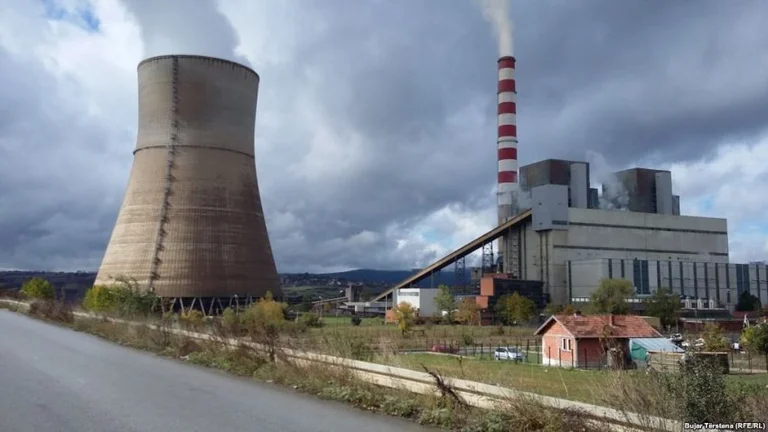
“Kosovos B” block B1 returns to evening hours in production
Periskopi(4 years ago)
(4 years ago)KEK officials have told the Economic Bulletin that the temporary withdrawal of this thermal power plant from the production process, I said it has not contributed to the supply of Kosovo consumption by electricity, as all energy lacking from the planned B1 withdrawal from work has been compensated by Albania's energy system [...]
The B1 block of thermal power plants “Kosovo B”, due to minor technical causes, has been temporarily withdrawn from production and after the KEK maintenance teams' interventions and the avoidance of these magnetic technical defects, it is expected that this important capacity for electricity production will be restored today, in evening hours in the labor and production process.
KEK officials have said that the temporary withdrawal of this thermal power plant from the production process has almost not contributed to the supply of Kosovo's consumption by electricity, as all energy lacking from the planned B1 withdrawal from work has been compensated by Albania's energy system in exchange. Not only in this case, exchange of Kosovo electricity- Albania and genuine co-operation between these two countries in this plan are proving successful and fruitful. In the event of needs, as was this with the planned withdrawal for several hours of B1 production, or in case of the needs of the Albanian electromagnetic system, when Kosovo has electricity surpluses, energy is exchanged.
In this way, both Kosovo and Albania avoid large expenditures that would have to be invested to import electricity at expensive prices from various electromagnetic systems in the region and beyond. As it is known, the capacity of active blocs in Kosovo thermal power plants (two Kosovo blocs B and three Kosovo blocs A-A3, A4 and A5, are down to about 1,000 MWs. 070 megavans). Blocks of the Kosovo B thermal power plants combined have a capacity of over 600 megawatts in the generator, while their capacity is 520 megawatts in the network. Each block, then, has the capacity to network 260 megawatts.
On the other hand, Kosova A, since the post-war operation has operated three blocks of A3, A4 and A5, which together have a network capacity of 550 megawatts. The A1 capacity is 200 megawatts in the generator, while on grid 180. A4 capacity is completely identical to A3. While A5 has the capacity at the 210-megawatt generator, while on the 190 grid. But these common blocks produce less energy.
The capacity for producing Kosovo blocks A, in most cases, is: A3 and A4 in the 150-megawatt-hour generator, while on grid 110, while the A5 capacity in the generator is 150 and on the 130-megawatt grid. These are the current capacities in the Kosovo A thermal power plants, already over-extended, and in Kosovo's so-old B- also beautiful. Kosovo B, as it is known, started production in 1979. While Kosovo's current consumption behaves more or less to 750 to 800 megawatts, while during peaks and in cases during the winter season, consumption has gone to 1280 megawatts as well.