6 hours ago
Has the Kosovo-Serbia dialogue been detected? What EU envoy Miroslav Lajcak says
Periskopi(4 years ago)
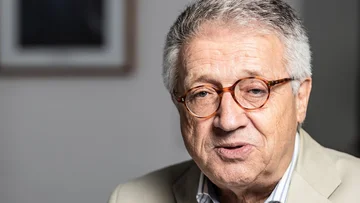
(4 years ago)The European Union's special envoy for the dialogue, Miroslav Lajcak, said that the third meeting between Kosovo and Serbia's leaders requires constructive and peaceful atmosphere. He said the process of dialogue between Kosovo and Serbia has not stalled, but “is being developed mainly at the level of top negotiators”. According to him, meetings of the seniors were [...]
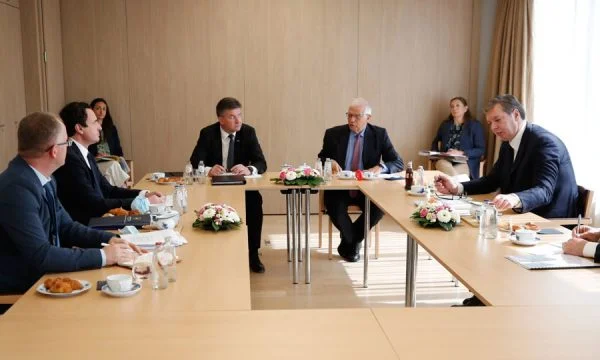
He said the process of dialogue between Kosovo and Serbia has not stalled, but “is being developed mainly at the level of top negotiators”. According to him, the meetings of the officials are under way to prepare the third meeting between Kosovo Prime Minister Albin Kurti, and Serbia's president, Aleksandar Vuciq. However, according to Lajcak, a Kurti-Vucciq meeting can only happen when the two leaders can agree on something.
Lajcak said dialogue is the only platform where Kosovo and Serbia are treated as equal.
In this interview he also spoke of rejecting Quint's proposal by the Government of Kosovo to hold Serbia's elections, but also about the Association of Serb-run municipalities.
REL: Mr Lajcak, the European Union has said Kosovo authorities have rejected the Quint countries' proposal. [Getty Images] The US, Germany, Great Britain, France and Italy] to enable Kosovo Serbs to vote in Serbia's upcoming elections, within the territory of Kosovo. This refusal takes into account the moment of Kosovo-Serbia dialogue. Do you fully freeze the process?
Miroslav Lajcak: No, I'm not putting the process on ice. I hope so. But, of course, we have been involved in trying to facilitate an election agreement, because any decision to be made would have an impact on the situation on the ground. For me, as the mediator [of dialogue], it is extremely important that the atmosphere remains constructive so that we can continue our meetings and have two sides ready to agree on things. So there has been an effort led by Quint and the active involvement of the European Union for nearly two months to find a formula that would accommodate the sensitivity of both sides. But, in the end, Quint's proposal has not been accepted by the Government of Kosovo. So there is no agreement and there will be no [Serb] elections on Kosovo territory.
REL: Can you find out what this proposal contained?
Miroslav Lajcak: Yes, the proposal has suggested that the only official communication channel between the Government of Kosovo and the Government of Serbia, the liaison officers, respectively, be used to submit Serbia's request [to elections] to Kosovo authorities. But this is not seen as a satisfactory or sufficient thing by the Kosovo government, which has called for direct communication among governments. But as I said, there is sensitivity in both sides.
The liaison offices are the only channel of communication that exists between the two governments. If we had normal interstate communication between Serbia and Kosovo, then there would be no need for dialogue. Dialogue develops to normalize relations. So Quinn tried to address the sensitivity, but, unfortunately, it didn't work.
Keeping Serbian elections in Kosovo, “has never been part of the” dialogue
REL: Dialogue is also a channel of communication. The European Union, ahead of Serbia's referendum on January 16th, has declared that this issue should be resolved within dialogue. [Kosovo has not allowed even holding this referendum on its territory]. Why the parties have not been invited to the talks and why an agreement has not been attempted under this process for normalising relations has not been reached.
Miroslav Lajcak: Holding Serbian elections in Kosovo has never been part of dialogue, but there is an arrangement that has been proposed by Quint and the Organisation for Security and Co-operation in Europe (OSBE). This arrangement has made it possible to hold five Serbian parties in Kosovo in the past ten years. Therefore, we have respected the existence of an existing model, and we have offered one thing from the dialogue, which is the channel [or] liaison officers, because they're out of dialogue.
We, too, have offered our good services to help facilitate the process. We didn't want to create a new mechanism. We wanted to adapt the existing mechanism to address the Kosovo government's concerns. We've been trying and working hard, but in the end, as I said, no reconciliation has been made.
Dialogue “has not stalled”
REL: What are the consequences? It has also been very difficult for you to bring [Kosovo and Serbia's] leaders here to Brussels. Last summer, there were two virtually failed meetings. After recent developments, how difficult will it be for you to move the negotiation process forward, which, to some extent, is stuck?
Miroslav Lajcak: First of all, the process has not stalled, but is being developed mainly at the level of chief negotiators. We are discussing practical issues, with the main goal of preparing the third meeting of the two leaders. For this, however, we need a constructive atmosphere, and we need a peaceful atmosphere. Unfortunately, we've had [automatic] license crisis, we've had situations that are not favorable to this atmosphere.
Dialogue and issues that are being addressed in dialogue are very sensitive issues. And for that, of course, you need an atmosphere where you can trust your partners to a degree. You can believe that what has been agreed upon will apply, and so on. We have seen the reaction from Belgrade, the immediate response to this new reality. Of course, this will not help improve the atmosphere. But at the same time, dialogue must continue. We don't have the luxury of not talking, because this is the only platform where Kosovo and Serbia talk to each other and not to each other. We have to work under circumstances that are not favorable. So we're also involved in this process, because, as I said, any decision to be made would affect dialogue, positive or negatively. So we have to adapt to reality and we have to make sure that the process [of dialogue] continues.
After Serbian elections, “unique opportunity to focus on dialog”
REL: You mentioned the meetings of the chief negotiators that inevitably lead me to the next question. You have mastered this particular kind of mediation... holding a meeting of the chief negotiators... then, being in the same building, at the same time, you have reached an agreement on September 30th, [the license plates], actually without a physical appointment...
Miroslav Lajcak: Yes, this is the reality, because it has not been possible to meet because of the preconditions the two sides have set for such a meeting. It's not my style to say we can't do anything. We had two teams here in the building and we talked separately with them. It's far from ideal, it's much less efficient, it takes more time, but it has helped us move forward. So the process is going on, we're walking, we're walking in the right direction, but not at the right speed. That should change if we want to have comprehensive agreements. We don't have time to continue at this speed we had last year.
I also want to say that now, after [April 3rd] Serbian elections, we enter a unique period, when there will be no planned elections in either Serbia or Kosovo, nor big elections in the European Union or the United States. This means that the rest of the year 2022 and 2023 is a unique opportunity to focus on dialogue. We can't be distracted by the political calendar and we have to achieve something because if we don't, in 2024 we get into a completely new situation with European elections and the U.S. elections and dialogue won't be the center of attention.
REL: You mentioned lack of faith, something that was not mentioned in the past when other leaders led the dialogue on behalf of their respective countries. Many member states, which accept direct reports from your cabinet, consider Kosovo Prime Minister Albin Kurti as the person responsible for lack of constructiveity and encouraging atmosphere in dialogue.
Miroslav Lajcak: I won't label my partners and conversationators. It is a fact that President Vuciq and Prime Minister Kurti have powerful political mandates from their voters, and it is a fact, also, that the current government of Kosovo has a strong view of dialogue, so it has taken us a lot of time to discuss the parameters of the process. For 10 years it has been self - evident why dialogue exists and how it should develop. Now we are discussing how to conduct the dialogue correctly.
Last year we were in a situation of crisis prevention or crisis management. Many jobs have been accomplished, many meetings, many phone conversations, many exchanges of documents, which are unseen by the public. We've had two meetings between the leaders and agreed that for the third meeting, we have to make sure that there are concrete results.
With what point of this mandate do you expire in August, can you imagine another meeting between Kurti and Vuciqi in Brussels?
Miroslav Lajcak: I want to make sure the meeting results in good news for their citizens. I want this meeting to demonstrate that Albin Kurti and Aleksandar Vuciq are willing to sit down and achieve compliance with things. Both say publicly and privately they are willing to come to Brussels.
But?
Miroslav Lajcak: But that is not enough. We had them here twice. For the third meeting, we wanted to make sure we made something. That's what people expect. Dialogue has no alternative. This thing is pretty clear. First, without normalising relations, Kosovo and Serbia will not move forward in the European agenda, secondly, this will affect the regional atmosphere, because it is known that this is a regional thing. This is the only platform where they can meet, talk to each other as equals.
Dialogue should not wait. The status quo doesn't help. After all, governments will be tried at the end of their mandates, even how much progress they have achieved in dialogue. These are factors that clearly indicate progress.
Dialogue, the only “platform where Kosovo and Serbia are equal to”
REL: How do you view parties as equals? Serbia does not recognise Kosovo's citizenship. The European Union has a perfect role in mediation. On the one hand, telling Kosovars that there are 22 member states that have recognised Kosovo, that it is unlikely that they will withdraw the decision, but, on the other hand, telling Serbia there are still five states that have not recognised citizenship. So all questions are open. How do you balance this equality when you sit at the table with the parties, or when you contact them?
Miroslav Lajcak: The EU-brokered dialogue is the only platform where Kosovo and Serbia are equal. There are no flags. They are referred to as Kosovo and Serbia, or Pristina and Belgrade. They have completely equal rights. We call them parties in dialogue. I'm not aware of any other platforms or forums where the same applies. It's a pair. As equal, they have the same opportunity to make proposals on issues that can be discussed, and of course the same responsibility for implementation. The European Union is a logical mediator, not only because we have a mandate from the United Nations, but also because this process is related to the European future for both states, Kosovo and Serbia. Therefore, we want to make sure that for all that is achieved in accordance with European standards, standards, and values.
REL: On your recent visits to Kosovo and Serbia, you have been asked direct questions, but you have given two different answers. Is the dialogue on Kosovo's status developed?
Miroslav Lajcak: No, dialogue develops for future relations between Kosovo and Serbia. Dialogue on normalising relations between Serbia and Kosovo.
What is your vision, how do you see the epilogue of the dialogue process? I am not asking you to make public the details of the comprehensive agreement, but how do you see the full normalisation of relations between Kosovo and Serbia?
Miroslav Lajcak: I'll show you my vision when we get there, because I'm here to intercede. Of course I have my vision and I'm trying to take the process that way. Finally, it's up to the parties to decide. When we get to the end of the road, then I can tell whether my expectations have been fulfilled. I don't think it helps if I introduce my vision, because I'm the mediator. The parties should have their vision and should be able to agree on a common vision.
Failure to Deal
REL: The sides have agreed to nearly 33 agreements from the 2013 Brussels Agreement. Do you have any statistics about how many agreements have not been implemented by the Serbian or Kosovo side?
Miroslav Lajcak: Of course, we have accurate data on their implementation, and we communicate this to both sides each time we discuss it. The sides know exactly how long their list of unfulfilled devotions is. We also inform member states of this. We repeat that everything for which reconciliation has been achieved must be applied, because it is the fundamental principle of any negotiation.
REL: When you weigh them, which side is more heavy, or do you apply more?
Miroslav Lajcak: It is difficult to answer because it is not only about the length of the list but also about the seriousness of matters. Some issues are more technical, some are more political. So I don't want to comment. As I said, the parties know exactly what is on their lists and what is expected of them.
Association, by “respecting the Kosovo Constitution”
Radio Free Europe: Because when you hear the public statements of European officials, one can gain the impression that there is only one obstacle, which is the Association of Serb majority municipalities in Kosovo, which is the only thing that has not been implemented and Kosovo has not implemented and must be done. Is that the correct impression?
Miroslav Lajcak: No, no, no, that's not true. As I said, both sides -- Kosovo and Serbia -- have lists of commitments they have not met. This vow is mentioned publicly, so there is this impression because it has been spoken about very publicly. But, of course, we prefer private talk on these issues, so diplomacy becomes. We don't want this to turn into a political instrument between the two sides. It is their responsibility towards facilitators, towards the European Union, and also towards their citizens to implement what they have agreed to, for what they signed in Brussels. We prefer quiet diplomacy.
REL: As for the Association of Serb majority municipalities and in light of what is happening on our continent, with the war in Ukraine, no doubt dialogue can be immune to geopolitical circumstances. What's happening there, would it be a lesson for you that the creation of single-ethnic troops, separately in the Balkans, could be the planned next bomb?
Miroslav Lajcak: Learning from the war in Ukraine, from Russian aggression in Ukraine for me, is that peace, stability and reconciliation are more important than ever. Therefore, we have to make progress in dialogue, because of course they will significantly strengthen peace and stability in the Balkans, and that is very important. Second, I always say that we are here to promote a European solution, because we want to help accelerate the integration of Kosovo and Serbia into the European Union. You can be sure that whatever you agree to, you will meet the highest European standards. We do not want to create special standards for the Balkans, and it is very likely how to address these issues by respecting European standards and respecting the Kosovo Constitution.
Crisiss in Bosnia, “not ignored”
REL: Besides being the Special Representative for the dialogue, you are also in charge of regional issues. So my next question is about the situation in Bosnia and Herzegovina. Many fear that the perfect ground for Putin's special war is right in Bosnia and Herzegovina. The subject of this country is also on the next summit agenda. Do you share this fear that Bosnia is still in danger of Putin's aggression?
Miroslav Lajcak: I wouldn't say that, but I'm going to say that Putin's aggression in Ukraine is probably exposing a lot of things that we've taken well-being or that we haven't paid much attention to.
Of course, security and protection issues have become more evident, our ability to defend ourselves, the need for unity is very clear. It also shows that being part of European integration progress is something that is built on belief in European values is a very political process. And this is the time for our partners to show what they believe, what the principles they stand for. This is extremely important.
As far as Bosnia and Herzegovina is concerned, it is facing several crises. I, even, would say this is the most serious situation since the end of the war and since the signing of Dayton. And it's very important that we address these crises and find solutions for these crises and we shouldn't be afraid of any potential danger and ignore the crises that are on the ground. That would be my approach.
After a week it will be your second anniversary of the appointment in this post. Your mandate expires in August, with a potential extension. What can you say about your achievements and failures, besides the headaches that leaders have caused you in this process?
Miroslav Lajcak: Initially, I don't think it's the right thing for me to talk about my achievements, because my achievements are the achievements of Kosovo and Serbia.
REL: I am asking because someone can say that Miroslav Lajcak is active only on Twitter. We don't see him doing anything but posting on Twitter”.
Miroslav Lajcak: Yes, a person can say so, but he would be wrong. Miroslav Lajcak works 12 hours a day, many things are happening in the background. Sometimes you see these things, especially when we have a bad situation like a car license crisis, that we managed to reduce tensions, or when the chief negotiators come here.
The fact is that in these two years, in the first year we were mainly involved in addressing the normalisation agreement that will occur in the future. In the second year, we're more busy, say crisis management, crisis prevention, and creating conditions for launching dialogue for normalisation, in achieving reconciliation for normalisation principles. So it's a job that's not very public, it's less spectacular, but it's a job that takes more time and also spends more energy.
But, in the end, it's not about Miroslav Lajcak, it's about Kosovo and Serbia. As I said, I am here, my team is in Brussels, in Pristina, in Belgrade. We're ready 24/7. But if the two sides don't have the will to agree on the matter, I can't force them to agree. So either we achieve something together, or we fail together. That's what it is, this process has nothing to do with Miroslav Lajcak. You can be sure that Miroslav Lajcak is investing all of his skills, experience and knowledge and the goodwill of this process to succeed.
Optimism in Solving the Tags
You mentioned the issue of license plates, and that's my last question. The deadline for the processing group is on 21 April, as their first meeting was held in October. Until then, they must present a pre-level political solution. Are things going in the right direction, will we also have a new meeting or a positive result from the dialogue?
Miroslav Lajcak: The processing group, indeed, is a working group. So far, they have met six times and are before to hold two or three more meetings, depending on the situation. The meetings have been for the two sides to present in detail their positions, red lines, but also their proposals for resolution.
We have a clear map of all existing options, with a demarcation of which of those options are permanent or temporary, which of those options are in line with European practices or are not in line with European practices.
Now we expect the parties to narrow the list of options and agree to one or two of them, which will then be recommended to political leadership. We have a few more weeks for this issue and of course we will continue this process and I am optimistic, I am hopeful that by April 21st the working group will be able to present at least one proposal, a joint proposal for resolving this issue.