11 minutes ago
K IPRED: Russian media with anti-Kosovo information
Periskopi(4 years ago)
(4 years ago)The Kosovar Institute for Policy Research and Development (KIPRED) has presented the work “The Kosovo Observer: The Russian Diplomatic War and Media Dezinforms, November 1, 2021 “Oobserver” is a quarterly report aimed at analyzing the public statements and publications of Russia's foreign policy establishment, and features of news containing [...]
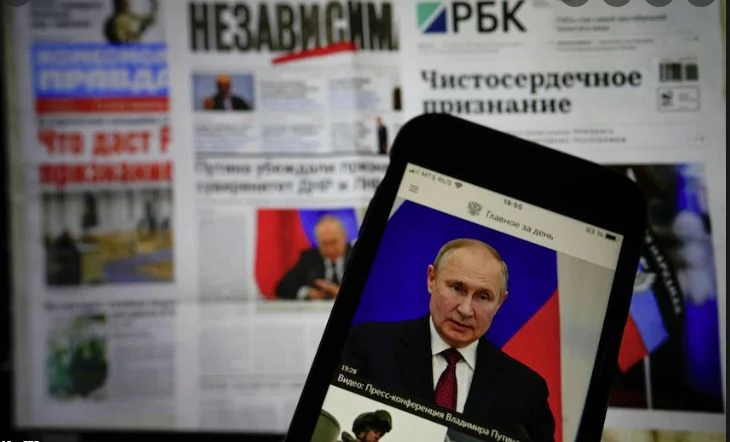
“Oobserver” is a quarterly report aimed at analyzing the public statements and publishing of Russia's foreign policy estabity, and the features of news containing dezinformation and mismanagement targeting Kosovo, published by Russian media in English and Serbian.
This work points out that a significant development in the Russian diplomatic fight against the West and Kosovo that has taken place during this period is the change of sodiums on the eve of Putin's attack on Ukraine. In his two statements, issued on January 13th and 14th 2022, Foreign Minister Sergei Lavrov compared the separatist regions of Ukraine dominated by Russians, Donetsk and Lugansk to the Serb-dominated northern part of Kosovo, as well as the Minsk Agreement to that for the Association of Serb municipalities, from aspect of the rights of Russian and Serbian populations in these two respective territories.
Moreover, for “munging implementation”, Lavrov blamed the European Union's “ “to push Kiev and Pristina to respect these two respective agreements.
Anti-Western attacks in Kosovo were particularly focused on United Kingdom Embassy in Kosovo, the Headmaster of the O Mission The SEU in Kosovo -- United Kingdom Ambassador Michael Davenport, and British intelligence -- plotting against the Serb community in Kosovo, through the support of the Kosovo Police intervention in the northern part of Kosovo, which was part of the operation against organised crime that took place throughout Kosovo, on October 13th 2021, as well as the “support of the Kosovo Government and Assembly decision not to allow Kosovo to hold on the territory of the referendum for constitutional changes in Serbia.
On the other hand, the Kremlin has given several brief opening statements to the meeting between Russian President Vladimir Putin and Serbian President Aleksandar Vuciq, who was held on November 25th 2021 in Sochi, also in the case the meeting itself lasted about three hours.
Furthermore, according to Serbian TV Pink, quoted by Radio Free Europe, Vuciqi launched the meeting, proud of military-technical co-operation with Russia, and he prayed for the quick achievement in Serbia of certain tactical weapons, in particular citing anti-antic weapons. And most interestingly, Vuciqi stressed the urgency of taking these Russian weapons because, according to him, he added “there will be other major things of a strategic interest for Serbia in a future, and that in a not too distant future,” where he added “so that the first things will be before the end of the year in Serbia.
In view of these Vuciqi statements, it is almost obvious that at the meeting with President Putin they have discussed the next Russian military gathering on the Ukrainian border, as well as possible co-ordination of the Russoʹserb in their goals in the Western Balkans in light of Putin's future attack on Ukraine. In this respect, comparing the separatist regions of Donetsk and Lugansk with the northern part of Kosovo by Minister Lavrov remains an issue of concern over the possible co-ordination of Serbian and Russian actions in relation to Kosovo and the Western Balkans.
In this context, the absurd comparisons of Kosovo and the intervention of NATO with the Crimea and the separatist regions of Donetsk and Lugansk of Ukraine, as well as those past to South Ossetia and Abkhazia in Georgia, exploited by Putin's regime, leave no doubt that they are being pursued to justify hegemonic aggression and policies in the vicinity of Russia's “, which are stripped of the fundamental norms of human rights and international rights.
Finally, analysis of news disinformation and malinformation rates (79) of selected media, which are a protracted hand of Moscow, shows that, in general, they convey the narratorates of Russia's foreign policy integrity, and that Sputnik Serbia, Sputnik International, Russ Today and TASS remain in line with these mountain information operations against Kosovo. /Periscopi