2 hours ago
Hasani: Kosovo membership in NATO is determined by Kosovo-Serbia dialogue, not by war in Ukraine
Periskopi(4 years ago)
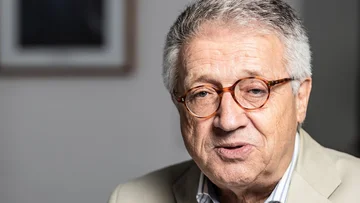
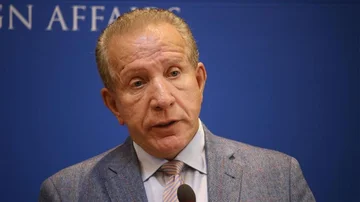
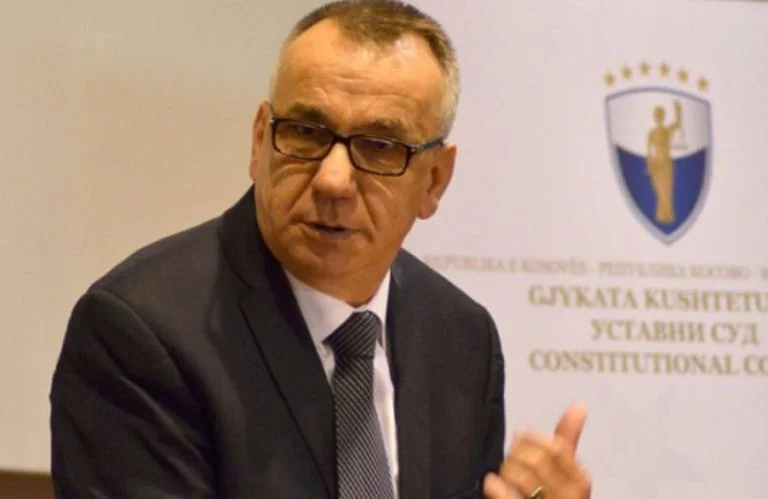
(4 years ago)The former head of the Kosovo Constitutional Court, Enver Hasani, is involved in the debate over the possibility of a separate process of Kosovo's NATO membership, writes the newspaper Periscopi. In an interview for Kosovo Press, it has said that Kosovo's membership does not depend on external circumstances, nor on war in Ukraine, but on Kosovo-Serbia dialogue. [...]
In an interview for Kosovo Press, it has said that Kosovo's membership does not depend on external circumstances, nor on war in Ukraine, but on Kosovo-Serbia dialogue.
“The issue of our NATO membership, this should be understood by everyone that it is determined by other internal dynamics and factors involving our reports in dialogue with Serbia. Our NATO membership is a matter of regional security here, not a global security issue. As the Russian influence is very weak in this part of the world and cannot project force because it is completely surrounded by NATO. Our NATO membership is one of the latest means of pressure on Serbia for recognising Kosovo and stabilising relations with Kosovo. It is not something that this crisis and this war that we can benefit with NATO membership, nor with membership in other international organisations. They are part of other dynamics related to our immediate region and neighbourhood, not Russia... It is not what is impossible, (Kosovo membership this year in NATO), but is not dictated by the factors being presented. It is not dictated by Russian factors, their neighbouring reports as Ukraine, or other countries. It is dictated by our reports with Serbia in terms of dialogue. Our NATO membership is part of that process and is a tool as pressure on Serbia if it doesn't understand how to say or don't want Kosovo to be a sovereign and independent state and we are the beneficiary of security under the NATO umbrella, such as Serbia”, he says.
Hasan has said it is another thing our desire and there are other things that are objective facts on the ground.
The other “is what we want, and our reaction against Serbia is legitimate to our allies. But Serbia is the only country in this part of Europe that anchors Russian military bases and considerable Chinese presence in the economic, intelligence and high-tech sphere. As a result, Western reports on both sides of the Atlantic are such that they are enough and their response is such that they are satisfied with the Serbian position of maintaining Ukraine's territorial integrity. So... I don't see Serbia can have consequences for European integration or procrastination because of the response. We may think as we wish but the reality is this. From Serbia it has been asked to say what it has said Ukraine's territorial integrity is not discussed and it also implies the internal constitutional regime. See now the issue of their sanctions, Cyprus didn't, I don't think Turkey does, too. Cyprus has condemned aggression and all, but in sanctions it does not participate”, Hasani points out.
On the other hand, Hasani, sees no impact that war can have on Ukraine in relation to the Western Balkans, since Russia, according to him, has no high influence in this region except Serbia.
“Today, it can hardly be said that there is any influence in the Balkans on what Russia has done today, as is this report of forces. Since Russian influence except in Serbia has been nowhere present. It's been present as it's called hybrid interventions, but they haven't been the result of the military vitality of Russian society, but more have been done slowly, not that they have achieved another purpose... Serbian nationalism forces can in the Balkans make any demonstration, or something similar, but at this stage and moment there can be no organised state structure of Serbs in the region that can stop them in open support of Putin”, he declares.
The former Constitutional Court has said that it is important for the West to preserve the international order based on certain clear rules.
The West's “is vital to preventing the breakdown of international order based on rules. Today's international rule algorithm is built after World War II by Americans, and Europeans have later empowered it. It is based on clear advance rules regarding the right to self - determination. That right to self-rule as Putin wants and as assumed in the Soviet union once and Milosevic as he wished doesn't go by force to show the other that they did, or so. The West in that sense sees Ukraine except as a state according to international law, it also has a democratic regime that protects it according to Helsinki Final Act standards, which preserves territorial integrity for those states that behave well with its citizens. So Putin says that genocide and the Republicans he met have done for this reason, with a reasoning that I am convinced that there is an international court that does not accept self-defense as he said. Since there is no sign that there has been a threat from the forces of Ukraine, either in the past or now. All the tests are that he has believed that the people of Ukraine support Russia, as they have had more peaceful and non-conflict history, he says.
Enver Hasani sees strong sanctions against Russia as positive as he said these sanctions have hit Putin himself.
“Sanctions have hit not only him (Poutin), since the nature of personal autocratics is that you have friends close, oligarchs and carry billions, and all their wealth is frozen. The wealth of the industry that the military sponsors is frozen, and these now pose an internal problem, as the problem will be with them. He sees danger that he could end his power that he did not expect. Its main calculations were that the people in Ukraine were cutting their hands open, convinced that they had false information. Now you're seeing that this process could be extended and, as a result, has thought, in addition to the threat of nuclear weapons”, Hasani concludes. / PERISCOP