a minute ago
Analysis: Is Russia repeating past wars in Ukraine?
Periskopi(4 years ago)
(4 years ago)At first glance, Russia's initial invasion of Ukraine seemed to indicate a change in the approach of the Russian armed forces. Moscow was probably counting that missile attacks and a multiple invasion of land forces would lead to a quick surrender by the Ukrainian government, writes Al Jazzera. Putin seems to have [...]
Putin appears to have predicted a repeat of Russia's decisive invasion of the Crime in 2014 or its 2008 invasion of Georgia, but what we have seen is more similar to its intervention in Chechnya in December 1994, when the Russian armed forces were initially unable to convert military supremacy (certainly in terms of numbers) into military and strategic success, and thousands of Russian troops proved unable to secure the North Caucasus republic.
The Ukrainian resistance force appears to have surprised Moscow, and in recent days there has been a change in Russian approach, moving towards greater use of artillery and missile attacks against major cities such as Kherson, Kharkiv and Mariupol.
There are echoes of Russian intervention in Chechnya at the end of December 1994, when the Russian leadership planned a massive armoured offensive against Chechen capital, Grozny, aiming to organise a crucial air support attack, relying on the speed of taking over Chechen leadership. They surprise and ensure that Russia takes the initiative. But Chechen forces had long been prepared for an attack on the city, and the attack was a miserable failure.
From Afghanistan to Chechnya and Ukraine: Subjection of the Will of the People
The Russians underestimated Chechen's will to protect their homeland. Putin likewise seems to have underestimated the Ukrainian will to protect their country.
The experience in Chechnya also showed an apparent disregard among those who were in charge of lessons learned in Afghanistan. The Soviets relied on the sudden shock of the initial invasion and the short-term military invasion to undermine their opponent, but had underestimated the determination of the Afghan population and its will to resist.
Russian Defence Minister Pavel Grachev had confirmed that Chechen resistance would be printed within hours of minimal force, but Chechen forces were prepared for an invasion.
The Russian intervention force's progress was also slow, hampered by civil deadlocks, agriculture and bad weather.
Urban War
One of the main issues for Russian forces was the lack of training in urban warfare: units involved in the 1994 New Year attack in Grozny had no specialised training in urban warfare, which was rare in the Russian Armed Forces, despite their extensive experience of it during World War II, especially in Stalingrad.
Unlike Russian troops, Chechen fighters were easily armed with machine guns, grenades and grenade launchers and organized into small, very mobile units.
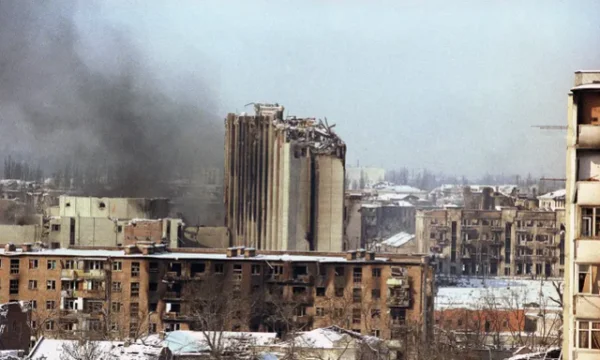
After its early failures, Russian forces changed their approach and tried to avoid direct fighting in Grozny. They fought from a distance, using massive air and artillery bombings to destroy the city, finally gaining control in February 1995.
Russia's second anti-Cacenya operation, which began in 1999, was heavily based on the use of massive fire power and overuse of force. The Russian siege of Grozn (1999-2000) destroyed the city, causing the United Nations to label it “the most devastated city on Earth”.
Media Role
One of the most important lessons Russia learned during the 1994-96 conflict was the crucial role of the media in modern warfare.
Early in the 1994 military operation, Russian media maintained a considerable amount of independence and often openly criticised the actions of the federal leadership.
It was Russia's first television fight and the credibility of the Russian armed forces was constantly undermined by media reports, which often rejected the official stance and also demonstrated the brutality of conflict against the Russian population. This played a major role in shifting public opinion against the occupation.
Consequently, during the second conflict (in 1999), the flow of information was rigorously controlled by official sources, while the government exerted considerable pressure on journalists and media organisations not to criticise or challenge politics.
Russia's fight with Georgia: “To wonder is to defeat”
Unlike anti-rebeling in Chechnya, Russia's five-day struggle with Georgia in August 2008 was a conventional military operation against another state actor, though one involving elements of non-kinetic action, particularly cyber attacks and the war of information.
Like its approach in Ukraine, Russia claimed that its conquest was intended to prevent the alleged genocide of the Orthodox people and protect Russian citizens living in South Ossetia. Putin has named Ukraine's ongoing invasion as a special military “x1> to protect civilians from “genocide”.
Russia used the element of total surprise: Georgians were unprepared for a large-scale Russian military intervention. The Georgian Armed Forces were prepared for a mobile, offensive fight against separatist forces, whether in South Ossetia or Abkhazia, not for simultaneous, large-scale combat against tens of thousands of Russian troops on two fronts at the same time.
The government and the Georgian army were stunned by the speed of the Russian occupation, unable to offer any significant resistance. Russian actions seem to reflect the principle of General Alexander Suvorov of “udiv ʹ gnargit pobedit” (of surprise means defeat).
Within days, thousands of Russian troops had advanced in Georgia's separatist territories, South Ossetia and Abkhazia. Russia's military advantage was strengthened through the use of proxy forces, a stable feature of all Russian post-Soviet interventions. In the absence of accurate ammunition, Russian forces hit civil buildings in cities like Gori, striking the hospital there.
Crime, 2014: Surprise and Confusion
Twenty years after its early failures in Chechnya, the vague use of force from Russia to Ukraine in 2014 led to a focus in the West on the hybrid and “grey zone”. However, it overlooked a continuing Russian emphasis on the priority of conventional forces.
Surprise and capture of the initiative played a key role in Russia's success in Crime. The speed of the Russian deployment in spring 2014 surprised the Ukrainian government, undermining its ability to make decisions and offer any resistance.
The speed of the intervention also surprised the international community, preventing any unified responses -- while the world's attention was focused on the Soci Winter Olympic Games, Moscow acted quickly to take over the decisive control of the Crimean Peninsula, with insulting acts denying Ukraine. The initiative and planted confusion.
Syria: Learn to fight in a new way?
Syria was considered to represent a change in Russian approach: Sergei Shoigu, Russian defence minister, claimed that Russian troops should learn to fight in a new way in Syria, and they had learned”.
Unlike previous campaigns, Russia's operations in Syria were carried out mainly by the Air Force (VKS), with only a limited number of deployed ground forces (mainly elite units), a significant change from previous operations.
But despite this belief that Russian operations in Syria constituted a new approach, there was a series of Chechnya echoes, especially a support in intensive bombings and non-recognitional air attacks against residential areas and civil infrastructure such as schools, hospitals and markets.
Exceeding Attacks in Urban Regions
There was a reception, ahead of last week's invasion, that the process of military modernisation that began in 2008, combined with operational experience (particularly in Syria), would mean that the Russian army was much better. However, evidence suggests that problems remain in areas such as logistics, troop morality, and failure to gain air supremacy.
Russia's actions in Ukraine are not unprecedented. Russian forces have gone into an approach that has been addressed many times since 1991 against cities like Grozny in Chechnya, Aleppo and Idlib in Syria: using heavy bombings, nondiscreet and air artillery to destroy urban areas, imposing heavy costs on Ukrainian population and their leaders.
The deliberate goal of civilians and the widespread destruction of cities aim to weaken the morality of the population in an attempt to undermine their will to resist.
At the same time, the Kremlin is seeking to ensure that it is controlling information flows within Russia. It has increased its control over local media to ensure that state-run narativa is dominant, trying to prevent anti-war protests that threaten domestic stability.