7 hours ago
ZERE forgave COSTT for providing northern Serbs without procurement, convicted KESCO of providing Albanians
Periskopi(4 years ago)
(4 years ago)Now when the world, especially Europe, is facing a major energy crisis, for which the governments of the countries are supporting their electricity companies, in Kosovo the opposite is happening: companies are being punished for providing, writes Periscopi. Current power, when it was opposition, had strongly opposed it through protests, privatisation of public enterprises, [...]
The current power, when it was opposition, had strongly opposed it, through protests, the privatisation of public enterprises, in general, and the power supply network, in particular.
Since this electromagnetic network was privatised and KESCO's KEDS were created as an electromagnetic company, the VV pledged that one day they should be converted into national companies.
As a result, Periscopi sources show that this VV promise has been sharply criticised by the Turkish Embassy in Pristina and by the Turkish government itself. This VV initiative had waned when it was realised that KEDS and KESCO are regulated companies and, as such, in any local judicial or arbitration confrontation would win the case, always under signed contracts and laws in force.
And now as we enter a winter, the VV's supply of electricity, along with it, seems to have been added to its appetite to achieve its goal.
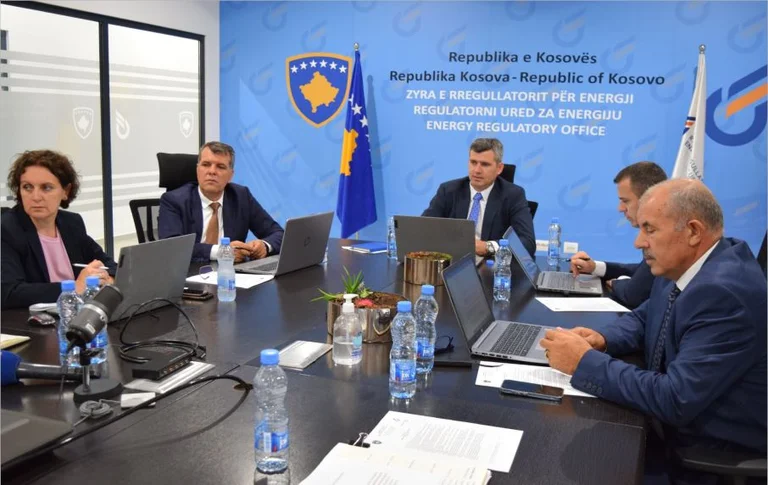
After a difficult year that was last year due to the energy crisis, long reductions, the creation of a crisis management committee and extraordinary proclamation, the Energy Regulatory Office (ZRRE) went back for a year and condemned these two companies to nothing less than 11m euros.
At the 13th session held by the ZERE on 16 November, as reported in the communiqué of this office, KEDS and KESCO have been sentenced because last year they had not left the Ferronikli, Trepca and Sharcem companies, known as unregulated companies, and had used the energy destined for consumers properly regulated for universal supply.
These unregulated companies are supplied directly by COSTT, which means electricity passes through the COST network. For this public company, COSTT, it has not even been discussed whether it has committed wrongdoing or not. And since the energy crisis was a vague and new situation for all, including energy sector companies, whose main job is production, distribution, and then supplies, all were caught off guard.
As Periscopi has learned, in KEK, this corporation, due to its inability to cover its lack of electricity and unstable production, due to expensive prices and import insurance, has not been punished at all. Z The RRE, as such, had not even considered KEK's sentence of deviations caused by lack of energy as a result of the unplanned decline of blocks, nor the COST for access and deviation during this time when KEK did not provide the necessary and mandatory energy.
It is even suspected that COSTT had supplied Serbs in northern Kosovo, leaving international transactions, offering free electricity without procurement. K The ESCO has been sentenced by the ZRRE because it has not provided electricity for consumers in other parts of the country, the vast majority of which are Albanians. So the ZERE does not condemn COSTT, which allegedly did not guarantee electricity for northern Serbs, but was directly provided with deviation, while KESCO is condemned for giving it to Albanians.
Whether such a situation was expected from this government because of its beliefs about privatisation, this is a comment.
Despite the fact that KED is one of many privatisation companies in Kosovo, the Kurti Government, instead of helping this energy distribution company, along with it the citizens of the Republic of Kosovo, so that together, we can manage this winter as easily as possible, it, in this emergency crisis situation, through ZRRE, learns to bank it and turn it into public property.
This sentence could also be a bad signal for foreign investors, as it converts it to an uncertain state for foreign investors. It turns Kosovo 15 years back. /Periscopi/