6 hours ago
Why do Afghan women and girls fear the Taliban regime? 8 The Rules That Will Not Be Broken by Death
Periskopi(5 years ago)
(5 years ago)Taking power in Afghanistan by the Taliban turns the country 20 years back. That is how foreign diplomats and analysts describe it. Two decades, essentially lost for both the country and its citizens, especially women. As seen by the photos and videos that have been on the Internet in recent days, women are [...]
Taking power in Afghanistan by the Taliban turns the country 20 years back. That is how foreign diplomats and analysts describe it. Two decades, essentially lost for both the country and its citizens, especially women.
As seen by the photos and videos that have been on the internet in recent days, women are the ones left behind, as men choose to leave the country with any means.
At a time when the international community chooses to look away and condemn, for women fear returns. As of early July, when the Taliban began to invade the first provinces in Afghanistan, <x0machth” began for women working.
According to the Al Jazeera network, the Taliban, with guns in their hands, delivered workers to their homes and ordered them not to return to work. In fact, three employees and bank manager told the network that the Taliban had informed them that male members of their family could take their place in the bank, the TCH reports.
It's really weird that you're not allowed to work, but now this is happening”, Nur Katera, 43, a Asia Bank employee, told Reuters.
The incident is an indication of what will happen to Afghan women from now on, after 20 years of fighting for equal rights.
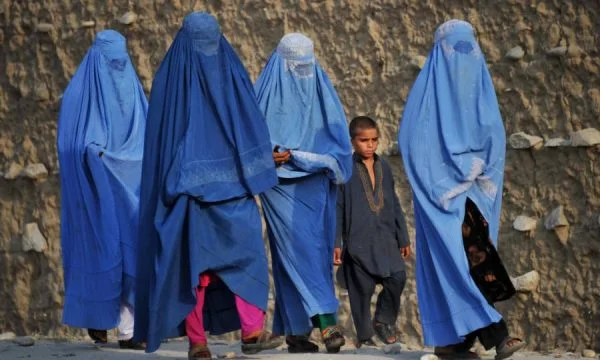
Between 1996 and 2001, when the Taliban were in power in Afghanistan, women were not allowed to work, young girls were not allowed to go to school, and it was compulsory for all women to wear headscarves. To get out, they must have been accompanied by a male member of their family.
More specifically, according to State Department reports in 2001, the eight rules that were implemented for women, established by the Taliban regime, were as follows:
They had to be covered with clothes from head to foot.
They were not allowed to work except on very specific occasions.
They were not allowed to go to school.
They had limited access to the health system.
They could not leave their home without being accompanied by a male member of their family.
When they got out, they would board special buses, and to get on a taxi, they would have to be accompanied again by a man, their relative.
Generally, women could not walk on the street without a man's company, much less a stranger.
The windows of their houses were to be painted so that no passersby could see inside.