19 minutes ago
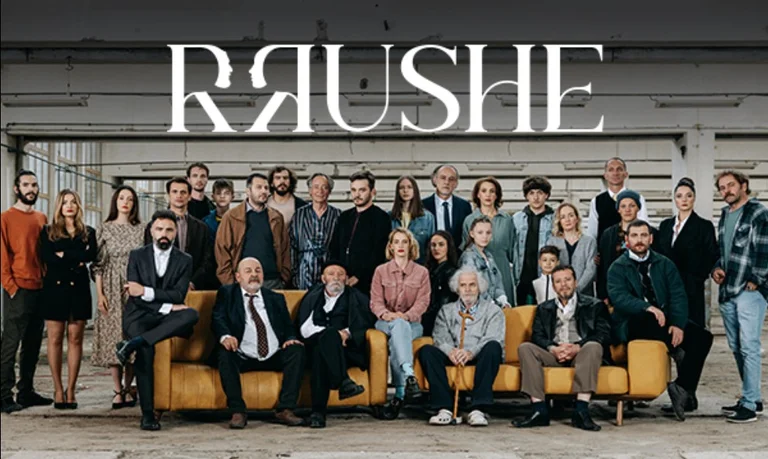
Total amateurism: The first episode of the series "Rruche," is a real cinematic disaster.
Periskopi(5 years ago)
(5 years ago)Before this analysis begins, we need to clarify... it's only about the first episode of the new series of “Gjirafa Video”, “Rrushe”. We haven't continued to watch the series, and frankly we don't even have the will and the will to do it. Everything that is written next is about [...]
We haven't continued to watch the series, and frankly we don't even have the will and the will to do it. Everything that goes on is about the first episode. We would like to believe that things have improved further, but we strongly doubt.
It's very interesting how it's so easy for them to hide medicine in a shadow of esctravaganza, you say that the Kosovo public has no power and intellectual capacity to understand and distinguish the alleged art and artist, writes Periscopi.
“Rush” is the best example of this phenomenon. A mixture of lazy writing, and disaster log, “Rrushe” becomes a manifestation of everything that's wrong with Kosovo cinematography. Next, we're going to split into some major points, without wanting to tire out our loving reader with stupid information and analysis, but just try to get the point of the problem we see as the viewer in the first episode.
Let's first talk about the scenario, which not only seems to have been written with the least possible effort, but you say you wrote someone who never was in Kosovo. Nothing that happens in this episode has any cultural character or identity that even links life in Pristina.
Most likely, our screenwriters think that the only thing that impresss us to see ourselves in these series is to see the characters using offensive languages, mean by swearing, or showing characters drinking coffee in cafes that we watch. Never in 40 minutes have we felt I've met, or experienced something similar that was presented in this episode.
Even for many of the characters, we can say that we haven't even heard anyone in Pristina speak that way. Take some examples; One of the stories presented in this episode (which, believe us, are so much that we suspect that they will all be able to connect, a principal of an elementary school threatens the art teacher because she's using some slightly weirder learning methods.
He threatens it because, just analyze it, another professor, who, as we realize, gives a science class (you know, because artists are very cheap, while these sciences are always against change, that's the stereotype of child series), doesn't like this new way. We absolutely cannot imagine such a scene happening in our schools.
It's a stupid, old-fashioned drama with no artistic and social effect. We don't know exactly what the screenwriter wanted to say with this scene, but we assume that the only reason he's led him to write something like this is the desire to put Enver Petrovci (which, the hand in the heart, is brilliant on this stage), in a role that gives him the perfect platform to act out manic and strangely.
However, writing is not the biggest problem we face in this episode. The regime is another level of disaster.
Not only does it prevent any scene from naturally flowing (as opposed to some we will discuss later), it is evident that most actors have not received the directives properly. For example, at one of the scenes, Vesha, or Rrushaja, goes home to celebrate her mother's birthday. She donates some flowers and something else to her, but her mother gets off to another level of happiness.
No person in the world, at least we believe it, does not rejoice to the extent that her daughter, as we realized, lives with them... that she didn't even miss it, buys some flowers for her birthday. It's obvious that the designs that the actress's got in question have been, and the blame for so many of these mistakes remains completely the screenwriter, who seems to have been working minimally to make this episode viewable, leaves it better.
In another scene, and this has made us most impressed with the amateurism of the director in question and the actor, who has been involved, is this: The ring goes to send an article to a portal (about which the article is not explained at all) and it meets a person who seems to be her supervisor at work. It's later shown that the bridge actually has this person's obsession even though if you analyze the scene over there it seems that they are more hated than they like.
And after a short conversation that, believe us, can cause you a headache, the male character comes close to Rrusha. I'm so proud of you.
Not only does no one we've heard, especially in Pristina where the event takes place, but his behavior is so strange that it really looks like someone who has the potential to cause some kind of waste injury, more than one person she could fall in love with. They are totally terrible and painful moments for Albanian cinematography.
Are there good things in this episode? A little, but there is. Every scene with Andy Baygora (“Friend” is really nice, interesting and very well shot. Looks like he was the most talented in that group of actors. As mentioned earlier, Enver Petrovci fares very well on the show-up stage, as well as Istreff's Shkumbin is OK. Anyone else who shows up in this episode, I think I should honestly consider another profession. We hope the series has improved, but in the end it should be said that in a country where cinematography is developed, the first episode is regarded as a pilot, and if there were these mistakes that were made by Rrushewé, it would never be broadcast on TV again. /Periscope. com/