33 minutes ago
U.S. Supreme Court refuses to review Skelzen Berisha's appeal on charges against him
Periskopi(5 years ago)
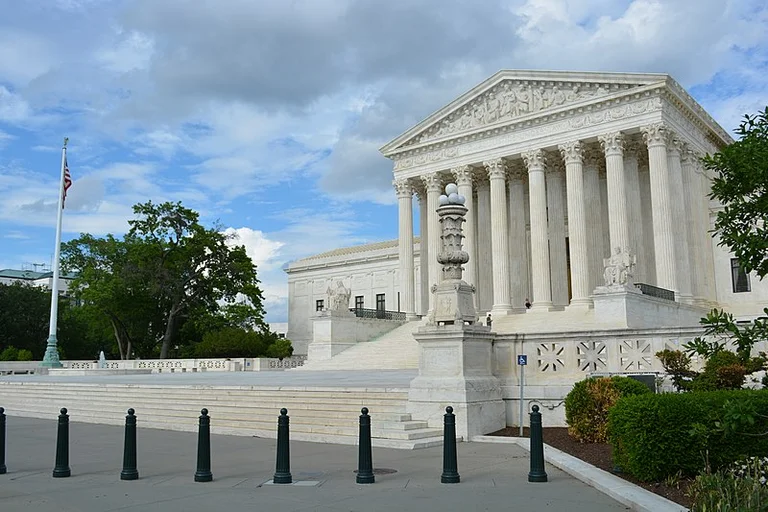
(5 years ago)The Supreme Court of the United States refused to investigate a case challenging the protection of journalists and media organisations against slander charges, but conservative judges Clara Thomas and Neil Gorsuch disagreed with this action and questioned such protections envisioned in a historic decision of the year [...]
Citing a rapidly changing and increasingly disinformed media environment, Judge Thomas and Gorsuch expressed in particular opinions that the court should see with a new eye the precedents that make it more difficult for public figures to sue for slander.
The court refused to consider an appeal by Shkelzen Berisha, son of former Albanian Prime Minister Sali Berisha, regarding his slander indictment on corruption charges against him made in a 2015 book by author Guy Lawson named “Arms and the Dudes”. Based on the book, Hollywood's 2016 film <x2 was made > Wide Dogs” With actors Jonah Hill and Miles Teller.
A lower court ruled in favour of Mr. Lawson, the publishing house of the book Simon & Schuster and several other defendants because he concluded that Shkelzen Berisha was unable to argue that the charges of his involvement in an arms trade scandal had been made with the “intentional ill will”. Such a standard, which provides protection from libel charges, includes statements that are made conscious of being false or unchallenged about whether they are truthful or false.
This precedent was set with the 1964 court's important decision on a case called New York Times towards Sullivan.
Members of the Supreme Court, Thomas and Gorsuch, said the court should have accepted the case for the investigation. They said that in today's media environment, the standard of presumption “of intent” can protect lies instead of truth, with consequences for the real world. Citing as an example the false theory of conspiracy “Pizzagate” which claimed that a pizza in Washington was used to conceal a pedophilia network led by former Democrat candidate for President Hillary Clinton, Judge Thomas said that both the <x4-figure public and private lies cause real damage. ”
Judge Thomas had asked the court two years earlier to review her precedents on slander cases when she refused to consider reopening a libel trial against actor Bill Cosby from a woman named Catherine McKee who had said he had called her a liar after she accused him of rape.
On Friday, Thomas again mentioned Mrs. McKee, saying that this court should not without discussion deny a woman's right to defend her reputation in court simply because she accuses of raping a prominent figure”.
Mr. Cosby was released from prison Wednesday after Pennsylvania's highest court abolished his sentence for sexual assault in another case.
Judge Gorsuch said the current standard of “maliciousity” could be less justified at a time when technological changes and social media mean that disinformation can be more effective and more profitable than traditional news with editors and fact checks.
” Not only has this doctrine become a protection for lies published to a extent that no one could have predicted, but it has managed to leave many more people without compensation than it could have been predicted”, Gorsuch said.
Shkelzen Berisha indicted Mr. Lawson and the other defendants at the federal court in 2017 for brief fragments in Mr. Lawson's book, which describes how three <x0m drug addicts” from Miami Beach secured a $300 million contract from the Department of Defence in 2006 to supply Afghan weapons to the Afghan army, and tried to recover it by providing weapons from reserves in Albania.
The book speaks of relations between them and a mafia linked to the Albanian government. According to the book Shkelzen Berisha was present at one of the meetings, and he is described in the dark <x0fric, a round beard and eyes like shark”, as well as accused as part of the corrupt arms trade relationship.
All three Miami people were sentenced to federal charges of fraud in the United States.
In 2020, Atlanta-based Law of Appeals rejected the indictment. The court concluded that Berisha could not challenge freedom of expression for defendants charged with slandering by public officials or prominent figures protected by the First Amendment to the United States Constitution. This protection was guaranteed by a series of Supreme Court precedents dating back to the New Decision York Times to Sullivan of 1964.
In his appeal to the Supreme Court, Shkelzen Berisha had argued that those precedents should change and limit the standard “for deliberate malice” only for public officials. / VoA/