6 minutes ago
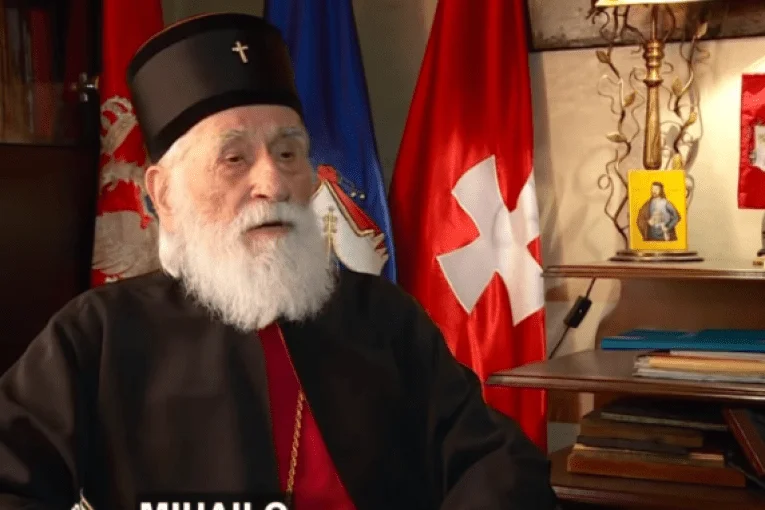
Metropolitan Mihailo: Why Serbs Dense Srebrenica and Who Ruin Yugoslavia
Periskopi(5 years ago)
(5 years ago)More than 8,000 Bosnian men and boys were killed in July 1995 in Srebrenica, in eastern Bosnia, where local crimes were assessed by the International Criminal Tribunal for the former Yugoslavia (ICTY) in The Hague as genocide, in decisions against the highest army and political leaders of the Republika Srpska entity, including Commander Ratko Mladic [...]
More than 8,000 Bosnian men and boys were killed in July 1995 in Srebrenica, in eastern Bosnia, where local crimes were assessed by the International Criminal Tribunal for the former Yugoslavia (ICTY) in The Hague as genocide, in decisions against the highest army and political leaders of the Republika Srpska entity, including Commander Ratko Mladic and the entity's first president, Radovan Karadzic.
Criminals are still heroes
On 8 June, Mladic, 78, was sentenced to life imprisonment by the International Criminal Tribunal for the former Yugoslavia (ICTY). The same mechanism sentenced Karadzic, 74, to life imprisonment in March last year.
Despite international court decisions, RS's leading politicians convicted of war crimes are still treated as national heroes, often calling crimes legitimate revenge, or by minimising the Srebrenica genocide even though those crimes were declared the biggest on European soil since World War II. As an example, a giant mural painting was drawn in honour of Mladic in the town of Foca, about 200km from Srebrenica, which local authorities have refused to remove.
There are information that coffins (at the Potocari Memorial Centre) are empty, that there are no remains in them, but only names,<x0th said Milorad Dodik, the Serb member of the three-member Bonje presidency from Republika Srpska, while world leaders expressed homazhe to the victims.
Serbia fears damages”
Mihailo believes that in Republika Srpska, but even in neighbouring Serbia, they are afraid of damages, compensations that may require surviving victims and families of those killed, so they refuse to recognise genocide in Srebrenica.
“is big money”, Mihailo told Al Jazeera, adding that his fear is that the scale of the Srebrenica genocide could be even greater than what is currently shown in official documents, which can be determined in the coming years with the use of modern techniques for the discovery of mortar waste.
Montenegrin Metropolitan, a staunch opponent of Serbian politics, continues to hold the Serbian Orthodox Church (SOC), the Serbian Academy of Sciences and Arts (SANU) and the Association of Serbian Writers for Wars in the former Yugoslavia, which claimed 100,000 lives in Bosnia alone. from 1992 to 1995 and left the region's economy far behind the rest of Europe.
“It is Serbia that destroyed Yugoslavia,” said Metropolitan Mihailo. In addition, he added, the idea of creating a Greater Serbia, which, according to Serbian nationalists, should include part of Bosnia, Montenegro and some other parts in the region, has not been abandoned today. Montenegro's current government, Prime Minister Zdravko Krivokapic, was also charged by Metropolitan Mihailo for being direct pro-Serbian and working at the expense of Montenegro.
If Montenegro had not been a NATO member and had it not been at the door of the European Union, I am sure that a civil war would have erupted in Montenegro so far. But, fortunately, this will not happen,” said Mihailo.
Ethnic clean states are not good.
The concept of ethnically clean sites, as protected by some Nazi politicians in countries that emerged from the breakup of Yugoslavia, is not sustainable for Mihailon. He said citizens should reject such a policy. He called for dialogue. Metropolitan Mihailo says people of the Western Balkans should enjoy the diversity of cultures and religions and should not be afraid of each other.
People have to be together; to see different cultures, different peoples, to listen to different languages, to live in civil states where all people have equal rights”. Metropolitan Mihailo said that the three major religions -- Christianity, Judaism and Islam -- also do not exclude each other and that this should not be done by people among them.