3 hours ago
Rama commemorates Day of Homeland Witnesses in Albania

Periskopi(5 years ago)
(5 years ago)Albania today commemorates the Day of Homeland Witnesses in Albania. Today's morning, Albanian Prime Minister Edi Rama has started by commemorating Homeland Witnesses. Rama has published a photograph by the cemetery of the martyrs in the First Government of Albania has written “M PRAYING? ♪ ”. Witness Day was decided to be May 5th....
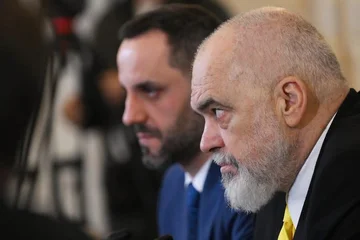
Today's morning, Albanian Prime Minister Edi Rama has started by commemorating Homeland Witnesses.
Rama has published a photograph by the cemetery of the country's martyrs.
First of the Government of Albania has written “M PRAYING? ♪ ”.
Witness Day was decided to be May 5, 1942, the day he was killed by fascist Kemal Stafa, a young communist activist of the National Liberation War.
Before the establishment of the Albanian state, the Albanian people remembered their martyrs and kept their legends alive, through epic song, and the heritage of their history from generation to generation.
After declaring Independence in 1912 until 1945, the Albanian state did not create a legal status for the martyrs of the homeland. In 1923 only his family's pension is legalized as part of the military pension law.
During the National Liberation War, the first attempt to honor martyrs fallen in the battlefields begins. The fallen symbolized the inspiration for freedom fighters. Songs of martyrs, giving names of martyrs, Partisan departments, writings of their act in the press and speeches, swearing before their graves, ceremonial burial, helping families, replacing them in the partisan ranks from near to, etc., all are expressions of appreciation for the act and picture of the witness.
After the liberation, on August 28, 1945, the headship of the Nationalist Anti-fascist Council adopted law No. 109 “Mby the reward of families of the martyrs and disabled of the Nationalist War Antiphascrimist”. This law also sanctioned the treatment of the families of patriots who had fought for their homeland even before the National Anti-fascist War, in the time of the National Renaissance, in the wars for independence, thus marking the first attempt at an integral law for martyrs of the homeland.
In the '60s, witness status is further processed and expanded, specifying the term” Witness of Homeland”. This law includes the cemetery of the Fatherland Witnesses, which was built in all surrounding centers of the country, where the tombs of all martyrs focused, except those of Peza and Kuci of Vlora were centered. The Homeland Witnesses' tombs were built in Tirana with the monument “Under Albania”.
In 1992-1993, with the change of political system, the status of the Homeland Witness also suffered. With a government decision, Mexico, still unpublished, benefits were lost to the families of the martyrs.
In 2000, law No. 8607 date 27.04, “The status of Homeland Witness”, which includes martyrs of all historical periods, even the fallen in 1997-1999, Albania and the Kosovo Liberation War.