2 minutes ago
New Times publishes Serbian criminal world ties with state, Brnabiq acknowledges institutions have ties with gangs
Periskopi(5 years ago)
(5 years ago)The NY Times newspaper has published an article discussing the arrests of several organised crime suspects. The article discusses links between gangs and fan groups of Serbian capital, Belgrade. The arrests shake a football scene in Serbia run by gangsters and exhumers”, reads the title of this research. [...]
The NY Times newspaper has published an article discussing the arrests of several organised crime suspects. The article discusses links between gangs and fan groups of Serbian capital, Belgrade.
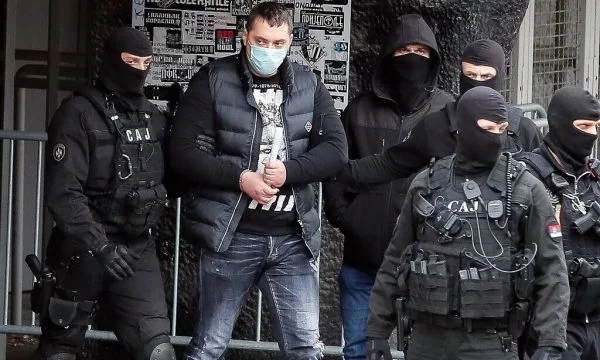
The arrests shake a football scene in Serbia run by the Gangsters and exhumers”, reads the title of this research conducted by the NY Times. “Variators” are the group of Belgrade's celebrated Partizan partisans, Serbianly known as “Grobari”. Serbian Prime Minister Anna Brnabyq, who also accepts ties between bandits and the state, also speaks in the article.
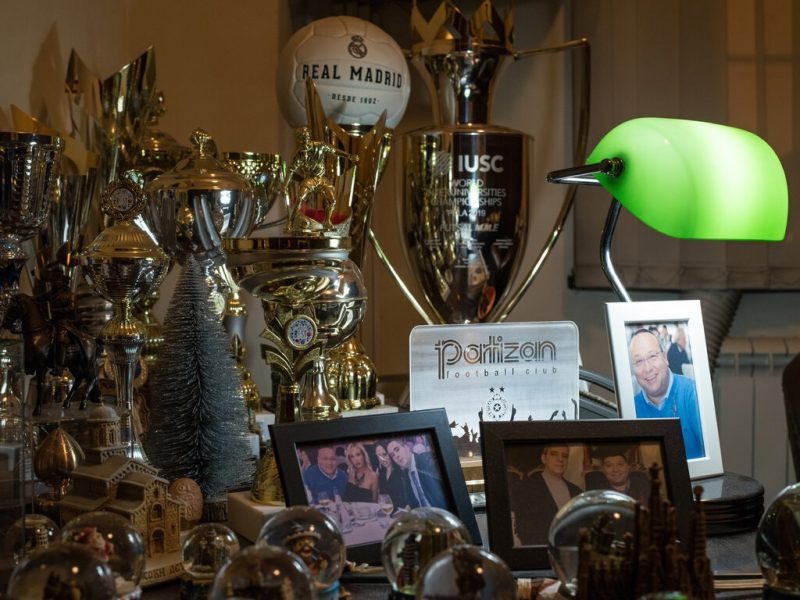
Immediately after the arrest of a suspect for the leadership of a criminal gang last month over a series of murders involving beheadings and tortures, Serbia's police officials had conducted raids on what they believed was the group's secret den: a bunker room in the inside of the stadium used by the football team “Partizani” from Belgrade, a team full of football stories in the Serbian capital.
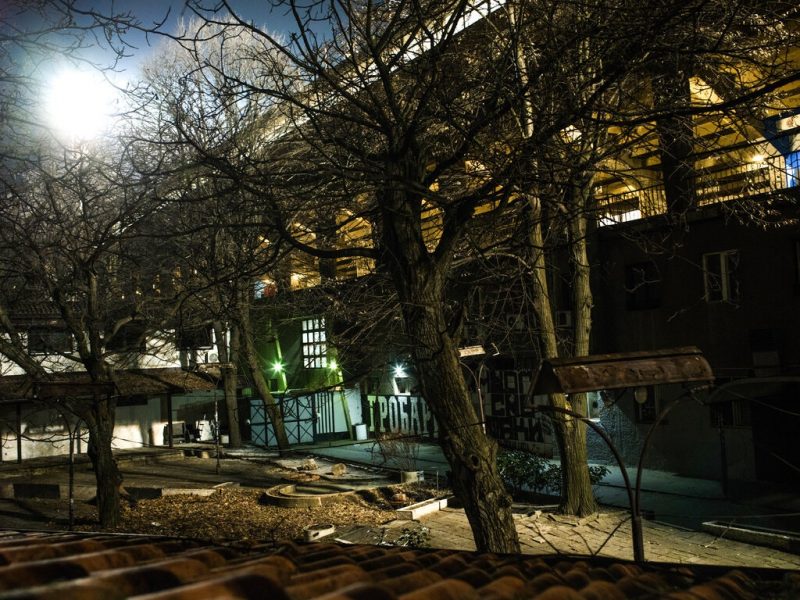
The room, located in a restaurant destroyed under billboards, has been closed as a crime scene because investigators seeking evidence of links between football hooligans and organised crime, found weapons there.
The outer wall is painted white and black with the name that Partizan fans use for themselves: “Grobari” (The disbelievers)
The name deserves such an epithet. Serbian football fans, at least those who in pre-pandemia days were involved in the turbulent stands south of the Partizan stadium and the northern side as anarchist of the arena used by their opponents from Belgrade as well, Crvena Zvezda (Red Star), have long had a reputation for extraordinary violence.
A French fan who traveled to Belgrade in 2009 to support his team, Toulouse, in a game against Partizan, lost his life after being beaten with iron bars and bicycle chains. On that occasion, 14 Partizan fans were convicted of murder.
Violent tennis has also made Serbian football fans, especially those of Belgrade's two rival teams, a powerful force in the streets and in Serbia's troubled politics.
The question now taking time for Serbia is what resulted in the arrest last month of Veljko Bellivuk, who is suspected to be a gangster and leader of a violent group of Partizan fans. For a long time he has acted with impunity and reportedly had close ties with government and security forces.
According to the government, Belivuk is a brutal mobster whose arrest signals a determination to curb criminal gangs that helped foster the terrible violence of the 1990s Balkan wars, which killed a reformist prime minister in 2003 and made Serbia's efforts to become a normal European country.
On March 6th, after state television broadcast horrible images of a severed-headed corpse and the crippled body of a young man with a tattoo of Crvena Zvezda on his leg, the alleged victims of the Bellivuk gang, President Aleksandar Vuciq, who is also a devoted fan of Club Crvena Zvezda, declared that our “posis is that we have put an end to this gang. ”
Investigators have also linked Belivuk to a long-standing drug war between two rival criminal clans for controlling a lucrative road of traffic across the Adriatic Sea from Serbia's neighbour Montenegro to Western Europe.
Ana Brnabiq, Serbia's prime minister, said in an interview that Vuciq, away from being Belivuk's partner, was his target. “I have reliable information that his life was in danger,” she said. “Was the time to act because of all threats made by organised crime.
However, she acknowledged that criminal gangs had developed strong “ ” connections to state and security structures and that these were now being investigated and eradicated. If there were no support in government”, she said.
Adding a broad view that Vuciq is hiding something, however, has been a vicious slander campaign in the pro-government media towards those who have challenged the president's story of a direct crackdown on organised crime.
Vladimir Vuletic, Belgrade law professor and former deputy head of the football club “Partizan”, who appeared in public on charges of a government co-operation with the arrested gang leader, has been viciously attacked every day on newspaper fronts that are supporters of Vuciq.
Brnabiq denies that this campaign was orchestrated by the government. Also tarnished by media fronts was Crick, a highly respected group of researchers journalists who have been reporting for years on connections between government officials and the Bellivuk gang.
Stevan Dojinovic, editor-in-chief of Crick, said organised crime in Serbia, and government officials, had long been linked to the brutal nature force “provided by football hooligans.
The politicians have always been afraid of our hooligans. Regardless of who is in power, they always create a partnership with them”, he said.
The difficulties of partnership with hooligans, however, were made evident by the collapse of former Serbian President Slobodan Milosevic. Under his rule in the 1990s, hooligans flocked to the ranks of state-sponsored paramilitary groups that committed crimes against humanity in Bosnia and Kosovo after the breakup of Yugoslavia.
Since Milosevic, for whom Vucic served as minister of information and whose security services worked closely with hooligans and criminals, was in serious trouble, it became clear when Red Star's ultrasound began to cheer “Slobodan kill yourself! (His parents had both died in suicide. )
Milosevic lost power in 2000 after the ultras led students and other protesters to attack the Parliament building in Belgrade.
When Yugoslavia, which was then part of Serbia, began to break down in the late 1980s, an early sign of the near war came in May 1990, when the Red Star traveled to Zagreb, capital of the Yugoslav republic of Croatia. The game was suspended after rival fans staged a violent clash and set fire to the stadium.
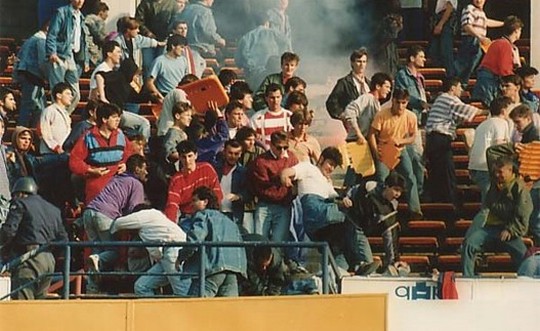
Among the supporters of the Red Star who had travelled to Zagreb for the match was Vuciq, who later boasted that he “balanced fought” in the games.
Polledica, chief of the Football Association, said: “our politicians are always afraid of the stadium and its terrible power. They know that any discontent in the stadium can spread quickly on the street. They want to control it”
He added he did not know why authorities had turned against Belivuk but speculated that Belivuk and his followers had gone too far. Everyone knew they were violent, beating people and making threats. But cutting off heads?
Belivuk's lawyer, Dejan Lazarevic, said his client was not yet officially charged and that there was no evidence to support charges of murder, kidnapping and other serious crimes committed against him by officials.
Professor Vuletic, said Belivuk and a hooligan known as “The sight of the mute”, who has since been killed, first took over in the southern part of the Partizan stadium shortly after Vucic became prime minister in 2014, and began beating anyone who cheered against him.
Suspects that Belivuk had powerful friends in the government, or at least law enforcement, have increased since 2016, when he was arrested on murder charges, but then released after DNA and other evidence against him disappeared or had to be rejected.
Crick, the investigative reporting group, later published photographs showing a member of Serbia's gendarmerie -- a police force -- attending football games with Bellivuk. At the time, the officer was in a relationship with a senior official responsible for the Interior Ministry.
This partnership with the government, said Dojcinovic, editor of Crick, collapsed last year for unknown reasons, perhaps due to an internal rift in the ruling Serbian Progressive Party of Vuciq, some of whose members have been caught in the Bellivuk investigation.
Among those questioned by police in connection with the case is Slavisa Kozeka, president of Serbia's Football Association. Kozeka, a senior official in the ruling party, was earlier an activist with an extreme right-wing nationalist dress run for years by a convicted war criminal.
All bad advertising has angered peaceful Partizan fans like Vladimir Trikic. Walking towards Belgrade's central circle, Dorcol, he showed the murals of artists, theatre directors and poets who have cheered for the club. The Partizan, though close to the former Yugoslav Army, said, “has always been a team for intellectuals”.
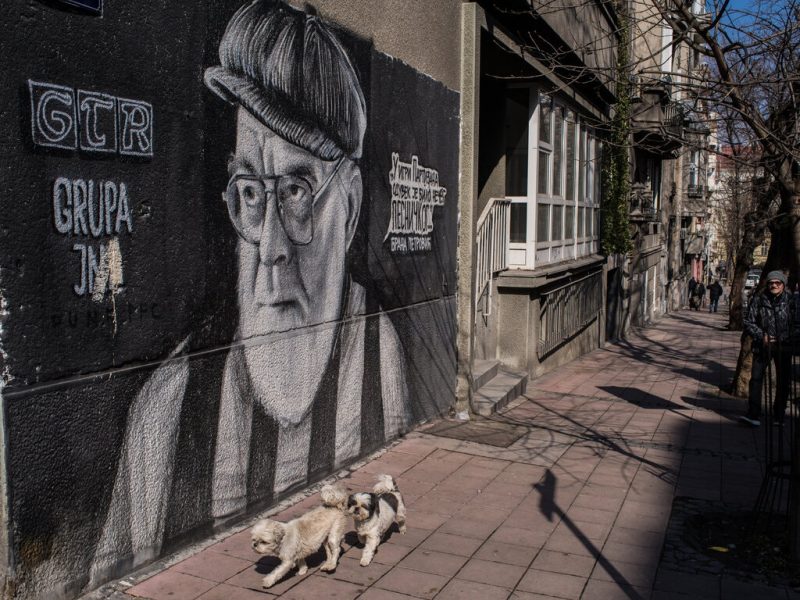
For Partizan's regular fans, Belivuk was never really a supporter, but a fraud sent by Vucic to control and discredit his team's bitter rivals.
At a Partizan game in Belgrade last week, held in front of largely empty trains because of the pandemic, Zoran Krivokapic was one of a small number of fans who managed to join the stadium. He said he had participated in every fight at home for 47 years and blamed Belivuk's rise and fall for what he said was a personal revenge against Partizan from Vuciq, the president.
“He wants to destroy Partizan and let the Red Star rise,” he said.