23 minutes ago
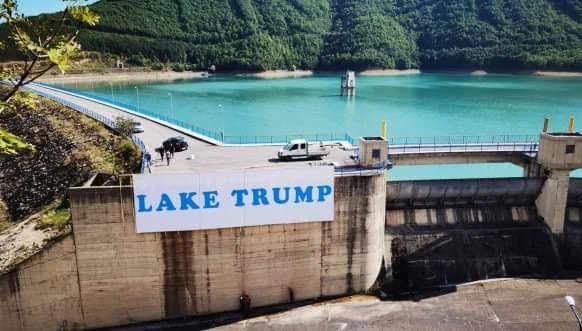
New York Times: How can you unite a deeply divided Kosovo? Name a lake named Trump
Periskopi(5 years ago)
(5 years ago)Most things in Kosovo have two names, and this is usually not a big deal. The two communities, which rarely mix and have deep doubts about each other, use anyone they wish. The New York Times But what it is called is a reservoir of about 13 square miles [13 sq km] of surface that extends to [...]
The New York Times
But as the reservoir, with about 13 square miles [13 sq km] of surface extended to Serbia but extending mostly to Kosovo, became a problem at the end of last year, when officials of the two countries were involved in an unusual diplomatic push by the Trump administration to heal the toxic rift between the two communities.
The effort, led by Trump's ambassador to Berlin, Richard Green, put the State Department and the European Union aside for years, with little success, to convince Serbia to accept Kosovo's existence as an independent state. Separated from ethnicity, language and history, the Albanian population majority and Serb minority in Kosovo disagree almost nothing, especially on the status of the country they share.
Hoping that common economic interests can help unlock the inconsistent political obstacles, Mr. Grenelli, whom the White House appointed as special envoys in an effort to negotiate the agreement for Kosovo, proposed that experts from the Department of Energy be sent to examine the update of the hydropower plant in the reservoir, which would potentially benefit both sides.
In what began as a joke, Mr. Green suggested that the appointment of the lake by Trump can help. But the joke got serious. Kosovo Prime Minister Avdullah Hoti, through a post on social networks, said that “welcomes Ambassador Green's proposal that Weiman Lake be called Lake Trump”.
Officials in the Serbian capital, Belgrade, interested in satisfying Trump, who they considered to be closer to their side that other American presidents also welcomed the idea.
Kosovo, perhaps the most pro-American state in the world, already has the “Bill Clinton” and a statue of the former Democrat president who headed NATO's bomb campaign against Serbia in the late nine years, a clothing store named “Hilary” and a street with the name of the late presidential son of Biden, Beau, a military officer who provided help to train Kosovo judges after the 1998-99 war.
Ethnic Albanians are very grateful for the United States, who rescued them from Serb violence in their 90s, that “almost everything proposed by America will be accepted, regardless of what is crazy”, says Valdete Idrizi, Kosovo Assembly MP from Mitrovica. “Without the United States, we would not have Kosovo state”, she adds.