2 hours ago
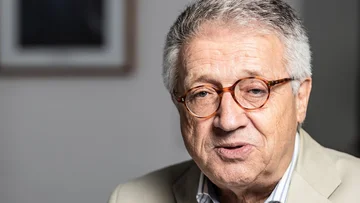
Blerim Latifi tells Luljeta Ali, what Kraleva is for Drenica residents.

Periskopi(5 years ago)
(5 years ago)Philosopher Blerim Latifi is involved in the Kraleva debate, saying the name Kralev in Skenderaj has the same significance as the Holocaust. In a Facebook text, Latifi has also given his reasoning on the findings, showing that after Azem Bayta's assassination, Serbian power had managed to establish a town [...]
In a Facebook text, Latifi has also given his reasoning on the findings, showing that following the assassination of Azem Bey, Serbian power had managed to establish a town right where Sarajet Osmane was supposed to be built.
After the assassination of Azem Bata and the disappearance of the Cacak Movement in Drenica and Kosovo in 1924, Serbian power decided to establish a town just where the Ottoman Sarajet were supposed to be built, whose name had been set on fire in 1891 by Ahmet Delia, setting it flat. The town would have administrative functions and would serve as a settlement for Serb settlers, which Serbia was placing around Kosovo under what was called agrarian reform, which was actually a plan of colonising Kosovo with Serbs brought from other parts of the then Yugoslav Kingdom. By that, it is understood, the change of the ethnic structure of the Kosovo population was targeted, which in most of it was Albanian. At first, Serbs had a dilemma about what name toʹte the new town. Some wanted him to be called Serbia. Some wanted to be called Little Kralev. The name Serbia was eventually chosen. Both names, in a very extenuating way, expressed the purpose of Serbian power -- the Serbisation of Drenica's territory, and this had to begin as soon as it was appointed. The name Kralev in Skenderaj has the same meaning as the name Holocaust for Jews. That's a name that bleeds. So don't mention that name to my countrymen, even when you don't think politically like them, but even when they make a mistake, as all the people of this world (4)x1> wrote.