27 minutes ago
Story of the boxer awaiting the death penalty for 50 years
Periskopi(6 years ago)
(6 years ago)Such a story is expected in totalitarian countries or in countries where crime has frightening statistics, such as in the United States, where 655 people are located in cells every 100,000 people. But in Japan, where this statistics go down by figures of 39 every 100,000 people, the 83-year-old Iwaho Hakamada [...]
Such a story is expected in totalitarian countries or in countries where crime has frightening statistics, such as in the United States, where 655 people are located in cells every 100,000 people.
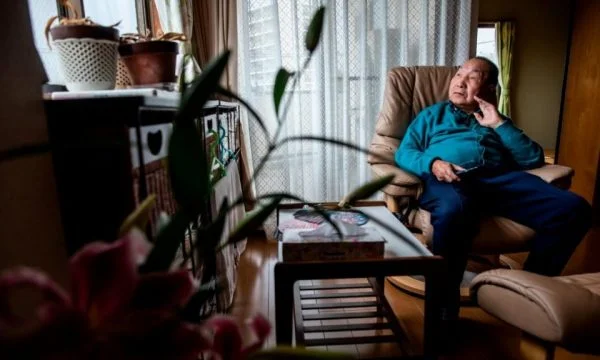
But in Japan, where this statistical goes down with the figures of 39 every 100,000 people, the 83-year-old Iwaho Hakamada looks like a Kafka novel, more than Muraka's.
Hakamada in 2014 was declared to be the death penalty awaiting the execution of more time in the world, totaling 48 years.
Today in 2019, after DNA evidence freed him in 2014 from the murder charge, he could be sent back to prison.

Hakamada was a talent of Japanese boxing in the '60s, as she was preparing for professionalism when an illness interrupted her career. He started work in a factory that produced soy oil, but his life was interrupted when in August 1966 he was charged with killing his owner and his family, and burning the house with their bodies inside.
The police, driven by public opinion that wanted one guilty, began investigating and questioning Hakamada for hours, while the only test was a pair of blood pants.

The former boxer was sentenced to death, with 2 judges in favour of sentence, and 1 against. The latter, in protest of treating convicts, left the profession forever.
But in 2004, The blood of pants was analyzed in the laboratory, and it ruled out the possibility that victims could. It took 10 years longer for him to be released temporarily, now old and sick.
But this year the Japanese Supreme Court decided not to reconsider the case, risking another return to prison for the Japanese, who has spent half a century in the cell.
The reason, according to analysts, is at the Japanese penal system, which has a 99.9% record. In practical terms, prosecutors, few in number, only prosecute cases where they are certain of the authorship of crime, and innocence is almost impossible.
This means that public opinion is extremely difficult to change the view of a convict. The first one to know this is Hakamada, whose son has no longer met his father in the last 53 years.