32 minutes ago
How is South Korea coming out of the coronary pandemic?
Periskopi(6 years ago)
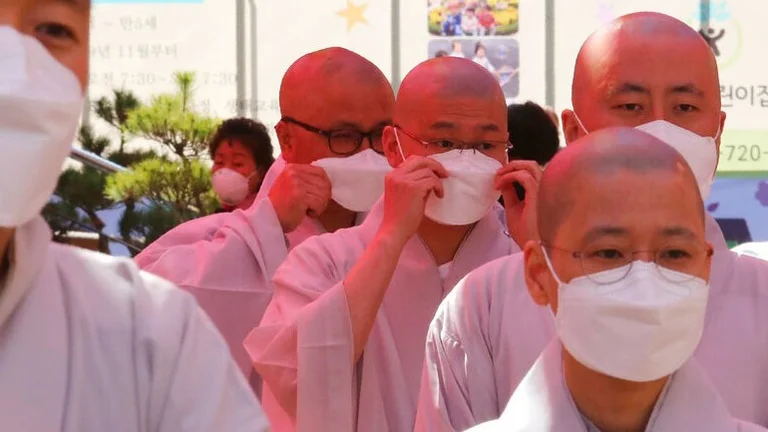
(6 years ago)After China, it seems that South Korea is also gradually emerging from the coronary crisis. The country has shown how it is possible to soften and “it is reduced to quaba” of the pandemic of new infections. While it seems to be an example to imitate, experts are not sure whether the rules of Korea [...]
After China, it seems that South Korea is also gradually emerging from the coronary crisis. The country has shown how it is possible to soften and “it is reduced to quaba” of the pandemic of new infections.
While it seems to be an example to imitate, experts are not sure whether South Korean rules can be widely applied and functional in other countries.
The scenario used by these two countries to exit the crisis is only four rules the countries decided to enforce strictly.
These four rules are:
- Quick pre-crisis intervention
- Time measures and test of most of the population.
- Feelings of affected persons, isolation and surveillance.
- The vast cooperation of citizens.
The World Health Organisation cited South Korea as an example that the virus can be stopped and called on other countries to implement its rules elsewhere”, foreign media write.
In fact, some countries, such as France and Sweden, are now trying to imitate it, but late enough, and they may not have similar results in the fight against the Coronavirus.
South Korea, a country of 51 million people, had reached the peak of the new infections curve on March 3rd, with 851 confirmed cases that day. While all feared that the situation would go far, in less than a week the new explosions had fallen in half and had again fallen in half four days later.
Since then the number of new diagnosiss has been steadily reduced, and on March 24 there were only 76 new cases and nine deaths.
Total so far has had 9,037 cases and only 120 deaths, one of the lowest mortality rates. However, the government is cautious because of fear of a new explosion, as the epidemic has not yet erupted, especially at the country's borders, foreign media write.
Why must the four rules of South Korea be applied?
- Quick pre-crisis intervention
Just a week after the first case confirmed at the end of January, the government urged the country's medical companies to immediately develop a coronary test and produce it en masse. Within two weeks thousands of tests were produced every day, and today the country produces 100,000 daily, discussing 17 export locations.
- Time measures and test of most of the population.
South Korea has tested many more people than any other country, which has allowed it to isolate some virus broadcasters and start treating patients earlier. He's done over 300,000 tests, at least 40 times more per capita than the U.S. The country's foreign minister told the BBC that “tes are the key to very low mortality”.
To avoid streaming to hospitals, the government has opened 600 centers exclusively for the testing of Coronobrus. In 50 you don't have to get out of your car to do the test.
How is this done?
Doctors give the driver at the window a questionnaire to complete, calibrate him, and take a sample from his neck for proof, a process that doesn't take more than ten minutes, as test results emerge within hours. Continued public messages encourage citizens to go to a testing centre if they have suspicious symptoms, while hotels and offices often use thermal cameras to detect people with fever. Many restaurants (not closed) control the temperature of their customers before accepting them.
- Feelings of affected persons, isolation and surveillance.
When a person is found to be positive about the virus, all his family members are checked and then isolated if necessary.
The country has been able to identify possible human transmission networks at the right time. However, this is followed by practices that are difficult to tolerate in a European country, such as the widespread use of security cameras on the street, monitoring debit card details to detect any suspicious transactions, tracking its routes through GPS data registration and analysis, mobile phones and cars, etc.
These practices are allowed through changes in national legislation, which give social security priority over personal data protection, something South Korea has generally accepted.
When someone believes he's holding hands, or had contact with a positive test, he is urgently required to go for a trial.
Those in voluntary quarantine must download a mobile app warning authorities if they leave their home with fines of up to 2,500 dollars.
- The vast cooperation of citizens.
Citizens have been informed from the start and their co-operation has been required. There is a almost combat spirit of a common national goal in the country, the government enjoys great faith, public panic is small, and citizens are not heavily supplied with food as in many other countries.
How much can the Korean model apply to other countries?
For experts this is difficult, as they see three main obstacles:
- Lack of political will by governments
- The absence of such high public cooperation
- Time delay
For some countries and those who might really want it is probably late to do what Korea” ...