9 minutes ago
19 years from the start of war in Macedonia
Periskopi(6 years ago)
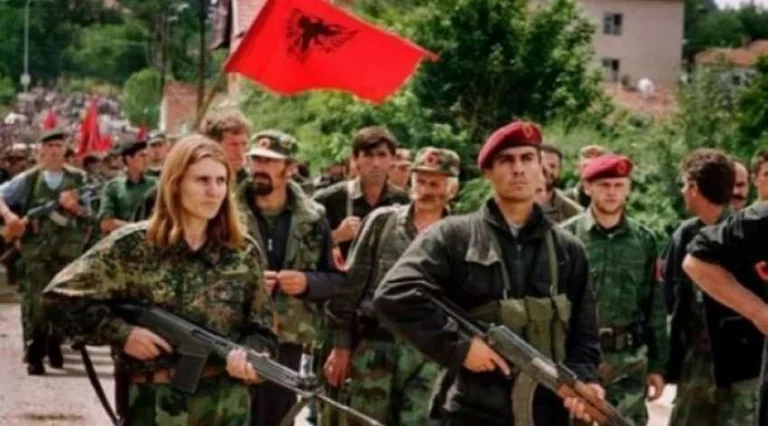
(6 years ago)Today it is 19 years old from the beginning of the war in the former Yugoslav Republic of Macedonia, which after resolving the name dispute with Greece is now called Northern Macedonia. Two years after the end of the war in Kosovo, it was the Albanians of Macedonia who would take up arms again under the KLA. It was founded [...]
Today it is 19 years old from the beginning of the war in the former Yugoslav Republic of Macedonia, which after resolving the name dispute with Greece is now called Northern Macedonia.
Two years after the end of the war in Kosovo, it was the Albanians of Macedonia who would take up arms again under the KLA.
Another army was established, which would try to change the Albanian fate of the former Yugoslav republic by the mouth of the rifle, where the decades-old Macedonian element had become dominant, which in the new conditions of independence had still deepened the oppression of the Albanian element.
Albanians who had to live geographically in this country, originally through the highest act of a state in 1991, lost the rights which they formally enjoyed with the 1974 constitution.
Even though the 1991 Constitution was adopted without the votes of Albanian deputies, the multidimensional discrimination flow continued further.
Also at this time, Macedonia was plagued by unemployment, extreme poverty, corruption, economic crime and successive economic crises, which had taken on enormous proportions.
As a result of the fatigue and distrust that sometimes Albanians and Macedonians can live together, the National Liberation Army decided to bring the matter to its end.
Through this war, the international factor, shared by that Albanian political factor, which, through intense diplomatic efforts between the political factor in power, military and international, came to an end this war, whose end was either at the negotiating table between the parties infiltrated in the whirlwind of this war.
The conflict led to the famous Ohrid agreement. It is built on five fundamental principles, which were associated with constitutional changes, which confirmed the multiethnic Macedonian society and were sanctioned that Albanians are state-form ethnicities.
The Framework Agreement aims at calm and harmonious development, while simultaneously respecting the ethnic identity and interests of all citizens of Macedonia.
This was guaranteed through its content, where decentralisation was among the main points, as it secured their governance from the largest community of population making up.
The Ohrid Agreement obliges central government authorities to ensure fair representation and no discrimination. Reflected in the law, this point of the agreement required that in employment in public administration «fair representation of communities in all central and local public organs and at all levels of employment in these organs.
Constitutional representation is required to be made on the proportion of representation in the Assembly according to ethnicities. Albanians who make up over 30 % of the population through the Ohrid Agreement are guaranteed the right to use as an official language, along with the Macedonian and Albanian language, as well as national symbols.