23 minutes ago
Businesses in Kosovo do not support tax, reciprocity
Periskopi(6 years ago)
(6 years ago)Some of the production businesses in Kosovo say they are neither in favour of maintaining the 100 per cent tax imposed by the past government on imports from Serbia and Bosnia and Herzegovina, but neither for reciprocity. These businesses say they favour an business environment where there is equal competition and [...]
Some of the production businesses in Kosovo say they are neither in favour of maintaining the 100 per cent tax imposed by the past government on imports from Serbia and Bosnia and Herzegovina, but neither for reciprocity. These businesses say they favour an business environment where there is equal and fair competition.
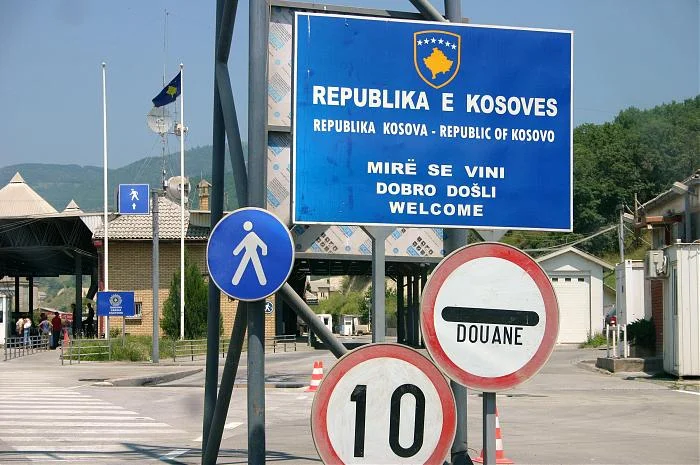
Last government, in November 2018, had imposed a 100 per cent customs duty on imports from Serbia and Bosnia and Herzegovina, but this tax is currently being considered by Prime Minister Albin Kurti's new government to be replaced with full political, economic and trade reciprocity towards Serbia.
Bedri Kosumi, owner of the company “Pesova”, which deals with processing and production of potatoes, told Radio Free Europe how producers want to be equal in the market and nothing more.
We ask nothing more than to be equal. If someone has the right or the balody of another state is present in Kosovo, the same is true for us to accept the balde and our products to be allowed to be present in that state”, Kosumi says.
“We do not fear competition, but we seek to be equal. Serbia's products are neither better nor cheaper, but the truth is that Serbia's boat is accepted in Kosovo, meanwhile if we want to sell our products in Serbia, the boat, which is 039 and as an identifying sign of Kosovo, is not allowed in Serbia”, Kosumi says.
During this week, Kosovo Prime Minister Albin Kurti, at the Kosovo Producers Convention, has stressed that 100 per cent will be removed and full trade reciprocity implemented with Serbia.
Kurti has said that the government he leads is not for tariffs as a punishment measure against consumers, but for reciprocity as a safeguard measure against producers.
The “products produced in Kosovo, which are subject to non-combat practices and competition, will be protected. The principles of reciprocity to be drawn by the Government of Kosovo will be based on principles of the World Trade Organisation (OBT) and on CEFTA”, Kurti said, adding that his government would not make a decision on economy and productivity without discussing and consulting producers.
Prime Minister Kurti has said that once he receives the working group's recommendations, composed of institutions and business representatives, which will sum up all trade barriers with Serbia, he will analyse recommendations and make decisions on tax evasion and setting reciprocity.
Syleman Konushevci, owner of the oil factory “Inter-comany” from Podujevo, tells Radio Free Europe that they would like the new government to succeed in creating a good business businessman and equal in the market.
“Under normal conditions, if Serbia were a state which would be a good neighbour and would recognise Kosovo's independence, it would need neither tax nor reciprocity. But, given Serbia's behaviour in relation to Kosovo, the tax has been good for us producers, since Serbia with a strong economy has damaged us. Similarly, Serbia has not respected any trade agreements, as is CEFTA. Serbian products that have come to Kosovo have had support and stimulus from the state of Serbia”, says Konushevci.
It shows there have been numerous cases when they exported their products to Serbia, but there the problem was with non-recognition of Kosovo documentation, so they have faced numerous trade barriers.
We have had cases when we exported products to Serbia, our models have stayed up to 20 days in Serbia's terminal and have sent the merchandise to numerous analysis, preventing it and placing barriers in order not to allow our goods to enter their market”, says Konushevci.
The removal of a 100 percent tax on products originating from Serbia and Bosnia and Herzegovina has also been requested by representatives of the American Economic Ode in Kosovo (OEAK).
OEAK Executive Director Arian Zeka had told Radio Free Europe that it is necessary for the fee to be removed, as it is contrary to the spirit of commitments Kosovo has undertaken in relation to other states.
“Tarifa, as such, needs to be reviewed and removed immediately on the part of the new government so that we can move to another stage where it is discussed new reports, both commercial and other freedoms that can be discussed. We need to talk about eliminating all problems of the political nature that have existed in the past, which would then enable recognition of documentation, even recognition of the full procedures issued by one state and are recognised by the other state”, Zeka said.
Since the introduction of a 100 percent tax on products imported from Serbia and Bosnia and Herzegovina, imports from these countries have dropped by 99 percent.
Before the customs tax was imposed, Serbia was the largest exporter of products in Kosovo. This state, before November 21st, of 2018 when taxes were imposed 100 per cent during one day has exported goods worth about 1.2m euros or about 450m euros in one year to Kosovo.
The 100 per cent tax on imports from Serbia has influenced dialogue on normalisation of reports between Kosovo and Serbia to end. Against this tax, since its establishment, the United States and the European Union had been declared.
Meanwhile, recently, following the formation of the new government, diplomatic pressure on official Pristina to abolish the tax decision has increased, with the aim of even dialogue between Kosovo and Serbia continuing until the achievement of a peaceful agreement between the two countries. The United States is demanding that after the tax is lifted it will not impose other barriers, including the measure of reciprocity.