a minute ago
Ethiopia's army kills 42 people after the Benisalul-Gumuz massacre
Periskopi(5 years ago)
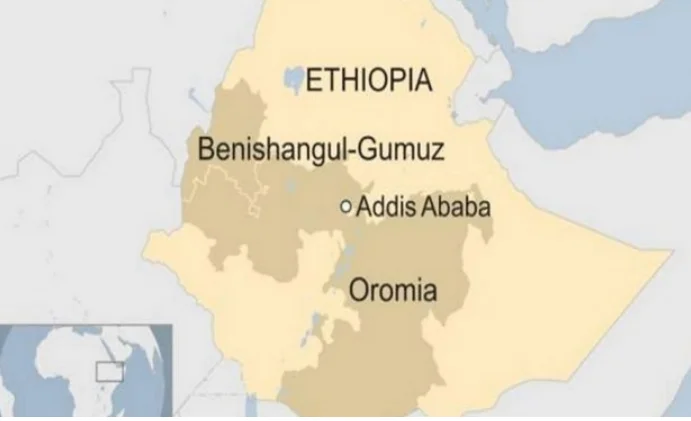
(5 years ago)Ethiopia's military has killed more than 40 men allegedly linked to the massacre of at least 100 people, including children, in the Benisalun-Gumuz region, state media reports. Five current and former government officials were also arrested because of the security crisis, reports added. Strikers burned the homes of villagers sleeping and [...]
Ethiopia's military has killed more than 40 men allegedly linked to the massacre of at least 100 people, including children, in the Benisalun-Gumuz region, state media reports.
Five current and former government officials were also arrested because of the security crisis, reports added.
The attackers burned the homes of villagers who slept and shot and stabbed people in Wednesday's attack.
The attack came a day after Prime Minister Abiy Ahmed visited the region, the BBC reports.
It is unclear who the attackers were, but they seem to have targeted the communities of ethnic minorities viewed as “kolons” in the region, said Amnesty International rights group.
Ethiopia has seen an increase in political, ethnic, and religious violence in recent years. It had the highest number of internally displaced people in Africa in 2018 c. about 1.8 million.
Conflicts have been promoted mainly by groups demanding more land and energy, with efforts to expel people whom they view as foreigners.
Abiy described the massacre as tragic and said the government had deployed a force in the area to help find a solution to the conflict.
State media did not disclose 42 people killed in the military operation to prosecute attackers. Weapons, including bows and arrows, were seized, said in the report.
A deputy minister in the government was among five persons arrested, state media reported.
A spokesperson for the Ethiopian Commission for Human Rights linked to the state told the BBC that armed people carried out the attack in the western Benisalun-Gumuz region on Wednesday.
“They went down to a village and while their victims were asleep, they set fire to their houses but also shot and killed civilians,” said Aaron Maasho.
Amnesty International said he had talked with five survivors and an official who reported that members of the Gumuz ethnic community attacked people's homes from Amhara communities, Oromo and Shinasha.
“While Amnesty International is unable to verify the identities of authors, this attack appears to be the last target of people of ethnic minorities in the area. With dozens still undiscovered and houses still lit, the death toll is likely to increase and there should be an urgent investigation into this horrific attack,” he added in a statement.