3 minutes ago
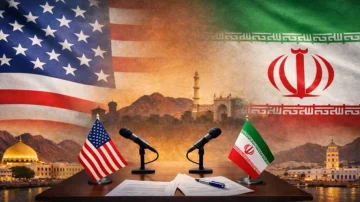
Is the U.S.-Iran War near?

Periskopi(7 years ago)
(7 years ago)Will the United States Fight Iran? Maybe not. Should the United States go to war against Iran? Maybe not. There's no way that we can find ourselves in a war with Iran at a close time, because both sides are eager to avoid it. Although, [...]
Although some of President Donald Trump's advisers may welcome a clash with Tehran, he has repeatedly made it clear that he wants to end American wars in the Middle East and not start a new war. This approach, has been behind its drive to pull American troops from Syria, and its unwillingness to get more involved in Yemen's civil war.
On the other side of the Persian Gulf, Iran's Supreme Leader, Ajothallah Ali Khamenei, announced there will be no war. If you don't believe him, Iranians have usually shown great respect for the conventional American military power, since they confronted him indirectly in the late 1980s.
They know very well that in a full-scale war, the U.S. would cause a tremendous damage to Iranian armed forces, and this could put the regime at serious risk, the scenario Tehran is trying to avoid. Of course, just because the two countries do not want a war between them does not mean that they slip into one.
In view of current tensions, created by American pressure on Iran and Tehran's new efforts in the form of rebuttal, the defeat of additional US military forces in the region, and the tendency of Iran's Revolutionary Guard, which occasionally takes unauthorized aggressive action, no one should rule out an intentional clash between 2 countries.
Even then, the most likely scenario would be a limited American attack to show Iran that it should keep its troubled “children under control. Over the long term, there are other threats. Due to its military weakness compared with the United States (and Israel), Iran has preferred to use cyber terrorism and attacks more frequently directed at American allies than the US itself to create problems for Washington, but without creating an excuse for an American military response.
We've already seen this, with mysterious attacks on Saudi oil carriers on the shores of the United Arab Emirates, and attacks on Huthi's allies at Saudi oil pipelines. These attacks have double benefits for Iran, harming (and potentially humiliating) an important American ally, while simultaneously increasing the price of oil.
In the past, Iranians have undertaken cyberattacks on the computer network of the large Saudi company “ramco”, which controls the Saudi oil network. If Iran continues with these kinds of activities, the US and its allies will seek new ways to prevent and overcome Iranian attacks.
At one point, the United States (or the Israelites) may decide to retaliate with a military attack. And Iranians may feel compelled to respond with the same coin, only to show that they will not take a handful of faces without turning one against the enemy.
Again, there is good reason to believe that this would be the end of the regime, but it is not impossible to start something bigger. We should also remember, that sometimes in the past, Iran has overcome itself, undertaking terrorist attacks they could have (and should have) crossed the red line, removed from the US.
In 1996, Iran blew up the Khobar Toweers complex in Saudi Arabia, killing 19 people, and injuring nearly 400 American military. In 2011, Iran plotted to blow up a restaurant in Washington while Saudi ambassador was dining there.
The attack was prevented before it could be executed, but if accomplished, it could have killed several people in the American capital. These were Tehran's careless movements at the time of intense tension that could easily have caused an American military response.
Finally, it is the most important issue of all: Should the United States seek to enter a war against Iran? A war with Iran for me is meaningless, and I say that as someone who would like to see the United States make a much more determined effort to ward off Iran's aggression and expansion in the Middle East.
But the best way to do that is by helping our allies throughout the region, allies who are justly afraid of the achievements Iran has scored in Iraq, Syria and Yemen over the past decade. The best reason not to go to war with Iran is that we'll definitely win it.
But, by winning, we can cause the collapse of the Iranian regime, which would create the same kind of chaos and internal conflict in Iran, which caused our failure to prepare for a complete reconstruction of that country in Iraq as well. And like Iraq, we would find Iran too important to let it sink into such a mess.
So if you liked the Iraq War, you'd probably want a war on Iran, because there's a population 3 times larger, an area 4 times larger, and 5 times more problems than Iraq. Winning such a war with Iran, only to carry out its extraordinary effort to stabilise and rebuild it, probably will not feel as much as a victory.
“Fox News” ) World.al/Analize by author Kenneth M. Pollack