4 hours ago
Your eye color affects depression during winter

Periskopi(8 years ago)
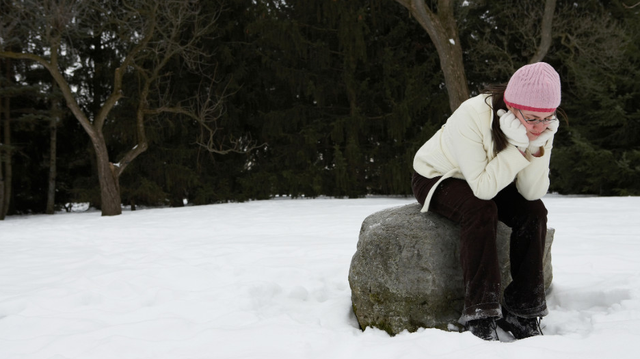
(8 years ago)For some people, cold temperatures and shorter days call to mind the wonders of the cold season, the comfortable evening near the chimney with bubulac fire. For others, though, this season translates into despair, scientists say there may be an indicator of why some people suffer from seasonal emotional disorder (SAD), while [...]
Scientists say there may be an indicator of why some people suffer from seasonal emotional disorder (SAD), while others do not. According to a recent study, the color of the eyes can play an important role.
The new research, published in the magazine Science and Behavioral Psychological, revealed that people with soft or blue eyes sought less seasonal moods during the winter, as well as problems with weight, appetite, sleep, and social activity.
The study included 175 university students and graduates of the South Wales and Cyprus at an average age of about 24.
The reason why eye color can make people more prone to depression or mood change may be because of the amount of light that can process the eyes of an individual”, writes Lance Workman, PhD, the principal author of research and psychology at Wales University.
Eyes with less blue or gray pigments, for example, are more sensitive to light, which means they don't need to absorb so much for their retinal cells to get and process images. This also means that people with shades of open eyes release less melatonin during autumn and winter.
Melatonin is a hormone produced by the body that helps us to sleep. However, some experts believe that many melatonin, or melatonin imbalance, and serotonin, another hormone that regulates mood conditions can make people feel tired or depressed.
Therefore, Workman wrote, open-eyed people produce melatonin less and may have “resistance to seasonal emotional disorders”, even though he points out it is not guarantee against winter depression.
Previous research has also suggested that people with brown or dark eyes are more likely to be depressed than those with a blue shade.
Of course, Workman says that eye color is not the only factor in determining whether one will develop seasonal depression or not. People who spend many hours indoors are also more vulnerable to depression. /Telegraphy/