27 minutes ago
BBC writes about Presevo: Brotherhood and Hatred Between Serbs and Albanians

Periskopi(7 years ago)
(7 years ago)It is ethnicity that determines where you will drink coffee in the Serbian town of Bujanovac, near the border with Kosovo. “Albanians and Serbs do not use the same cafe,” said Valon Arifi, an ethnic Albanian. The city's population is Serb in majority, but in the wider region Albanians are more numerous. That's why [...]
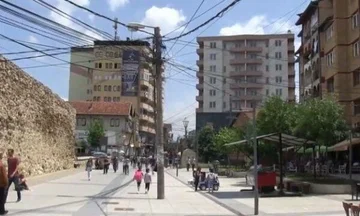
It is ethnicity that determines where you will drink coffee in the Serbian town of Bujanovac, near the border with Kosovo.
“Albanians and Serbs do not use the same cafe,” said Valon Arifi, an ethnic Albanian.
The city's population is Serb in majority, but in the wider region Albanians are more numerous.
That is why the Presevo Valley has been at the heart of speculation: could it be part of the exchange of territories to end once and for all the enmity between Serbia and Kosovo?
“ [People here] drink coffee together unless they do any shopping, on business issues,” said Valon. But drink together as friends? This doesn't happen. ”

And if you order an express on a wrong “cafe” in Bujanovac, you will soon receive the message.
Could be something like, “Albanians are not welcome here”. And in Albanian cafes, it may be something similar, but against Serbs,” adds further.
Ethnic division is part of life in the Presevo Valley, a poor corner of Serbia.
Where you live, where you take your children to school, the language you speak, and if you go to church or to glass they reflect on your origin.
Why English exchange?
Since the bloody war between Serbia and Kosovo in 1999, relations have remained tense. Serbia never recognised Kosovo's independence, declared by the latter in 2008.

But, the EU requires Serbia to reach reconciliation with its neighbour before moving towards EU membership. Kosovo, meanwhile, seeks formal recognition to the UN, which is blocked by Serbia's ally, Russia.
A dramatic solution, some say even unthinkable to conclude the dispute, may be to exchange territories on ethnic grounds.
Kosovo would take the Presevo Valley, while the Serb majority region in Kosovo would become part of Serbia.
But nothing has been decided and no one knows where the new boundaries will be drawn, translates Periscope further.
Meanwhile, tensions have only increased with Kosovo, which has imposed the tax on 100% goods exported from Serbia.
To the northwest of Bujanovac, even closer to the Kosovo border, the Trnovci community is exclusively Albanian.
The proposal that Presevo Valley joins Kosovo is not new. After the war, Trnovci became the key to the paramilitary forces that fought Serbia until 2001 with such a goal.
Aridona Shaban, returning home for vacation from medical school in Tirana, would like that. As she grew up, she had no Serbian friend and does not speak that language.
“I like that language, it says.” It's not as interesting as English or French. ”

Her mother, Jevahir, may not drink coffee with Serbs she knows, but she speaks their language, though.
“We lived in the former Yugoslavia when Serbs and Albanians were thought to be united,” remembers it.
This generation grew up in times of war, when hatred was promoted. Those harsh experiences have led young people to leave each other. ”
A few miles east, Rakovci is another case.

“Rakovci is an old Serbian village. We do not want to be part of Kosovo,” says Vukasini, who is in his 20s.
If the border were revised and Rakovci became part of Kosovo, would there be danger of violence?
The “could happen,” said Dragoslav, who like many others in that country is unemployed but dealing with selling wood.
Exhausted by politics, Stojko Yianqi regrets the split between communities.
I worked with Albanians for 17 years,” he remembers. “I had better friends among them than among Serbs. They still want to be friends with me, but they're afraid to see me because they'd be considered a traitor to their community. ”
In one area, at least, ties are strong between the two communities.
On a basketball team in Bujanovac, young Serbs, Albanians and Roma, exercise together.
As I was growing up we all played together, but things changed because of the war,” said the founder of the club, Nenad Stajik, Serbian.
I have a philosophy: everywhere in the world, children cry the same, no difference between them. Young people live together, work together, make friends. ”
Hevzi Imer, ethnically Albanian, and Danilo Dabetiq Serb, have aspirations to become professional players and good friends.
“Danilo is like my Albanian friends, except he speaks another language,” said Hevziu, who speaks Serbian well.

And this society among them goes against the culture of sharing coffee in Bujanovac.
We go out to have coffee together, hang out at night, go to birthday parties together,” said Danilo.
But all of this can change if the boundaries are revised. /Periscopi