18 minutes ago
Serbia keeps energy line blocked between Kosovo and Albania

Periskopi(8 years ago)
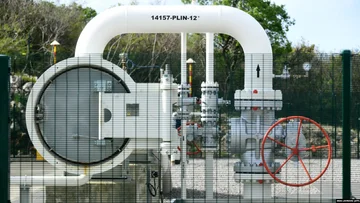
(8 years ago)The interconction line between Kosovo and Albania has been inaugurated for two years, but which still remains dysfunctional due to Serbia's blocking release in circulation, officials in the Government of Kosovo say. This line was declared completed, inaugurated and tested in June 2016. Line interception 400 kilowatt [...]
This line was declared completed, inaugurated and tested in June 2016. The 400 kilowata interconction line between Albania and Kosovo has a total length of 241.1km, of which 151.1 km extends to the territory of Albania and 90km on Kosovo territory, has cost 75.5m euros.
Over 33m euros were financed by Kosovo, while another 42m from Albania.
Minister of Economic Development in the Government of Kosovo, Valdrin Luka, says the pressure by the Government of Kosovo to solve this problem has increased greatly.
But, official Belgrade, according to him, is hindering the deadlock of the line, insisting that the energy deal be established in Pristina talks, Belgrade, under way in Brussels with the European Union's mediation.
This thing's got a bigger momentum, we're much more dynamic. We already have a German negotiator, former Germany Environment Minister Klaus Toepfe, who is helping us solve the problem, between Kosovo and Serbia”.
“We are in discussions. At the last meeting we were together agreed to look at a political-level meeting in Berlin, between Kosovo and Serbia, with former German minister's mediation to see the solution of the problem as quickly as”, Luka told Radio Free Europe.
Meanwhile, former Kosovo Government Minister for Dialogue Edita Tahiri for Radio Free Europe estimates that in this direction a more serious commitment of the Government of Kosovo is missing, but that the European Union, according to her, is not putting enough pressure on Serbia.
Now when Kosovo has begun the process towards implementing the Association Agreement, she says, it is time for Serbia to implement the energy agreement, but also other agreements it is not implementing.
Then in a way the European Union is not a mediator who is following the time schedule and obligations of both sides”.
“Then, the Government of Kosovo should be more vocal, I don't see it being loud. This government has only held a technical meeting in Brussels once, and it has failed. So, I'm not seeing serious commitments in this direction from our government”, Tahiri says.
She also said Belgrade is stalling the implementation of agreements reached with Pristina, trying to get them to bear for the final phase of the talks.
Unlike the failure to implement the energy agreement, signed in 2013 between representatives of Pristina and Belgrade, Kosovo's state loses about 25m euros a year, Minister Luka says on the other hand, including the blocking of Kosovo-Albanian energy line.
“About 10m euros from the transmission tariffs, which energy passes through Kosovo, and Serbia runs the means on behalf of Kosovo. We have up to 11m euros that northern citizens do not pay off the energy spent, 2m euros are lost due to the non-activation of the line, and also about 2m euros paid for return of credit that has become net investment”, Luka said.
The Kosovo Interconciess Line has been blocked because of the failure to implement the energy agreement between Pristina and Belgrade, which has been reached in Brussels.
On the basis of this condition agreement for Serbia is the registration of a new Serbian company, according to the Kosovo legal framework, which will power consumers in the four Serb majority northern municipalities.
The competent Kosovo authorities have met all the criteria and conditions for registering this company, but that Serbia is not making such a move.