10 minutes ago
What foreign powers require of the Syrian war

Periskopi(8 years ago)
(8 years ago)The Syrian opposition and the loyal forces of President Bashar al-Assad are not the only ones in this conflict. Other countries continue to pursue their own interests. Iran Tehran has been a powerful Assad protector, supporting its troops with money, weapons and intelligence equipment. Iran has also sent military advisers [...]
Iran
Tehran has been a powerful Assad protector, supporting his troops with money, weapons and intelligence equipment. Iran has also sent military advisers from Hezbollah-led revolutionary guard, a Lebanese-based militant group who have also been involved in the conflict.
Tehran's participation in this war portrays itself as a protector of Shiism the sect of Islam that makes up the majority in Iran. Syrian rains have been targeted by militant groups identified as Sunni, another sect in Islam. Iran also wants to hold Assad in power.
Russia
Moscow comes to the aid of Assad in 2015 when air strikes on Syria had begun. Russian officials said air strikes have had organisations such as “Islamic State” (IS) target. But Russian bombs have also attacked other anti-Assad groups.
Moscow aims to maintain influence in the Middle East with Assad's power and security of the important military air base west of Latakya province and a maritime base in the city of Tartus. Russia's President Vladimir Putin seems to want to strengthen Russian prestige and influence in the Middle East at the expense of the United States, reports “DW” Transmission Periscope.
Saudi Arabia
Riyadh has given much money and weapons to Syrian opposition forces, including the Islamic militant group. It had attacked IS targets as part of the international coalition with US allies.
Saudi Arabia is the largest Sunni country, which has rejected Iran's claims on extending influence in the Persian Gulf since the end of the war in Iraq in 2003. Riyadh wants to replace Assad with a pro-Saudi and anti-Iranian leader.
Turkey
Turkish leaders have had good ties with Assad since mid 2000, but they have been supplying non-Kurdish Syrian opposition groups since the outbreak of war in 2011. Turkey has allowed rival fighters, including jihadist militants, to lead land battles from Turkey and to enter into clashes across the Turkish-Syrian border.
Turkey wants to stop Syrian Kurds from starting autonomy in northern Syria.
Israel
Israeli targets have been Hezbollah and Iranian targets since the beginning of the conflict.
Israel wants to stop Iran's influence in Syria. Iranian leaders have repeatedly questioned Israel's right to exist and finance anti-Israel terrorist groups. Israel also wants to prevent Hezbollah's expansion in Syria.
United States of America
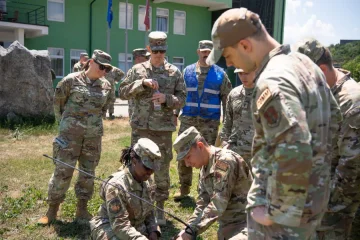
United States as leader of international coalition in fight against IS has been launching air strikes since 2014. It has consistently supplied arms and air support to opposition groups in northern Syria, including Kurds who are fighting Turkey with US ally in NATO. Washington has also sent hundreds of special forces soldiers to help opposition groups.
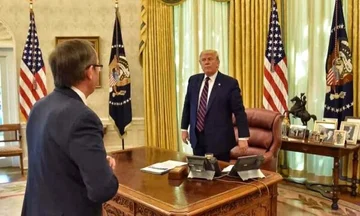
The main goal of the US is to destroy the IS and other extremist groups. US policies in relation to Assad are unclear. Trump's predecessor, Barack Obama, had said “Assad must leave.” In addition to its opposition to the use of chemical weapons by the Syrian government, the position of Trump administration on Assad's future is very unclear.
Germany
Germany has launched monitoring flights over Syrian territory to support air strikes against IS helped train Kurdish opposition fighters. Berlin has also called on Russia and Iran to persuade Assad to leave the office in any peace accords.
Berlin also wants to see the loss of the IS, which has carried out and inspired terrorist attacks in Germany. It has also rejected Assad's regime./Periscopi/