9 minutes ago
Austrian diplomat gives Serbia hope: Kosovo independence irreversible

Periskopi(8 years ago)
(8 years ago)Kosovo's independence is irreversible even if Serbia and Russia and several other countries continue to deny it. So says Albert Rohan, an Austrian diplomat and former UN emissary in the Kosovo status negotiations. Rohan shows when Kosovo declared independence on February 17th of 2008, becoming [...]
Kosovo's independence is irreversible even if Serbia and Russia and several other countries continue to deny it.
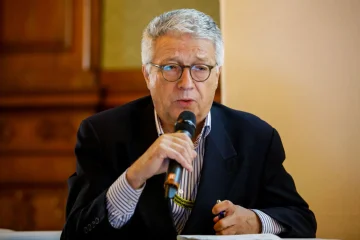
So says Albert Rohan, an Austrian diplomat and former UN emissary in the Kosovo status negotiations.
Rohan shows when Kosovo declared independence on February 17th of 2008, thus becoming the newest state in Europe. But it shows how Kosovars also experienced pressure from Belgrade.
“was the moment that had two principles of international law- territorial integrity of states and the right of people to self-rule”, he writes, broadcasts Koha.net.
Rohan says the basis for Kosovo's independence was the dominant view on international law that minorities who suffer systematic discrimination have the right to secede. So this provided the basis for the recognition of Kosovo even by the majority of UN member states.
Says to understand how Kosovo achieved independence it is necessary to know everyone.
“Belgrade in 1989 abolished Kosovo's autonomy as Serbia's province, Yugoslavia collapsed and Kosovo lost its status as Yugoslavia's federal entity. During the 1990s, Serbian authorities continued to discriminate against Kosovars, excluding them from all Serbia's administrative, health and educational systems. Then Kosovo was led by the late Ibrahim Rugova, who followed a policy of peaceful residence for several years. On the other hand, Yugoslav and Serbian forces were urged to conduct massive military operation against Kosovars”, he wrote.
After that, NATO decided to intervene militarily towards Yugoslavia. But Yugoslav forces expelled over 800,000 Kosovars from their homes to neighboring countries.
After nearly three months of NATO air strikes, Yugoslav President Slobodan Milosevic eventually surrendered, agreeing to withdraw all security forces from Kosovo.
This also ended Serbian administration in Kosovo by adopting Resolution 1244 on June 10th 1999.
The UN Security Council established a UN-led interim administration “and an international security force (KFOR). Furthermore, the UN was authorised to facilitate a political process to determine Kosovo's future status”, he writes further.
He says the international community took more than six years to start this process.
“In consultation with the UN Security Council, UN Secretary General Kofi Annan appointed former Finnish President Martti Ahtisaari as his special envoy for the Kosovo status talks. In 2006, the mission headquarters in Vienna (UNOSEK) hosted 17 rounds of talks between delegations from Kosovo and Serbia. Throughout this process, Ahtisaari and his team remained in close contact with the group consisting of Germany, France, Italy, Russia, Great Britain and the United States, which had provided “road progress” for negotiations”, he says.
According to these principles, the resolution of Kosovo's status should ensure multiethnicity and allow all communities to participate in the government.
Furthermore, the principles stated there would be no return to the March 1999 situation, no partition of Kosovo, no union in the middle of Kosovo and any other country or parts of any country.
During a meeting in London on 31 January 2006, the foreign ministers of that group added the requirement that choice “should be acceptable to the people of Kosovo”. Given that 90 percent of Kosovo's population wanted independence, the ministers' statement was of obvious importance.
It was clear that neither side would change its position on the fundamental issue of Kosovo's status. Belgrade was determined to retain Serbian sovereignty over Kosovo, while Kosovars insisted on independence as the only possible solution to”, it has written away.
Add to W NOSEK focused discussions on issues that should be resolved regardless of Kosovo's eventual status: community rights, administrative decentralisation, protection of the Serbian Orthodox Church, security, property rights and economic issues.
However, it was impossible to reach an agreement on these issues as well. As a result, Ahtisaari concluded that no amount of negotiations would produce a solution acceptable to both sides for Kosovo's status.
Representatives from the EU, Russia and the US tried to negotiate a solution in the fall of 2006, but only managed to prove Ahtisaari's assessment was correct. Using his mandate, Ahtisaari outlined a proposal that took into account Kosovo's recent history and reality on the ground.
“Presented to UN Secretary General and parties in March 2007, this “General Proposation for Kosovo Status Resolution” (The Ahtisaari Plan) contained significant compromises. It is based on the concept of independence, though it includes certain restrictions on Kosovo's sovereignty: preventing joining another country, restrictions on its future security force, international oversight of its independence for an initial period and a continued international military presence”, he writes.
Rohan writes that in response to Serbia's concerns, the Ahtisaari Plan included broad provisions benefiting from the Kosovo Serb community. The transfer of a maximum of competencies to the municipal level and the creation of new Serb majority municipalities are designed to allow Serbs to control their affairs extensively. Ahtisaari's proposal also contained broad provisions to protect the legacy of the Serbian Orthodox Church. All these measures were intended to create conditions that would allow Serbs to stay in Kosovo.
The “It is unfortunate that Serbia rejected the Ahtisaari Plan, and Russia prevented the UN Security Council from adopting it despite the fact that the plan had the full support of Annan's successor, Ban Ki-moon”, he says.
In addition, Kosovo's leadership accepted the Ahtisaari Plan, writes.
Vienna talks and the proposal by the UN special envoy permanently defined Kosovo's status.
Kosovo's “Independence has become irreversible fact, even if Serbia, Russia and some other countries continue to deny this reality”, he concludes, hoping that the EU-mediated dialogue between Belgrade and Pristina will bring gradual improvement in relations between Kosovo and Serbia.