4 minutes ago
Political situation, excessive bureaucracy hinder investment in Kosovo

Periskopi(7 years ago)
(7 years ago)Foreign direct investment in Kosovo has been consistently deemed necessary for an economic development, taking into account the different sufficient resources Kosovo possesses and the lack of investment by the locals. Despite this, however, the value of such investments year after year has been reduced. Experts on economic issues and civil society representatives very [...]
Experts on economic issues and representatives of civil society have many times expressed concerns that excessive bureaucracy in institutions is also affecting this area.
According to official data from the Central Bank of the Republic of Kosovo, for the nine months of this year, the value of foreign investments has reached 164.4m euros. In 2017, investments have been 287m euros, and in 2016, 220m euros.
The value of investments has been higher before Kosovo's 2008 independence was declared. In 2007, the amount of foreign investment had reached 440m euros, worth that never after Kosovo's declaration of independence has reached the Republic of Kosovo.
Experts on economic issues consider that the trend of declining foreign investment after Kosovo's declaration of independence is characterised by many factors.
Shpend Balija, executive director of the Council of European Investors in Kosovo, for Radio Free Europe, says political stability and actions right there in front of international investors are the main factors in the decline of foreign investments.
If you welcome investors, they come, but if you treat them well, they stay. It is not enough just to invite them and say that Kosovo is the beautiful place and come invest. But businesses that have come and extended their capital in Kosovo need to have the ease of doing business, eliminating barriers. Be it all with a more accelerated dynamic and in co-ordination with all competent”, Balija said.
But, Majid Bektashi, professor at the University of Pristina, says Kosovo authorities must create conditions for foreign investors so that their value doubles. Increasing international investments, according to him, affect the country's overall economic development.
This withdrawal of foreign investment in value double or three times higher than in 2018 would enable and greatly impact the actual unemployment rate”, Bektas said.
Under the Ministry of Trade and Industry, the Agency for Investment and Support of Enterprises in Kosovo (KIESA), the agency that has to promote and support investments, exports and tourism in the Republic of Kosovo.
According to this agency in January-November 2018, 681 foreign businesses have been registered in the ministry. In a response to Radio Free Europe, officials of this ministry say KISA consistently accepts demands and interests from investors who are analyzing Kosovo for potential investments.
In just nine months of 2018, this agency has realised about 115 contacts with local and foreign investors who have been notified of the possibilities and conditions Kosovo offers to investors.
But, Shpend Balija says international investors are primarily interested in political and economic stability and investment conditions. For that, he says, the Government of Kosovo should accelerate the dynamics of work to create even more favourable conditions in front of countries in the region.
The investor sees no boundaries, no different cultures and religions, wants the best opportunity wherever you see it. Therefore, it is not a problem for investors to decide to leave Kosovo and go to countries in the region, as the investor seeks better conditions, greater stability and less problems. Therefore, Kosovo should always assess itself to the states of the region because with these countries we are in competition and we should always be the first to offer positives or invetivations”, Balija points out.
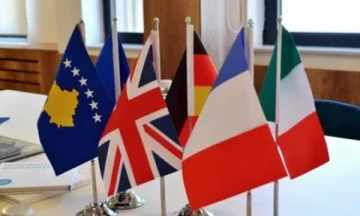
In recent years, however, investments have mostly been made in real estate, energy, construction, and commercial services. In contrast, the countries that have mostly made investments in Kosovo are Germany, Switzerland and Austria, followed by investments coming from America, Turkey and Great Britain.