7 hours ago
Greek nationalists flood Albanian village for Constantine Kacifas' funeral

Periskopi(8 years ago)
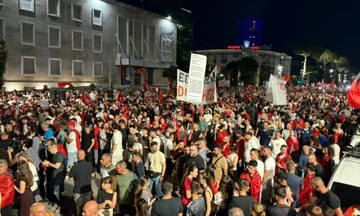
(8 years ago)Greek ultranationalists joined a village in southern Albania on Thursday for the funeral of Constantinople Kacifas, who died in a shootout with Albanian Police. During the ceremony, the police stayed away to avoid tensions. Several hundred Greeks, some of whom bore anti-Albanian and anti-Macedonian signs, attended Constantine's funeral [...]
Greek ultranationalists joined a village in southern Albania on Thursday for the funeral of Constantinople Kacifas, who died in a shootout with Albanian Police.
During the ceremony, the police stayed away to avoid tensions.
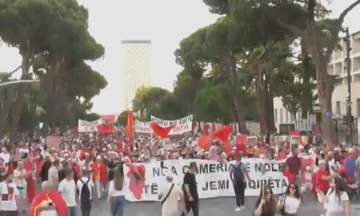
Several hundred Greeks, some of whom bore anti-Albanian and anti-Macedonian signs, attended the funeral of Constantine Kacifa on Thursday in the village of Bularat in southern Albania, hailing him as a national hero.
The media reported that several buses and other vehicles traveled from different cities to Greece across the border to Albania.
Some of the travellers sang anti-Albanian slogans and waved a Greek flag on which they said: the North Epirus is Greece and Macedonia is Greece”.
The local Dropul municipality said it had decided to cover the funeral cost because the victim's family was in need.
Kacifa, 35, was killed by Albanian police after he opened fire with Kalashnikov on 28 September, when Bulaati celebrated Oxi Day, a national holiday in Greece commemorating the start of the Greek-Italian War in 1940.
Following the assassination, Greek nationalists staged protests and several incidents of hatred were marked and attacks on Albanian property in Greece.
Before the funerals, the Foreign Ministry and the Ministry of Civil Defence called on participants at the “funeral to show restraint”.
Albanian media reporting from the village said police were not present for the funeral, trying to ease tensions.
The funeral ended in the afternoon without incident.
Greek nationalists have long claimed southern Albania, which they call Vorio-Epir.
Albania's south has historically been an area with a mixed Albanian and Greek population.
Albanians were deported to several waves from the Greek side of the border during the first half of the 20th century, with the largest expulsion registered in the last days of World War II, when about 30,000 people were forced to move to Albania. They're known as lame.
In the 1989 census, there were about 60,000 ethnic Greeks in Albania, focused on about 100 villages along the border with Greece.
The Greek population in Albania has decreased over the past three decades due to mass migration from rural areas to urban centres in Greece, as well as within Albania. In the 2011 census, there are about 24,000 Greeks in Albania.