5 minutes ago
Cooper: Correcting borders must have majority support

Periskopi(8 years ago)
(8 years ago)When the main theme is “correction of borders” Kosovo-Serbia, former mediator of technical dialogue between Kosovo and Serbia Robert Cooper, says great attention should also be given to implementing agreements reached so far between the two countries. And for the first one, it says that special attention is needed, [...]
While, for the first one, it says special care must be taken, recommending consultation with neighbouring countries due to the avoidance of possible security stability in the region.
Cooper, in an interview for Kosova Prees, also talks about the final agreement with Serbia, where he says he doesn't want to speculate about when that could happen.
I'm not sure there's anything like this, like a final deal. I'm also not sure for any time, or it will happen soon. If the agreement is a true agreement that will remain and will be a solid basis for peace, then I think it's not just leaders who have to agree, I think it's the population as a whole that needs to be reconciled, and what are the possibilities for this, it's very hard for me to appreciate, because I'm not going to live in Serbia or in Kosovo”, Cooper says.
As for President Hashim Thaci's idea of “border correction”, the British diplomat says the borders cannot be changed over and over again, while adding that if such an agreement exists, all countries in the region should consult, as the Balkans, according to him, are a small country.
I think what the whole region wants is stability and a kind of clarity for the future. Can't constantly change borders, people need to know which states they're born into, which country they belong to, so it's very important that if there's a border fixing agreement, everyone will understand it and most will be in its favour and everyone knows it will stay. Will this affect other countries in the region? In my view there's no reason why, many countries have problems, but I think they're different. I start with the belief that two countries that have been at odds with each other, who talk seriously about solving problems is a good thing, reaching a real deal for them is even better, but I think they should also be in consultation with neighbours because the region is small”, Cooper says.
The first Western countries to decide whether to support this idea, he says, all details of its contents must be made public first.
For now, what we're talking about is an idea, we don't know what the idea is. I don't think you can ask governments to support it if it's not a more concrete proposal and it's just the opportunity to do that. I think everybody should know the details. It's not just the question of where, it's about consulting the local population, it's about terms of respecting rights and minority duties...”, the British diplomat said.
Former Kosovo-Serbia dialogue mediator, now a member of the European Council for Foreign Relations Robert Cooper, says the two countries should also be committed to respecting minority rights.
Once, he also talks about whether Serbia is late to recognise Kosovo.
The “issue is really about EU member states and each of them. There are five who do not recognise Kosovo at the moment, all appear to have different reasons. I think that formal recognition by Serbia for Kosovo is much more important than Spain or Cyprus to recognise Kosovo. Serbia recognises Kosovo, this is fundamental because at this moment Kosovo in the Serbian constitution figures as part of Serbia. If Serbia knows it, then I don't understand why others should be more Catholic than Pope”, the former British mediator says.
It also warns of the consequences that there may be no implementation of agreements reached so far Kosovo-Serbia.
Rather, it is better to have no agreement than to have an agreement that has not been implemented.
The British diplomat, who supervised technical negotiations between the two sides since their beginning in 2011, also shows what would change if there were even that role.
I think almost all the agreements reached in the first part of the dialogue, so-called technical dialogue, have been implemented almost all now, not as soon as I wanted, but it happened, so I am grateful for that. If I did that again and we had more time, I think I would try to insist that implementation take place step by step because the agreements that are not implemented are bad for both sides, it is better not to have agreement than to have an agreement that has not been implemented”, he says.
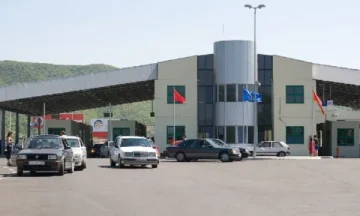
Asked about the ban that the state of Serbia is becoming Kosovo citizens when they travel, Cooper says it is an extremely harmful thing and denial of the right to free movement.
Well, I don't think it's in accordance with the agreements we've reached, but I don't know the details, it seems like a bad ending to me, this is a small region that people can't stop from travelling”, Cooper stressed.
Otherwise, Cooper, who supervised technical negotiations between the two sides, indicated that commitment is needed in reaching a Kosovo-Serbia agreement, until he reiterated the importance of recognising Kosovo's independence on Serbia's part.