4 minutes ago
World War III is coming.

Periskopi(9 years ago)
(9 years ago)The prospect of a global conflict - the Third World War - seems somewhat unimaginable. Since World War II, there has been no major conflict between great powers. The original European post-war project was based on peace, social justice and harmony. The removal of this project, accompanied by growing nationalism, is likely [...]
The prospect of a global conflict - the Third World War - seems somewhat unimaginable. Since World War II, there has been no major conflict between great powers. The original European post-war project was based on peace, social justice and harmony. The removal of this project, accompanied by growing nationalism, is likely to exacerbate the dangers of war on a continent with a history filled with bloody conflicts.
In the 20th century, both world wars were unexpected. Christopher Clarke's highly esteemed book, “Somenambulls: Like Europe went to war in 1914”, published in due time, on the occasion of the centennial of World War I, describes a sudden slide of Europe into war. The first world war was preceded by a pre-war tranquillity of the 20th century, with relative peace and stability. The great powers of the Edwardian Europe had been engaged in diplomacy and trade, ahead of the slaughter offensive, writes the “The Independent”.
During the 1930 ' s, the main powers were designed to avoid another war, so they followed a domestication policy, so the U.S. had been reluctant to include, so the Nazi-Soviet pact came. Neville Chamberlain's announcement of “peace for our time” should be seen in this context. During the Cold War, the concept of a third world war was inextricably linked to nuclear war and the doctrine of mutual destruction.
However, it is possible that the future conflict between the great powers can take the form of another cold war, or even a heated conventional war (so, not thermo-movorial). In the 20th century I have three key fronts for future wars. The first is the European-Russia front with a new Cold War caused by the Ukrainian conflict. Second is Middle Eastern front, centered around I SIS and Syrian war. The third is the front of Asia and the Pacific with a strong confrontation between the United States and China.
Time magazine ʹ the original spokeswoman for the American estabite during the Cold War echoed the start of the Cold War II in 2014. Western powers have characterised Vladimir Putin's incidents in Georgia in 2008 and those in Ukraine as aggressive expansionism. Apparently, the irony of the fact that the US is calling for no violation of national sovereignty, while it has plunged itself into Iraq, has saved many. Realistic perspective is that the Ukrainian crisis was preceded by two decades of NATO expansionism to Russia's borders. This was contrary to promises made to respect these boundaries at the end of the Cold War.
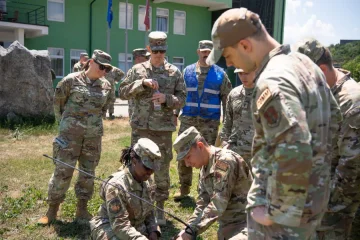
The United States recently deployed troops in Poland to the largest deployment of American troops in Europe since the end of the Cold War. As reported, these American troops will also be beaten across other Eastern European states, including Estonia, Bulgaria and Romania”. Russia alarmed the Baltic states by using “moving Iscander-M nuclear missiles at its naval base in Kaliningrad in autumn”.
The three fronts mentioned above are dangerous enough to be considered the potential cause of another major conflict, which would involve great powers. /bota.al/