3 minutes ago
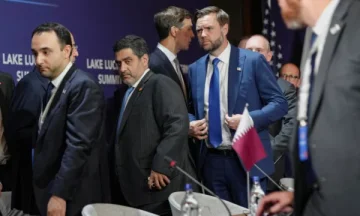
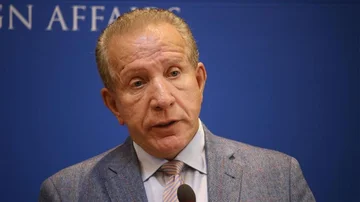
Mustafa at informal meeting in Durres complains in Serbia, Bosnia

Periskopi(9 years ago)
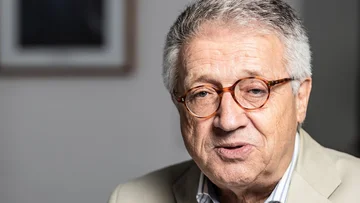
(9 years ago)Kosovo's acting prime minister, Isa Mustafa, has said today's informal meeting of the prime ministers of six Western Balkan countries in Durres was focused on facilitating economic co-operation for the circulation of goods, while he at this meeting has raised the visa problem Kosovo has with Bosnia, as well as the problem of [...]
Mustafa has told Kosovo Press that it is in the interest of all Western Balkan countries to facilitate economic co-operation, digitisation of the economy and use of IT technology among Western Balkan countries.
Speaking about the regional economic zone, Prime Minister Mustafa explained that it is not about establishing mechanisms for a particular Western Balkan market, but only about facilitating the flow of goods.
Prime Minister Mustafa has stressed that the meeting was oriented into finding mechanisms to implement the action plan, which were hired at the summit in Trieste, Italy, while counting on some of the benefits business will have with unifying fiscal policies.
I think that they earn a lot of businesses because the deadline or time of staying goods on the border is eased. Then we will do our best to unify, to equalize fiscal policies and other policies between our countries, so that we have no major differences in the application of policies in preparing civil servants or experts who work at the border not to slow the flow of goods and earn businesses because they become more competitive. The goods become cheaper because their services and attitudes are reduced, and we become more competitive in the market of Western Balkan countries, but also the European Union market”, he said.
Mustafa has said that at this meeting he has also raised the issue of the visa problem Kosovo has with Bosnia, as well as the problem of interconction with Serbia.
“We for Kosovo, stressed the problems we have with Bosnia and Herzegovina, the problem of the visa regime, because our businesses cannot easily circulate between the two countries, as well as with Serbia, the interconction problem, respectively, the implementation of the energy agreement that has blocked us so far so as not to activate infrastructure in electricity interconctions with Albania, and despite the fact that we have invested over 70m euros with Albania through the German Bank for Development and our governments, Mustafa said.