3 minutes ago
Pressure on the Media in Balkan

Periskopi(9 years ago)
(9 years ago)The weakening of EU and US influence on the Balkans, the increasing Russian influence, as well as increasing political and business pressures on journalists have created a new reality for media in the Balkans. This is the conclusion of the new conference “Reality added attacks on media and organisations in Balkan” organised by [...]
This is the conclusion of the new conference “Reality added attacks on media and organisations at Balkan” organised by the Balkan Investigative Journalism Network, BIRN.
At the Balkan Investigative Journalial Network's Falling Summit, B INR, Ana Petruseva, director of BIRN Macedonia, said the situation facing the media in the Balkans “seems to be going from bad to worse”.
Besides political and financial pressures, she said, the media is facing new types of pressures labelling journalists and media as spies or foreign mercenaries, as well as opening a large number of websites with false news.
Petruseva said the flood of false news is creating a boomer on the media” in which it is becoming difficult for the public to distinguish between true and false information, and therefore the public is losing confidence in the media in general.
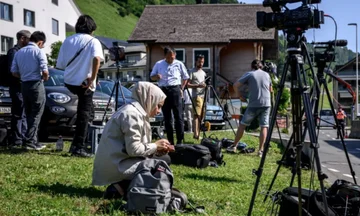
“People are losing confidence in the media, and are beginning to see everything as propaganda and promotion,” said Petruseva at a conference Saturday in Copatic, Serbia, referring to the new challenges facing the media in the Balkans.
BIRN Board member and Austria's Marshall Plan President Wolfgang Petritsch warned that Balkan countries will not always believe in support from the EU, because many in Brussels see “instability as top priority” on reforms.
The EU's “position has weakened due to its internal problems. As long as it does not complete the process of internal reforms, there will be no strong role of the EU in the region,” he said, noting that while the promise of EU enlargement is ending, authoritarian regimes in the region are strengthening.
Because an enlargement system has not been created, the situation will remain unclear “,” said Petritsch.
Political analyst for “The Economist” and Balkan expert Tim Judah said that the policy of “therocracy”, in which the EU and the US seem to tolerate authoritarian leaders in the Balkans who give stability, is essentially a pragmatic response.
This means working with the leaders we have and working with the Balkans in the way it is,” he said.
Judah said that while the influence of the West has declined, Russia's has increased, but that influence has been declining in recent months. He provided an example here of how Macedonian Prime Minister Nikola Gruevski has been replaced.
“What are Russia's interests? It is simple, they want to create within the region a pro-Russian or neutral territory,” said Judah.
BIRN Board member and visiting scholar in Carnegie Europe Stefan Lehne said Balkan countries can move closer to EU membership than some expect.
“Paralyse with the very slow and boring enlargement process should have a horizontal process. Balkan countries need not only membership in a specific order, but political after politics,” Lehne said, setting an example for this participation of Balkan countries in the Energy Community.
BIRN Board member and media expert Robert Bitterman spoke of recent media experience in the United States, where President Donald Trump's administration has targeted the media.
Any weaknesses in the media will be noted. It doesn't matter if two things are wrong and 98 is correct, these two things will become the most important in the world. It doesn't matter if the administration is doing 98 things wrong and two things exactly,” said Byman.
However, he added with optimism that the American audience appears more willing now to pay for editorial content, adding that the media is also beginning to do its job.
Prior to the panel, BIRN Regional Director Gordana Igric presented the results of network projects over the last year, noting that the network has directly reached 5 million people.
This number has increased by over half a million people over the past year,” she said, adding that the most important articles have addressed major issues such as corruption, problems with public procurement and concessions. As a result of the investigation, officials have been dismissed and criminal charges have been filed.
Igric said BIRN currently operates 16 websites in different languages and has produced over 100 television and film reports, and has held 50 trainings over the past year.
According to Igric, B The IERN has been published or published in many respected foreign media such as Guardian, BBC and Bloomberg. B The INR was also very active in aggravating the condemnation of war crimes, as well as in developing participation budgets.
The bilateral meeting of the BIRN network is taking place from 7 July to 10 July at Mount Kopaonic, in Serbia.