a few seconds ago
How did war criminals become heroes of Serbia?

Periskopi(9 years ago)
(9 years ago)War criminals who have served their sentences have become active participants in political life in Serbia thanks to Government and the media, who have decided to forget what they did and promote them as heroes. <x0)
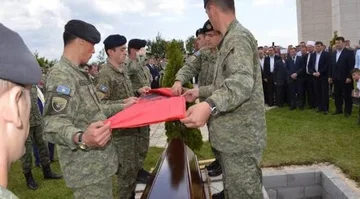
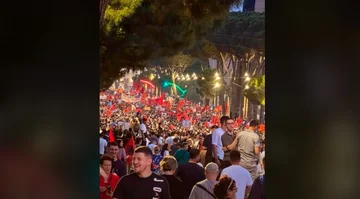
The “Nobody will ever be ashamed of these people, Serbian Defence Minister Aleksandar Vulin said this weekend at a rally of former Yugoslav Army Third Battalion soldiers.
The time of shame has passed. This is the time to be proud, he insisted.
This would not be considered an extraordinary event if the respected commanders of the Seal were not convicted war criminals.
First among the former soldiers to be honoured were Vladimir Lazarevich, former Yugoslav Army Corps Chief of Staff Pristina and Nikola Shainovic, former Yugoslav Prime Minister/Sev.
Lazarevic and Shainovic were sentenced by the International Criminal Tribunal for the former Yugoslavia to 14 and 18 years in prison respectively for the Kosovo military campaign that left 11,000 Kosovo Albanians killed and another 700,000 were deported to neighbouring Albania, Montenegro and Macedonia.
It was not only the Serbian government expressing pride in our <x0heroes”, but also officials at the office of Serbian President Alexander Vuciq.
The chief secretary in Vucic's office, Nikola Sellakovic, said at the same gathering that it is Serbia's <x0 plan to honour the Serbian Army's” professionalism of the Third Battalion.
This is not the first time Vulin and Selakoviqi have shown kindness to war criminals.
In 2015 they organised a heroly welcome for Lazarevic when he returned to Serbia after serving his sentence.
But war criminals in Serbia enjoy not only the support of ministers and other officials, but also the media.
Despite their obligations to the code of ethics, Serbian media rarely mention the past of those sentenced by The Hague tribunal. Although many of them have appeared on television or in recent years, it is rare that the media mention their criminal past and instead introduce them as analysts, former generals or advisers.
Also, if you watch weekend news from the gathering of former Yugoslav Army soldiers, you will not read anything about their shameful actions during the war in Kosovo.
And Serbian public television, RTS, he didn't mention who these people were that highly honored by Voulin and Selakovic.
But those who rise up against denial of the past and the return of war criminals to public life, such as Youth Initiative for Human Rights activists, face threats, abuses, and even physical violence.
Under the “Kriminals are not our heroes” and the <x2-Criminors of war to silence the victims to speak”, activists of the Youth Initiative tried to prevent former Yugoslav People's Army's Colonel Veselin Sljivancanin and former Bosnian Serb Parliament Speaker Momcilo Krajninik, both convicted of war crimes by The Hague tribunal.
Activists were beaten and threatened, but their attackers were never caught.
As Serbia advances on its path to the EU, claiming it is respecting rule of law and that it is meeting the membership criteria, when it comes to war crimes prosecution and confrontation with the past, it is making no progress.
Trials instead of war crimes have been mired in a legal stalemate caused by the fact that the chief war crimes prosecutor was not appointed for a year and a half.
The number of court dates is among the lowest since the war crimes prosecutor's office was established in 2003, as it became three years since no criminal indictment was filed in Kosovo.
What is also disturbing is that this trend echoes in other countries of the former Yugoslavia. In Bosnia, Fikret Abdiq, who served his 15-year sentence for war crimes, is now mayor, while others facing war crimes charges in Bosnia and Herzegovina also hold political positions. B IERN wrote extensively about their political influence in 2016.
The international community has worked hard at establishing The Hague tribunal, which will close at the end of this year, but failed to address the issue of rehabilitation of war criminals and their reintegration into society.
When acts carried out by war criminals, such as Vladimir Lazarevic and Nikola Schinovic, are not mentioned in the public arena and they are resurfaced as heroes, it is clear that serious problems continue.
As Hague tribunal chief prosecutor Serge Brammertz said in his latest report to the UN, nationalists in different countries of the former Yugoslavia still believe in their innocence and victimisation.
“The message of denial and revisionism is voice and clear,” said Brammertz. “We know our victims, but not yours. Your war criminals are our heroes. ”