10 minutes ago
Case “Monstra”, positive turn for judiciary

Periskopi(9 years ago)
(9 years ago)Public Prosecutor's request for review of the case “Monstra”, reports of a similar decision, or innocent convicts' claim even in the “case Sopot”, Special Prosecutor's interventions at the Criminal Court due to allegations of irregularities and many other initiated processes, according to judicial experts, provide a hint of hope for any [...]
According to Constitutional Law Professor Merim Maxuti, the case “Monstra” to apply for retrial or annulment of the decisions of life imprisonment for six Albanians convicted of killing five Macedonians in April 2012, without relevant evidence, speaks of justice seized by the former authority, but also of signals that the judiciary can function on the principles of law, if left to work on the basis of laws, and not political influence.
The latest “case, at the request of the Prosecutor for the review or retrial of the case, is a signal or a turning point that the trial in Macedonia is launching a new stage in the functioning of legal state tracks. This certainly presents hope that court and prosecution are already entering the normal functioning phase for an independent judge”, Professor Maxuti told Radio Free Europe.
Criminal Law Professor Gordan Kalljadzhiev says the Supreme Court, which should say the final word regarding the prosecution's request, should not have a dilemma at all, but the sooner it proves the prosecution's decision to return the course for retrial in the first degree.
He estimates that this trial was filled with concessions and evidence that left them wondering whether these were the real perpetrators of crime.
We had a case when even the Public Prosecutor no longer stands behind the prosecution, so I consider the Supreme Court to act morally. If I were a judge and an officer of the prosecution, I couldn't punish anyone with life in prison until he who argues to me the guilty charge is not safe, I mean the prosecution. I have no doubt that there should be retrial”, says Professor Kalajdzic.
He says such actions, or political interference, have brought the Judiciary into serious condition, possibly the worst since the country's independence.
case “Monstra” along with “Sopotin”, the murder of Martin Nashkovski, a protester in a rally of Gruevski's party, V MRO DPMNE, then the subsequent accident by journalist Nikola Mladenov's death and the case of the “Trimean Quarter, in Kumanovo, is estimated as the biggest scandals that have conveyed the past government between VMRO and DUI.
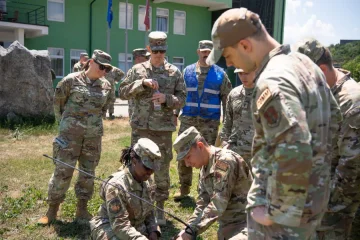
A clear decision from the prosecution is expected to have in case “Sopot”, where dozens of residents were sentenced to over 150 years in prison for an explosion bomb in 2002 in the village of Sopot in Kumanovo, from which two NATO soldiers had lost their lives.
But, from the evidence presented later, even by NATO officials themselves, these residents prove to be innocent.
Professor Mersim Maksut believes such cases in the future will not occur and that current power, according to him, even though with an unstable majority, will not try to put his hand on the judiciary.
This power has no powerful political basis, political stability, in its life expectancy in the sense of numbers making up the government. But, despite that, I think the spirit that has been created is what will bring reforms in all areas, but no doubt they will first come to Judiciary”, Maxuti estimates.
By the government now led by LSDM leader Zoran Zaev, they have said that the investigation will also take other cases, in particular in the case of the first Kumanovo, where there were 19 victims and dozens of others injured. The government has also adopted a strategy for reform in the judiciary, which on the basis has international community recommendations.