9 minutes ago
Japan proposes a plan to attack China

Periskopi(9 years ago)
(9 years ago)Tokyo aims to join the US, India and Australia to promote free co-operation and defence and security co-operation, but also to contain Beijing's aggressive enlargement policies. At the G-20 leaders' summit in Hamburg in July, Japanese Prime Minister Shinzo Abe indicated that Tokyo would be willing to receive [...]
At the G-20 leaders' summit in Hamburg in July, Japanese Prime Minister Shinzo Abe indicated that Tokyo would be willing to participate in the EU's economic development plan, “One Belt, One Road” (OBOR).
The Japanese leader's decision was prompted by concerns that domestic companies would lose profitable construction projects, as modern “project Silk Road” spread to Southeast Asia, the republics of Central Asia, the Middle East, and beyond.
Japan's Foreign Minister Taro Kono has announced that he intends to use US President Donald Trump's upcoming visit to propose what might be considered a very easy option for China's OBORê initiative, reports “Deutsche Welle”, the Periscopi broadcast.
Four - Way Dialogue
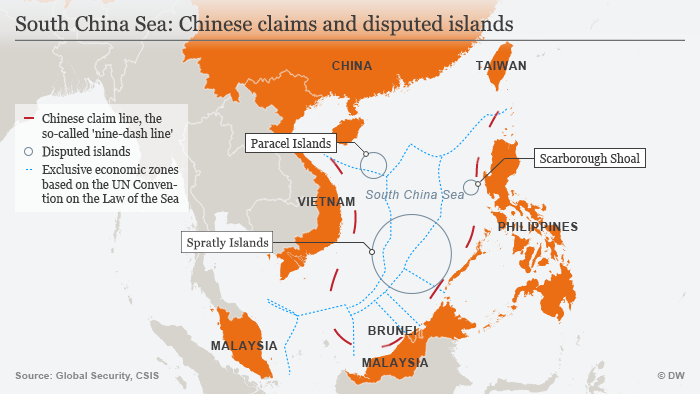
In an interview with Japan's “Nicki Economic Daily” on Wednesday, Kono said that Tokyo wanted to open a high-level dialogue between Japan, the US, India and Australia so that four powers could promote free trade and security co-operation across the South China Sea, across the Indian Ocean and across the entire route to the continent of Africa.
Kono added that he had offered co-operation roles for other nations he also cited France and Britain as potential future contributors.
The plan is clearly designed to counter the massive military power Beijing continues to build.
Largest Trade Partner
China is Australia's biggest trading partner and has had big investments in Australia by Chinese companies in recent years.
One of the most controversial deals was the renting of the port in Darwin to a Chinese company in northern Australia. This agreement has been welcomed with much criticism, stressing that there is no point in giving the country's strategic infrastructure assets a rival.
The Pentagon was also unhappy with the deal, as Darwin serves as a main naval facility for the American Navy and its Marine Corps. /Periscope.