12 minutes ago
The Judicial Chamber to postpone the decision on former KLA leaders: Accountability should be considered individually and carefully
Periskopi(2 hours ago)
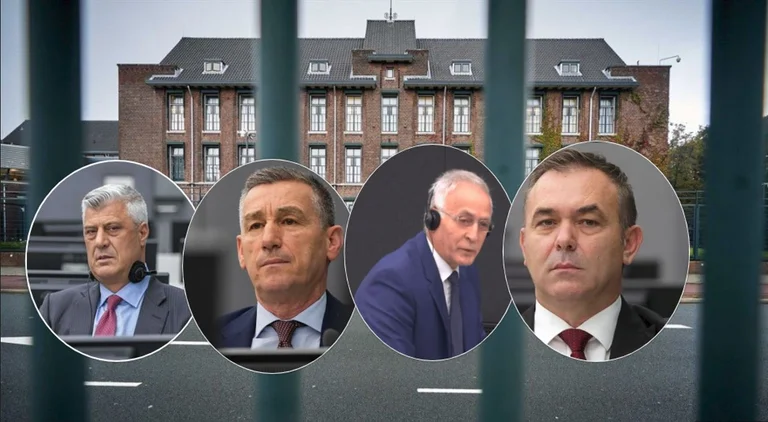
(2 hours ago)The Special Court Court Court's Judicial Chamber in The Hague has decided to once again postpone the plea of the trial in the court case against four former Kosovo Liberation Army leaders, eventually setting September 16th as the date to clarify the decision.
In the decision released Wednesday, the Judicial Chamber stresses that a further extension of the deadline is “that is absolutely necessary” due to the extraordinary volume of evidence and complexity of the issue.
According to the court's reasoning, evidence of some 270 witnesses has been administered during the process, 5,467 provative materials have been accepted in evidence, while the transcript of the procedure reaches 29.238 pages. Similarly, the court estimates that the issue covers events that span more than a year and a half, includes a large number of countries allegedly committed crimes and many individual incidents.
The Judicial Chamber stresses that, in addition to the complexity of the evidence, the procedure concerns the four accused, the responsibility of each of them “should be considered individually and carefully”.
The Judicial Chamber considers that a further extension is necessarily necessary in the sense of the 159% Rule. The Judicial Chamber recalls that, as set out in the Order for Proliferation of the First Century Act: (i) has accepted the evidence of around 270 witnesses (directly and in writing); (ii) has accepted 5,467 provative materials in evidence; (ii) the transliteration of these procedures has 29.238 pages; and (iv) the complexity of the procedure in this case, respectively, the fact that the case events cover more than a year and a half and include a large number of countries where it is expected to be committed, as a significant number of individual incidents and incidents. Moreover, the procedures involve charges against the four accused, whose responsibility should be considered individually and carefully. In view of the foregoing, to ensure that he can conduct a full and fair assessment of the entire trial and give a rational opinion that takes into account the considerable volume of evidence and the complexity of the procedure, the Judicial Chamber is convinced that a further extension is necessarily necessary”, the decision says.
The court says in the ruling that the accused has the right to be tried within a reasonable deadline and that he is aware of the time they have spent in custody. However, according to the ruling, an additional extension of a little less than 60 days would not cause them unnecessary prejudice, while it is necessary to ensure a full, fair and reasonable assessment of all evidence.
The judge's “Dog admits that, in line with Article 214), the accused have the right to be tried within a reasonable term. The Judicial Chamber is aware of the time the accused have already spent in custody and of the need for procedures to be conducted as soon as possible. However, given the circumstances of the case, the Judicial Chamber is convinced that an additional extension for a slightly shorter period than 60 days will not cause unnecessary prejudice against the accused. The extension is reasoned by the need to ensure a proper, comprehensive, and rational assessment of the evidence file as well as by the request for an reasoning written opinion that accurately reflects that file. The Judicial Chamber is convinced that no shorter extension would enable him to properly fulfill his responsibilities”, the decision says.
The Judicial Chamber said the First Stairway Act would be declared stately “in the name of the people of Kosovo and in the presence of the accused, unless extraordinary circumstances argue their absence”.
The Judicial Chamber considers that the appointment of a date, at this stage, for announcing the First Scale Act provided fair and timely notice to all concerned”, the decision bearing the signing of the chairman of the Judicial Chamber, Charles Smith.