2 hours ago
Iranian Radicals warn of a “coup”, as US ceasefire questioned
Periskopi(6 hours ago)
(6 hours ago)Until Iran's president, Masoud Peskian, walked by the coffin of Supreme Leader Ali Khamenei in Tehran last week, some of the black-covered participants did not cheer in honour of the late leader, but directly against him, shouting: “compromise deaths! ”
Not far from that country, Abbas Arghchi, Iran's top diplomat, who negotiated the ceasefire with the Trump administration and managed to ensure the removal of certain sanctions against the Islamic Republic, was forced to leave the mortary ceremony after a mob shot him with stones, while cheering slogans labeling him “trandary who sold the country”.
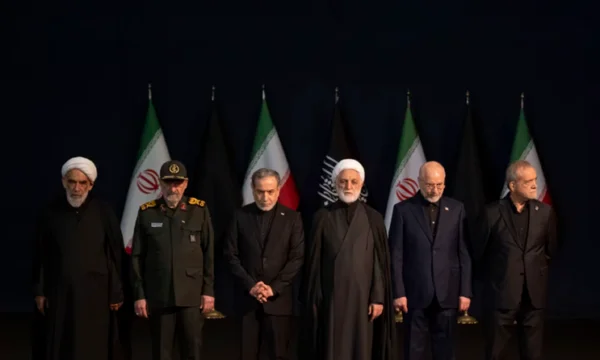
The hostility manifested to top officials during the ceremony reflects a theory that has been gaining ground for months within the most radical factions of the Islamic Republic: that Iranian wartime leaders, who negotiated and signed the agreement with Washington, are organising a soft coup against the Islamic Republic and its revolutionary ideals, while the new supreme leader remains largely invisible because of fear of his life or, as some have suggested, because he is incapable of exercising office.
The hardline factions, which took part in large numbers at the funeral, believe that instead of taking revenge for the murder of Khamenei, Iranian officials have surrendered by signing an agreement that conflicts with the orders of Supreme Leader Moitaba Khamenei, son and successor of the late leader. However, Mojtaba Khamenei has remained away from the public eye; he has not directly addressed the nation and has not publicly demonstrated his authority, even though officials negotiate and govern in his name.
The Radicals have accused Iran's visible leadership of leading and representing the country, while Khamene continues to remain in hiding, as they are trying to consolidate power by suspending parliament, challenging its orders during negotiations and trying to disperse night protests on the road, which have become an important base of support for fundamentalists.
A warning to Iran's people: Is a coup being prepared?
“Offering farewell to the martyr Imam (Khamenei), we raise the vengeance flag for his blood and stand firm against the coup,” wrote he several days later.
In the absence of Mojataba Khamenei, chief negotiator Mohammad Bagher Ghalibaf, President Masoud Pnezkian and diplomat Abbas Aarchchi have become the most visible figures to lead Iran after the war. Having no access to the new Supreme Leader, the radicals dissatisfied with their performance have accused them of preparing a coup, US-based Iran expert Arash Azazi, author of the book “What Iranians Want” (“what Iranians want”, told CNN.
Mojtaba's continuing shadow means that they have no access to him and, at the same time, Ghalibaf and his allies are leading the country into practice... Therefore, ultra-radicals have accused Ghalibafin and Pezkhian of organising a state gychruccia against Mojaba”, Azizi said.
Despite widespread calls throughout Iran for unity during wartime, Khamene's week-long funeral ceremony, which was killed at the end of February by Israeli air strikes co-ordinated with the United States, turned into a powerful demonstration of hardliners of the Islamic Republic. They used this opportunity to reinforce the pleas for revenge against their leader's assassination by re-launching the war with Washington and to declare their refusal to deal with President Trump.
It seems that their wish has now come true. The fragile truce between Iran and the United States nearly collapsed this week after Revolutionary Guard launched attacks on ships on the Strait of Hormuz in an effort to establish control over this strategic waterway. This triggered revenge attacks by Washington and new demands by Iranian Radicals to reject the ceasefire.