3 hours ago
US Secretary of State: Kosovo's NATO membership is now not at the helm of Allied agenda
Periskopi(22 days ago)
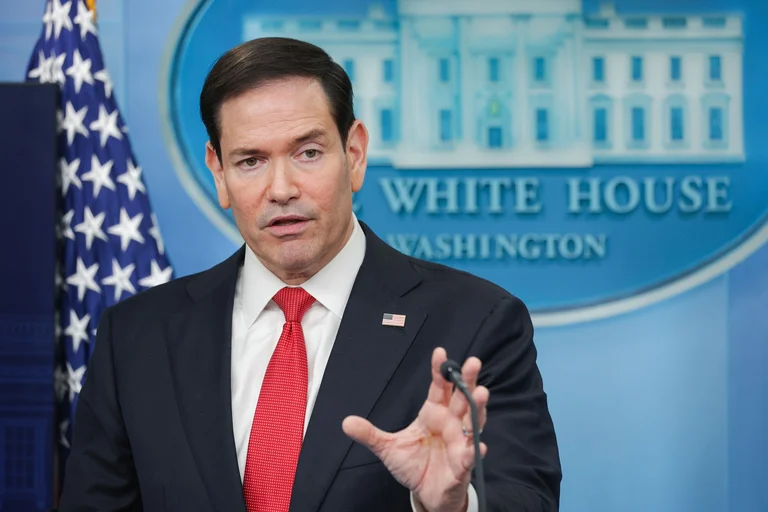
(22 days ago)US Secretary of State Marco Rubio said enlargement NATO to include Kosovo currently is not at the helm of the Allies' agenda, but added that this does not mean that such a thing cannot happen in the future.
During a hearing session on the House of Representatives Foreign Affairs Committee, Rubio also said that the United States supports the Italian candidate for the new high representative post in Bosnia and Herzegovina, saying he believes he would do the job well and help bring stability to this” function.
US State Secretary of State answered questions from Vicecommittee for Europe in the House of Representatives, Keith Self, who recently visited Bosnia and Herzegovina, Serbia and Kosovo. During the session, Self named the situation in the Western Balkans as the extremely fragile “”.
Self said that there is an unresolved “problem between Serbia and Kosovo, and urged Rubio, in talks with the four NATO member states that do not recognise Kosovo's independence and, therefore, block its membership in the Western military alliance, to support Kosovo's NATO membership.
Rubio said that, given his meetings with the foreign ministers of the coalition member states, NATO “is focused on other questions” and that “enlargement, specifically in the case of Kosovo, but in other cases, is not at the top of the agenda of these countries”. However, he added, this “does not mean that this will never happen”.
This has not been important in recent talks with our NATO allies”, Rubio said.
Kosovo aims to become part of NATO and the European Union. But, states that do not recognise its independence, declared in 2008, continue to be an obstacle to Pristina's Euro-Atlantic integration.
Self, along with two colleagues in Congress, Ritchie Torres and Mike Lawler, has presented a resolution in support of Kosovo's NATO membership to the House of Representatives. This resolution says Kosovo's presence in the alliance is necessary for protecting US national security interests in Southeast Europe.
“gentlemen from Italy” for Bosnia and Herzegovina
Asked by Self for the election of a new high representative to Bosnia and Herzegovina, following Christian Schmidt's resignation, Rubio said the US supports “ownership by Italy”, not to mention his name.
Italian diplomat Antonio Zardard Landi is cited as a candidate who enjoys support from the United States, while European countries have their own candidates.
Beyond that, we remain engaged in this matter, as you stressed, and we have done so privately. The last thing we want to see is any conflict there, any division, restriction or things of this nature that would cause further conflict”, Rubio said.
In Sarajevo on Wednesday, the Assembly of the Peace Implementation Council (PIC) began, in which it is expected to be discussed choosing the new high representative in Bosnia and Herzegovina, as well as determining its next mandate.
In addition to Zanard, France's special envoy for the Western Balkans, René Troccaz, as well as current and former British envoys for the Western Balkans Karen Pierce and Stuart Peach are among the candidates mentioned.
If no agreement is reached, the current high representative, Schmidt, will remain in office until another decision, as he himself has warned during his resignation.
The high representative, who is appointed by the PIC, has a mandate to oversee the civilian implementation of the Dayton Peace Agreement, which, in 1995, stopped the war in Bosnia and Herzegovina. He has been given the so-called Bonn competencies, which include the possibility of imposing decisions and laws, as well as the dismissal of officials in Bosnia and Herzegovina.