7 hours ago
DnV says it will monitor with 600 election monitors, in the campaign, personal attacks and polarising rhetoric
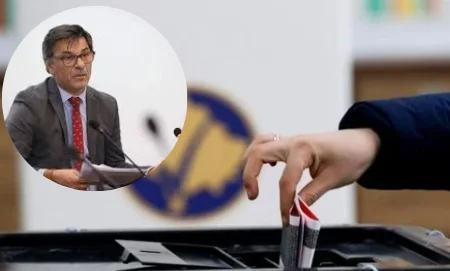
Periskopi(18 days ago)
(18 days ago)Democracy in Action today has held the conference, where it has unveiled its assessment of the pre-election period, the development of the election campaign and the plan for monitoring Election Day.
The news says that DneVA estimates are based on systematic monitoring of the election process, including the campaign, the CEC's work on election management, monitoring traditional media, and monitoring activities, respectively, the costs of subjects and candidates on social networks.
However, inequality in the election race has remained one of the main concerns recorded during this period. The actions and decisions of influential public institutions, prior to the launch of the campaign, have influenced the perception of equality of opportunities among political competitors, said among other things in the report.
In addition, the communique says that particular concern is the continuation of the dezination and distribution of unverified information, especially in social networks, which, reportedly by DNV, violates the quality of public debate and affects citizens' right to make informed decisions.
Some 500 social media profiles, including official profiles of the main political parties ( LV The V, PDK, LDK, AAK and PSD -- all their candidates, as well as the candidates of two political subjects from the Serb community. During the last week of the campaign alone, expenses for sponsorship worth over 100,000 euros have been recorded. During the monitoring period, about 10,000 posts on the social Facebook network have been recorded. Of them, approximately 20% have been posts based on video production and production, which represents a relatively new and more expensive form of election campaign. Over a third of the total number of posts have been sponsored, with values ranging from 100 to 1,000 euros for posting, is added to the communique.
Communications:
The detailed DNV plan for monitoring election day after a campaign packed with pronounced political rivalry
On the eve of voting day for June 7th Parliamentary Pre-election coalition Democracy in Action ( DnV today held the media conference, where it unveiled its assessment of the pre-election period, election campaign development and the Election Day monitoring plan.
DnV estimates are based on systematic monitoring of the election process, including campaigning, the CEC's work on election management, monitoring traditional media, and monitoring activities, respectively, the costs of subjects and candidates on social networks.
General Election Campaign Rating
In general, the election campaign has been held in a competitive and largely calm environment, enabling political subjects and candidates to present their offers to citizens. The election race has been open to political subjects and communities, reflecting political pluralism and fundamental standards of a democratic process.
Political subjects have been able to develop their election activities and communicate with voters throughout the country, through mobilizations on the ground and through digital campaigning.
However, inequality in the election race has remained one of the main concerns recorded during this period. The actions and decisions of the election-inflicted public institutions prior to the start of the campaign have influenced the perception of equality of opportunities among political competitors.
In general, the campaign has been characterised more by promoting political leaders and electoral messages than by presenting individual candidates. It is also positive that no major incident has been recorded in this campaign.
Election bids, dominant topics in campaign and candidates
The topics that have dominated the election campaign are mainly related to the economy, energy, wages, pensions, social schemes, infrastructure development and technology.
Promises of revenue growth, social support and improvement of economic prosperity have been present in almost all political subjects, despite the programming differences between them. In most cases, however, there has been a lack of full elaboration of financial costs, sources of financing, and concrete deadlines of realisation of these pledges.
Consequently, public debate has often focused more on slogans and political messages than on measurable, financial and applicable public policies.
A positive development of this election race is the inclusion of a considerable number of new candidates. Over half of candidates compete for the first time for a representative mandate, while the average age of candidates is about 42 years old.
Women make up about 34 per cent of candidates for MPs, exceeding the minimum legal threshold of representation. However, DnV monitoring has estimated that women's participation in television debates, public panels and media space during the campaign has been significantly lower compared to men.
This shows that formal representation does not necessarily guarantee equal opportunities for participation and representation in public and political discourse
Campaign nature, tone of public communication
The 10-day official campaign has dominated major electoral gatherings in major Kosovo centres. Meetings in communities and door - to - door activities have been less present. In cases of field activities, they have often been focused on business visits or promotional activities, while less in open discussions with citizens on their needs and priorities.
This has limited the possibility of a more substantial dialogue between candidates and voters and for a deeper discussion about public policies.
The election campaign has been held in a calmer atmosphere compared to some earlier election processes. Children's involvement in political and promotional activities by election subjects has been expressed. The use of children for the purposes of political promotion remains inappropriate practice and contrary to the principle of protecting the child's best interests.
However, cases of labelling language, personal attacks, and polarizing rhetoric have not been missed among political acts that have influenced the quality of public debate.
Special concern remains the continuation of the dezinformation and distribution of unverified information, especially on social networks. These phenomena affect the quality of public debate and influence citizens' right to make informed decisions.
Campaign spending and social networking sponsorship
Initial surveys show that the campaign has been characterised by significant investments in the organisation of public gatherings, promotional materials, advertising in traditional media and digital communication.
Social networks have continued to serve as one of the main platforms of political communication, occupying an important part of the promotional activities of political subjects and candidates.
DnV has specifically monitored the expenses of political subjects and candidates during the election period for promoting their activities on social networks, mainly on Meta platforms. DnV will also monitor how these expenditures are expected to be reflected in financial reports of political subjects following the elections.
About 500 social media profiles, including official profiles of the main political parties ( LV The V, PDK, LDK, AAK and PSD -- all their candidates, as well as the candidates of two political subjects from the Serb community. During the last week of the campaign alone, expenses for sponsorship worth over 100,000 euros have been recorded.
During the monitoring period, about 10,000 posts on the social Facebook network have been recorded. Of them, approximately 20% have been posts based on video production and production, which represents a relatively new and more expensive form of election campaign.
Over a third of the total number of posts have been sponsored, with values ranging from 100 to 1,000 euros for the post.
Accounting at higher spending for sponsorisation results in candidate Uran Ismaili, with about 9 thousand euros. Political Subject Account after him LDK, with about 60,000 euros, candidate profile Bedri Hamza with about 4 thousand euros, political subject profile LVV at about 4 thousand euros, candidate profile Ardian Gjini at around 3,500 euros, as well as candidate profile Lumir Abdixhiku with about 3 thousand euros.
As far as overall spending on sponsorisation, political subject The PDK and its candidates rank first with about 33 thousand euros. Following them come the LDK and its candidates of around 26,500m euros, LVV and its candidates of around 25 thousand euros, the AAK and its candidates of about 10,000 euros. Candidates of political subjects from the Serbian community have scored minimal levels or have not reported attainable spending on sponsorship during the monitoring period.
The Role of Digital Media and platforms
The media have played an important role in informing the public and creating space for political debate during the election period. Interviews and television debates have contributed to increased public transparency and accountability. However, in some cases media reporting has focused more on political rhetoric and competition dynamics than on analyzing concrete programmes, costs and policies proposed by political subjects. Faces and debates between candidates for prime ministers have been missing.
Social networks have continued to play an important role in political communication, but have also served as a channel for spreading unverified dezinforms and information.
Election process management
DnV estimates that election institutions have fulfilled most of their obligations in line with the legal framework and the early deadlines.
During this period, however, several decisions and interpretations of the CEC have prompted public discussions and dilemmas concerning the extent of the institution's competencies and the interpretation of legal provisions. Some decisions and rules made in this process are estimated to contain overstepping the Law on the Elections (voting with valid documents, rules of accredition of observers).
On the other hand, the Electoral Panel for Anxiety and Parashteta has played an important role in reviewing complaints and overseeing the implementation of the electoral framework. Through his decision-making, P The ZAP has contributed to clarifying legal standards and addressing cases recorded during the campaign.
The incidents discussed during this period have been mainly linked to the involvement of children in political activities and the use of public spaces for political promotion purposes.
Until today, P The ZAP has accepted a total of 19 complaints over violations committed during the election campaign, half of which have been deposited by civil society organisations and the other half by political subjects. 19 decisions have been issued, out of which 10 have been approved and nine rejecters. For repeated violations of the Ethics Code during the election campaign, P ZAP has so far pronounced 26,100 euros in fines against political subjects.
Election Process Security
From the security aspect, responsible institutions -- in particular the Kosovo Police -- have contributed to preserving a safe and secure environment for the development of electoral activities.
In general, the pre-election period has developed without serious incidents that could affect the exercise of citizens' political rights or the normal development of the election process.
In this context, the engagement of about 100 prosecutors during election day presents indications of the dedication of justice institutions to protect the integrity of the election process. This commitment aims to provide additional guarantees to citizens and also ensure rapid and effective response to any attempt to influence, manipulate or undermine the election process and the will of voters.
DnV engagement on Voter Day
While the voting process abroad, on diplomatic representations of the Republic of Kosovo, is under way in a calm and orderly manner, tomorrow, by 7:00 p.m., Kosovo citizens will have the opportunity to exercise the right to vote.
DnV has mobilised its surveillance network across the country. More than 600 observers will be present on the ground to monitor the opening of seats, the voting process, closure of seats and counting votes. 500 of them will be statistical observers in the elected polling according to representative sample.
During election day, DnV will regularly inform the public and media through media conferences, where findings and assessments from field surveillance will be presented.
For the assessment of the election process, DnV will implement the Parale Counting Method (PVT), which relies on a statistically representative voting sample and enables the independent and reliable assessment of the voting process and vote counting.
DnV calls on all political subjects, candidates and their supporters to respect election rules, avoid any form of pressure on voters, and contribute to preserving a calm and democratic atmosphere during the day of the vote.
It also expects responsible institutions to act professionally, impartially and transparently in dealing with any eventual complaint or irregularities.
DnV encourages citizens to participate in the election process and exercise their right to vote in a free, independent and non-pressive manner.
At the end of Dnv stressed that voting Day represents an important moment of the democratic process, but electoral integrity is not measured only by the way the vote is conducted. It is also measured by the way the process is administered, how each vote is counted, and how the final outcome is guaranteed to reflect the will of citizens correctly. /Periscope