7 hours ago
Early elections, lack of functional Assembly, international agreements remain at risk of implementation
Periskopi(2 months ago)
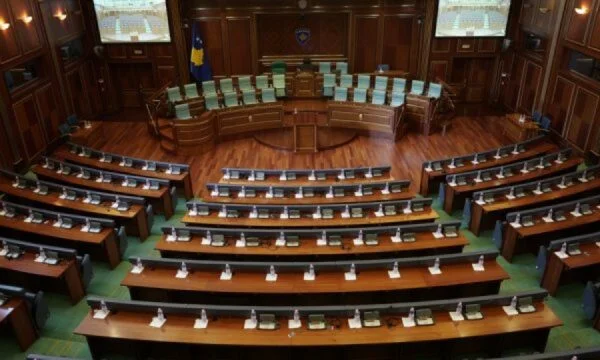
(2 months ago)The president's election issue led to the suspension of institutional operation, and the country ended in early elections. As a consequence of the political crisis and the failure to function of the Parliament, a series of international agreements will remain unmet, causing financial consequences for Kosovo.
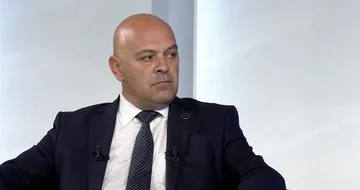
Former Alliance for the Future of Kosovo President Besnik Tahiri, for the Online Economy, initially blamed Vetevendosje Movement as parliamentary majority for the institutional deadlock and failure to implement international agreements.
“Failure to implement international agreements is directly the responsibility of the majority. As Kosovo citizens know, the Alliance for the Future of Kosovo voted all international agreements without any conditions, without any condition, without any demands”, he said.
Tahiri said the responsibility for the current situation falls on, as he called it, the “primaryity” of LVV.
Therefore, the failure to implement international agreements by this already in office government is directly billed to the stubbornness of the Vetevendosje Movement, which at any cost tried to usurp the president's post. Unfortunately, one million Kosovo citizens will still address the ballot boxes, and at this time I hope there will be a change, so that Kosovo really opens up another horizon and is governed, not ruled”, he said.
He added that the damage caused by the election process and institutional blockades are large and still incalculable.
“While damage still cannot be calculated because it's too big. June 7th are elections, we don't know how long the confirmation of the election results will last, and we won't know when the new government will become. So we're talking potentially about a situation, a situation that can put the place in blockades. And that's a big loss and it's not calculated right now. The essential Calculation is that Kosovo is losing, and the loss is coming that the trust of Kosovo's citizens, given for a political subject over 51%, has been betrayed”, Tahiri said.
Meanwhile, senior researcher at the Kosovo Institute for Justice, Naim Jakaj, for Online Economics cited the Development Plan and financial losses that, according to him, resulted from the non-function of the Parliament during 2025.
“As you know, from the growth plan, the agreements were negotiated in 2024 and they were approved this year in February of this year. So a year and a half with the lack of approval of these international agreements, for which Kosovo would have benefited hundreds of millions of euros. As you know, 882m euros have stayed in the European Union and couldn't come here because we haven't had legitimate and legal governments, and we haven't had a functional”, Jakaj said.
According to him, problems will continue even in the phase of implementing ratified agreements.
Jakaj said the lack of a full-term government would make it difficult to execute these agreements and allocate funds from the European Union.
As a consequence, we will be in certain difficulties in implementing agreements which have been ratified by the Kosovo Parliament, to obtain financial means from the European Union respectively, because there is no legitimate and legal government, in the almighty sense, to carry out and execute those international agreements”, he said.
He also cited the lack of budget planning and staff needed for implementation of agreements.
“E know that the budgetary division law was not revised for budgetary organisations that could be affected with additional staff so that there would be additional staffs to execute these tools. All these international agreements require additional staff that is not envisioned with the law on budgetary division for 2026, because we know how it was passed completely in early February with accelerated procedure”, he says.
Jakaj added that a government with full mandate and functional capacity is needed for implementation of the agreements.
“In the meantime, for the execution of these agreements, it is required to have additional staff and to have, as I said earlier, a legitimate government that has emerged from elections and is legalally powerful. Currently, the government does several jobs that are only in everydayity and advance with the law on budgetary division for this year”, Jakaj says.
As the Constitutional Court's 28 April deadline for electing the president of the Republic of Kosovo was automatically dissolved and the country has gone to the polls.
Kosovo President Albulen Haxhiu's post after consulting with political parties announced the elections on June 7th 2026.
Meanwhile, on April 10, 2026, MPs ratified four international agreements worth millions of euros.
Over 80 votes received the loan agreement between Kosovo and the International Development Association for the Kosovo Financial Sector Development Project.
The loan agreement between Kosovo and the French Agency for Development for the Policy-based Credit Programme also passed. According to Finance Minister Iron Murati, the deal is worth 80m euros.
The green light also received the loan agreement between Kosovo and the German Government for loans in the energy and climate sector.
Minister Murati said this agreement, also worth 80m euros, supports policies and reforms in the energy sector.
The International Development Association credit agreement for the “Trade and Transport Exchange Project was also ratified.
Murati said the agreement is within the framework of a regional project that envisions 35m euros as loans and 12m in the form of grants.
Even though they were ratified for their implementation, government and functional assembly are needed.