6 minutes ago
“Citizens in the North complain about electricity bills
Periskopi(2 months ago)
(2 months ago)Lack of transparency and unrealistic spending are some of the reasons why some members of the Serb community in the north of Kosovo say they do not want to pay their consumed electricity.
They claim that the bills they receive are “inflated”.
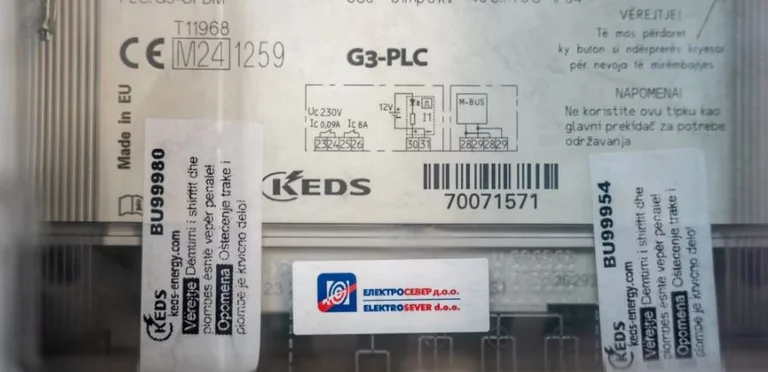
They also say infrastructure is weak and that the situation in the meter is not real, as they have not been replaced or calibrated.
Vesna Premovovic and Goran Milenkovic of Leposaviqi tell Radio Free Europe that Elektrosever representatives behave <x0 against-professional, irresponsible and arrogant” and that no one responds to their complaints.
We're not against paying bills, the current has to be paid, but I didn't spend it. That's the material”, says Premovic.
She was out of power in November last year with the assistance of the Kosovo Police.
He has since repaid his debt in part.
She still owes another 1,830 euros and expects the current to be cut off again because, as she says, she cannot afford to pay something she did not spend.
“People are taking credit to pay off electricity bills”, says Milenkovic.
He too has been held back from the middle of April because of the debt he is forced to pay back.
However, he continues to claim that real consumption is not measured.
“No one is against the current fee, but home meter is old and neglected. I've only been changed the meter on April 15th of this year, when I'm out of debt. There must be a order and transparency”, says Milenkovic.
The power supply and fatisation in northern Kosovo makes the company Elektrosever, which has obtained an operating license in June 1923.
It is owned by Serbia's energy company EPS and is the result of energy issues agreements between Kosovo and Serbia, which have been reached within the dialogue for normalising relations between the two countries.
Elektroseveri has signed a commercial contract with the Kosovar Power Distributation Company KEDS, under which she carried out the power supply activities in northern Kosovo ʹ the Serb-populated area.
As KEDS's subsurgeon, it is obliged to meet distribution and supply obligations in line with the license received.
The company's website is said to be eligible for purchase and sale of electricity, surplus reductions, as well as import and energy exports.
Kosovo's northern residents -- northern Mitrovica, Leposaviqi, Zvecan and Zubin Potok -- have not paid off electricity from 1999 to 2024, when Elektroseverer has started issuing the first bills.
Then, too, the replacement of older measurements and the installation of young people in objects they previously did not have.
But residents say this process has not yet been completed.
Paying bills without contract
Premovic and Milenkovic claim they didn't have contracts signed with Elektroseverer, but that the company has nevertheless “charged” to pay debts.
Milenkovic says he hasn't signed the contract yet, even though he has cleared the debt after the power cuts, while Premovic has signed the contract only after he's been powered late last year.
Earlier, by Elektroseverer, they have claimed that users who do not pay the first bill and do not sign the contract automatically become consumers of the Kosovar Company for Equipment of Electrical Energy KESCO. But then, he has announced that he has the right to cut power for those who do not have a contract or who do not allow access to the meter.
“thought it would pay Serbia”
Milenkovic also says he has not insisted earlier on paying regular electricity bills for what citizens have found the impression that costs would cover Serbia's state.
“The people had the impression that the state of Serbia repaid our expenses. We had information that the bills were covered by the end of 2025”, he says.
Milenkovic says there are numerous irregularities in Elektroseveri's work.
“They were obliged to replace the meter and draw up contracts, but started with immediate interruptions and led citizens to a kind of debt drier. Debts now total several thousand euros”, says Milenkovic.
He adds that he is also ready for judicial procedures, as he does not want to pay for energy that has not consumed him.
The plant for February was 150 euros, while we don't heat up on power”, he says.
Premovic also claims that the bills differ from one consumer to another and that no one knows where the money goes”. Its bill for March was about 160 euros, which, as it says, is not real, because it warms with wood and uses one-sided power.
She says citizens in the north pay their bills in various bank accounts and that “nobody knows who the money goes to”.
KESCO did not answer the REL question if there are consumers in northern Kosovo municipalities.
Premovic says that in his reasoning about power cuts, Elektroseveri has mentioned the inability to get access to the meter, but she absolutely denies such a claim.
Radio Free Europe addressed Elektroseveri at the request to comment on these accusations of citizens from the north of Kosovo, but received no answers.
Even the Energy REL Regulatory Office did not answer REL's question of how many consumers have Elektroseveri, and how many citizens do not pay their bills in majority Serb municipalities in northern Kosovo.
Otherwise, Kosovo System, Transmission and Electricity Market Operator COSTT, based on the Guide for Implementation of Energy Agreements between Pristina and Belgrade, has earlier provided access to the Vallach substation, which supplies most of the electricity to citizens in northern Kosovo.
The hydro power plant is also supplied to Weiman Lake.
Vallaci's role is to provide stable electricity supplies to the parties that are linked to this substation, within the Kosovo transmission system. /rel/