an hour ago
“How do I make a boy?”: Kosovo's advice market, myth and legal gaps
Periskopi(2 months ago)
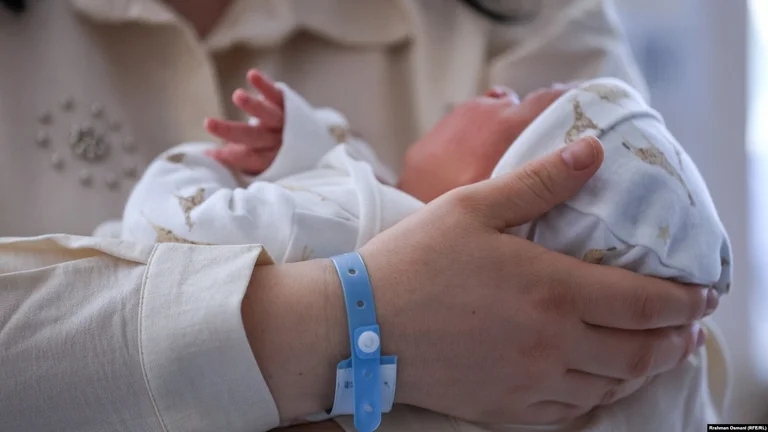
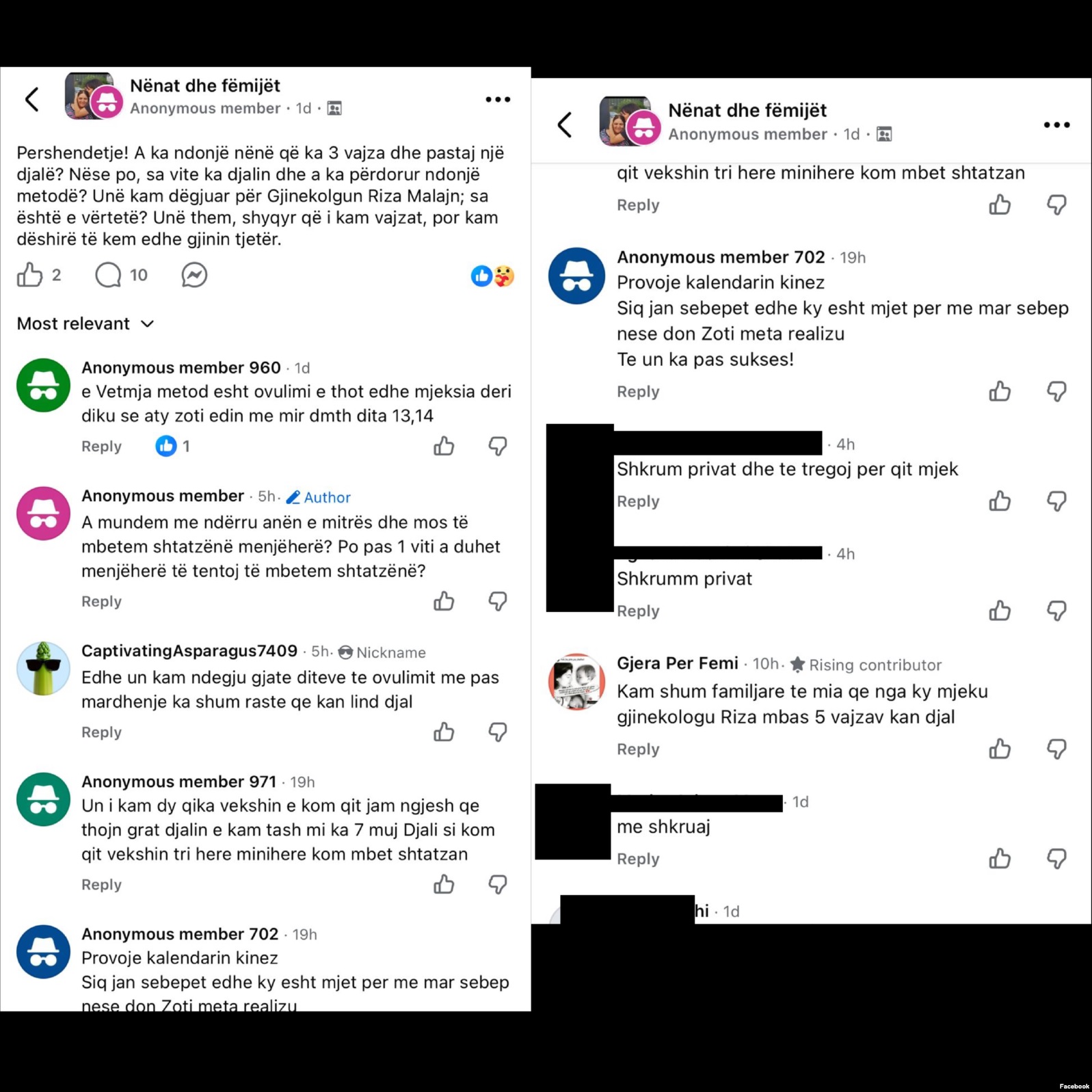
(2 months ago)“A has a mother who has three daughters and then a son? ” begins a post of a mother on Facebook, who continues seeking advice on how she and she can make sure that her next child is a boy. Counsel is numerous and varied: See the Chinese calendar, wash out bread sodas, [...]
The advice is many and varied: look at the Chinese calendar, wash out bread sodas, change the side of the uterus, get pregnant on the day of ovululation, consume beef, and man drink more coffee...
Such requests have also been addressed to gynecology specialist Merita Demiri Demoll, who says that he is always trying to make it clear to parents that there are no natural methods of determining gender.
“Methods that circulate as certain diets, positions during relations or planning) according to innovation, have no proven scientific basis”, it tells of Radio Free Europe.
It points out that the definition of gender, which can be scientifically made through assisted medical fertilization (IVF), is done only when there are medical reasons, not for “personal preference”.
But, in the face of a desire to have a son in the family, many women also direct each other to a specific gynecologist whose name they associate with the boys' birth stories after many girls in the family.
The gynecologist they refer to, Riza Malaj, was not available for a comment on his practices for Radio Free Europe, after being called into other commitments.
REL has also attempted to contact some women who have expressed interest in determining the gender of children, but, in most cases, they write in Facebook groups with anonymous profiles, making contact impossible.
In the Kosovo Criminal Code, there is no specific punishment for works that connect with such practices that claim to define gender by natural methods, nor does the Law on Health specifically mention them.
The only legal restrictions are those related to assisted medical orientation, as there is an administrative guide that prohibits gender selection from health clinics during the IVF procedure.
Radio Free Europe has asked the Ministry of Health about how it monitors the work of gynecologists in this regard and what actions it takes to find violations by health professionals, but has not received answers to the publication of this article.
Besarta Breznica, women's rights activist from the Kosovo Women's Network (RRGK), calls on institutions for stricter control of health clinics.
This is all human brainwash and legal theft, if not illegal”, says Breznica for REL.
Gynecologist Demiri Demolli shows that the pressure to have children of a certain gender “can have a significant impact on both emotional and physical health of women”.
This approach can also lead to hasty or unrealistic decisions, which can have long-term consequences for the woman's physical and psychological health of”, she warns.
The effects, however, do not affect the mother alone, adds Breznica.
If you grow up a little bit in a family where you're probably eight sisters and yet it's the desire to have a son of course... necessarily they feel like they don't matter and value, as secondary”, she says.
According to her, this phenomenon is continuing to be cultivated even in new generations, although it stems from the most traditional mind.
“Historically, in Kosovo only boys are seen as family heirs, as continuation of family blood. If a family has not had a son, that family is considered to have died down”, Britnica explains.
She also links this with the need for care that parents feel they may have in old age in the absence of homes caring for the elderly.
For this need, parents have relied mainly on boys rather than girls, who have traditionally moved to their husbands ' homes, often with their husband's family.
Also, family property is largely inherited to family boys, making more than three quarters of property in Kosovo to be in the name of men.
“Gras, unfortunately, are victims of this system”, Breznica says.
Studies that analyze this parents' desire to have sons in Kosovo beyond the desire of simply having children from both genders have not been in recent years.
Earlier, in 2016, research was published by the United Nations Population Fund (UNFPA), which said 47 percent of Kosovars believe that a family “needs a son”.
This desire to have a son is seen in all regions, social levels and ethnic affiliations in Kosovo”, said in that report.
It examined the data from the 2011 census in Kosovo and was found that recent births in Kosovo families are far more often boys, indicating that parents stopped trying after giving birth to a son.
The desire to have sons has also prompted parents to act on certain superstitions, such as naming the girl by the mother's name or February, in hopes that the child's birth “is therefore cut short.
According to the Kosovo Statistics Agency, the name February or February has more than seven thousand girls in Kosovo, thus making it among the most used names.
But, beyond superstition and advice for “Naturalodism”, determining the gender in Kosovo is prohibited in the single scientific form.
The ban on determining the gender of a baby is also provided through the Law on Reproductive Health and Associated Medical Fertilization (IVF) ) law that was envisioned by the Kurti III Government to be cast into the Assembly for voting on October 1st of this year.
However, on April 28th, after the election of a new president was not achieved, the tenth legislature of the Kosovo Parliament was disbanded and the country is again on the eve of early elections.
This law had been discussed and put to the polls even in the past several times, but was also rejected by some MPs who were then part of the ruling Vetevendosje Movement.
In that law it is designed to prevent the selective abortion of certain gender embryos and the selection of the child's gender through IVF, except cases of gender-related heirs.
And beyond myths and legal gaps, the message of professionals remains clear.
X-ray doesn't determine the value of a child. The priority should always be the health of mother and child”, Demiri Demolli concludes. / REL