7 hours ago
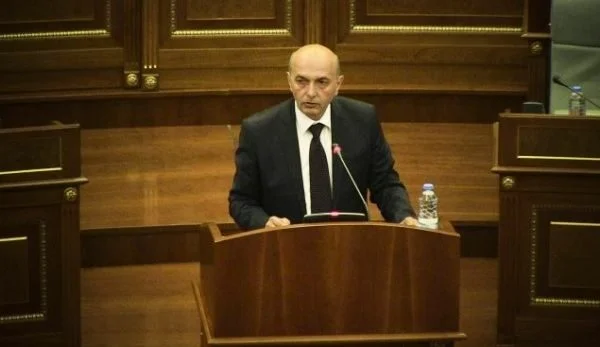
9 years from no-confidence motion against government Mustafa
Periskopi(2 months ago)
(2 months ago)Today, nine years have been made by the vote on no confidence in the Government of Kosovo, initiated by the opposition, and supported by the Democratic Party of Kosovo.
The position of the Democratic Party of Kosovo was crucial in the opposition motion case.
The PDK has given support to the opposition's motion of ousting the Kosovo government. For the motion, 78 MPs have voted, against 34 and 3 MPs abstained. This vote has resulted in the fall of the current Kosovo government, led by Isa Mustafa.
The PDK vote for the motion has also meant the decision to break the coalition with the Democratic League of Kosovo and Prime Minister Isa Mustafa.
Her decision, The PDK has argued with the fact that the current government has lost its decision-making power, particularly attributing the failure of the prosecution for ratification in the country of the border demarcation agreement with Montenegro.
The PDK's definition of the collapse of the government and the collapse of the coalition, LDK deputies, during the speeches, have described it as scenario prepared earlier in co-operation with the opposition.
The hearing has been spent with debates, accusations and controversy between PDK deputies and LDK so far, partner parties in the ruling coalition.
Opposition parties have marked this day as a victory over power.
After the vote, Kosovo President Hashim Thaci had issued the decree for the distribution of the Kosovo Assembly.
After accepting the official announcement from the Parliament of the Republic of Kosovo, Republic of Kosovo President Hashim Thaci has decreed the distribution of the fifth legislature”, the report said.
Based on coalition between The PDK and the LDK, the Government of Kosovo, were established on December 9th 2014, with 73 deputies' votes. The coalition agreement included the Serbian List and parties of non-Serb communities.
This coalition was built on principles of dividing positions and powers, which meant that the PDK would take over the post of president and speaker of the Parliament, while the LDK would take over the post of prime minister.
In addition to programming points for economic development, easing unemployment and creating well-being for citizens, this government had also taken international pledges such as establishing and launching the work of the Special Court for War Crimes, continuing dialogue with Serbia, and implementing agreements, with emphasis on establishing association of Serb majority municipalities, as well as in the meantime, made the pledge to ratify border demarcation with Montenegro as conditions for visa liberalisation. /Kosovo priss