7 hours ago
KS UN discusses Kosovo this month, sees no progress in dialogue with Serbia
Periskopi(3 months ago)
(3 months ago)The UN Security Council is expected to hold its first report for this year on the situation in Kosovo during April. In this session, Special Representative and chief of the UN Interim Administration Mission in Kosovo (UNMIK), Peter Due, will report on recent developments and the latest report [...]
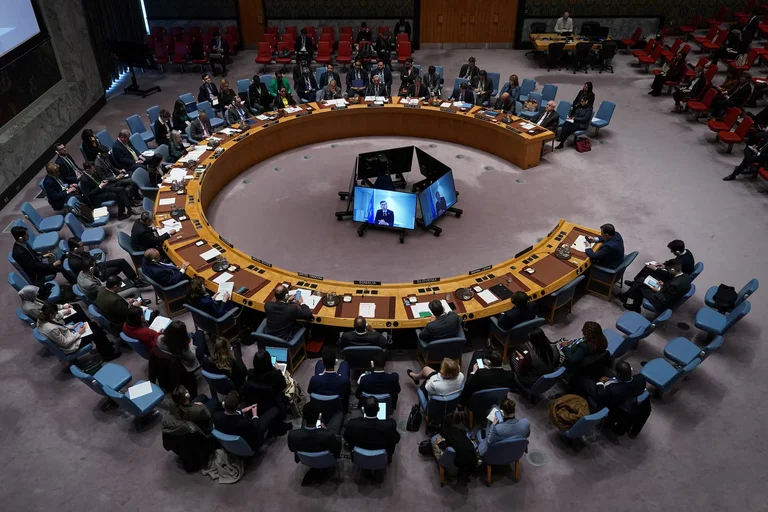
At this session, Special Representative and chief of the UN Interim Administration Mission in Kosovo (UNMIK), Peter Due, will report on recent developments and the secretary-general's newest report.
According to the document, “did not have significant progress in the EU-mediated dialogue for normalising relations between” Kosovo and Serbia.
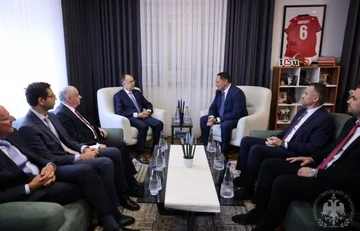
In an effort to revive the process, EU special envoy for dialogue Peter Sorensen has reportedly held separate meetings with senior officials in Pristina and Belgrade during January and February, including with Prime Minister Albin Kurti and Serbian President Allexander Vuciq.
On January 22nd, Soirensen gathered in Brussels chief negotiators of Kosovo and Serbia for the first meeting of the Joint Commission for Missing Persons, a trilateral body overseeing implementation of the Declaration on Missing Persons in 2023.
Meanwhile, notes that on January 16th, Kurti announced plans for the gradual integration of Serbia-backed health institutions and education in majority Serb areas into the Kosovo system.
In this regard, Sorensen stressed that “any such integration should be comprehensive, in accordance with previous and designed pledges to avoid disruption of essential services”, adding the need for structural consultations with the Serb community in Kosovo.
The UN's KS report emphasises that security rhetoric in the region has hardened in recent months.
On February 11th, Albania, Croatia and Kosovo agreed to the first joint exercise for 2026, following a meeting of their defence officials. This step prompted a sharp reaction from Belgrade, with Serbia's Defence Ministry condemning the trilateral meeting and the interconnected security plans as violations of Resolution 1244, stressing that KFOR remains the only legitimate armed formation in Kosovo with a clearly defined mandate of”, the report said.
The report also criticised the election period after December 28th, where it says that although the Vetevendosje Movement won over half of the vote by 57 seats in the assembly, the post-election process was later extended by a recounting nationwide and an investigation into vote manipulation, in which authorities arrested more than 100 people, though the election outcome did not change.
On February 11th, parliament approved a new government led by Kurti, ending more than a year of political deadlock”.
“However, expectations that the new government would restore political stability resulted in short-lived. On March 5th, Kosovo's parliament failed to elect a president within the constitutional deadline, as the ruling party failed to secure the support and participation needed to continue with the vote for its candidate. Osmani dissolved parliament on March 6th and announced early elections, but then the Constitutional Court intervened. After initially banning Osman temporarily from setting an election date before 31 March, the court decided on March 25th that the decree to distribute parliament had no legal effect and gave the assembly 34 days to elect a president”, the UN report says.
The Council says preserving stability in Kosovo and promoting reduced tensions in the north remains a key priority.
A second key issue is whether the Council can help preserve the momentum behind the EU facilitated dialogue and implement existing commitments.
Another issue facing the Council is how to foster constructive discussion on this politically sensitive issue. During the Council's open reports on Kosovo, Belgrade and Pristina usually present deeply opposed attitudes on regional sources of instability. These meetings often turn into an arena for public attitudes, instead of substantial engagement. This dynamic can dim any positive moment and turn attention to mutual accusations”.
“instead of open reporting, Council members may want to consider holding closed consultations or private meetings, which would also be closed, but would enable the participation of Kosovo and Serbian officials, unlike closed consultations. This could enable a more sincere exchange on obstacles to implement commitments under the EU-mediated dialogue and advance the normalisation process”, the UN report on Kosovo said.
In response to the numerous challenges facing Kosovo, the Council said it could also review the adoption of a presidential statement that <x0 quasi-press support for Sorensen, urges Belgrade and Pristina to engage in trust and implement the expected commitments without preconditions, and stresses that any measures affecting the Serb community of Kosovo should avoid disruptions of essential services and encourage inclusive implementation in line with previous commitments of the” dialogue.
The report goes on to say that most Council members support the Kosovo-Serbia dialogue, but divisions among permanent members remain deep.
“Midis five permanent members of the Council, France, the UK and the United States recognise Kosovo's independence and tend to support its government; China and Russia do not recognise its independence and strongly support Serbia's stance and its claim for territorial integrity. The elected members Bahraini, Colombia, Denmark, Latvia, Liberia, Pakistan and Panama recognise Kosovo's independence, while the Democratic Republic of Congo and Greece do not. Somalia reportedly recognised Kosovo's independence in May 2010, although its recognition has been rejected by Serbian officials in recent years and has since been reaffirmed by Kosovo authorities”, reports Clankosova, broadcast Periscopi.
Meanwhile, in terms of UNMIK's mandate, the report says the idea of closing it is a controversial issue among Council members, saying “The US has been the most vocal supporter of UNMIK's review of operations and eventually his gradual removal”.
“In Council briefing on October 21st 2025 on Kosovo, the US describes U NMIK as an inflated peacekeeping commission without peacekeepers and called for its functions to be transferred to the most appropriate agencies to carry them”.
“Dianmarca and United Kingdom similarly argued that a strategic review was delayed”.
“Finance has taken a more careful approach, expressing support both for reasonable efforts to improve and rationalise peacekeeping missions through efficiency measures, and for extending UNMIK's mandate as long as necessary, stressing that the mission's mandate is closely linked to the normalisation process”.
“Russia, on the contrary, has rejected changes to UNMIK's mandate or budget, maintaining the position that the mission continues to play an essential” role, was outlined in the UN KS report, which is expected to be discussed this month.