3 hours ago
What happens when elections go too far?
Periskopi(2 months ago)
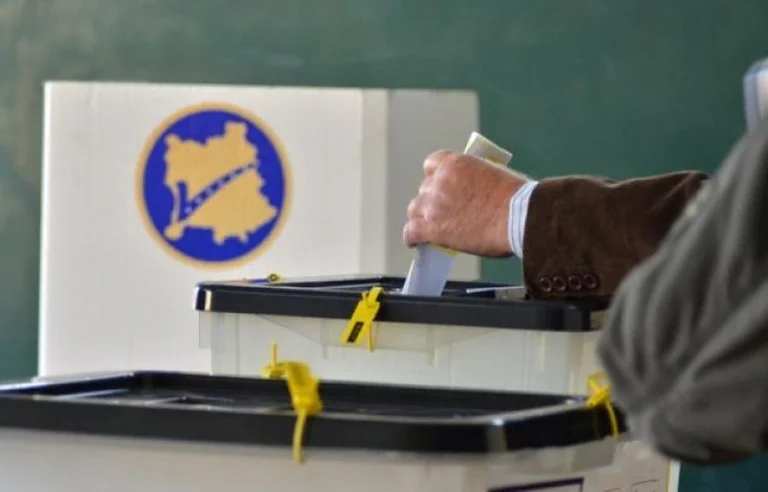
(2 months ago)Kosovo will hold parliamentary elections for the third time in less than a year and a half. It will be the second in a row, following those in December 2025, which were caused by the failure of the ninth legislature, issued by the regular February elections that year for the consolidation of institutions. In [...]
It will be the second in a row, following those in December 2025, which were caused by the failure of the ninth legislature, issued by the regular February elections that year for the consolidation of institutions.
In these first months of 2026, political subjects in the Kosovo Assembly failed to elect the country's president within the constitutional deadline.
As a result, the tenth legislature was distributed. President Albulen Haxhiu's post, declared June 7th as the date for holding elections.
Opposition Election Effect
Social Affairs acquaintances estimate the short electoral cycle to be exhausted.
Sociologist and political analyst Artan Muhhaxhiri says democracy is the governing system aimed at empowering citizens.
But, according to him, frequent holding of the elections turns into exhausting practice, with the opposite effect: losing confidence in the vote and corrosing the political substance.
The democratic ritual becomes the very one who destroys the spirit and the meaning of democracy. Political energy is spent and there is a demobilisation of participants in the current <x1) processes, Mujadir says for Radio Free Europe, broadcasts Periscope.
Last year, in addition to two parties of parliamentary elections, two rounds of local elections were held in most Kosovo municipalities.
Webi Mujku from the Institute for Social Policy Development (IZHPS) recalls that, for most citizens, it will be the fifth time they vote within 16 months.
Going out five times [at the polls] for such a short period of time is extremely heavy for each citizen, either in economic terms for the state or in the social aspect of citizens' sustainability”, Mujku says.
Voter Loss
Citizens in Pristina, with whom he talked REL sees frequent voting tiring.
Not that we're tired, but we're getting too tired. The same thing is repeating itself. The same names will be promoted again, there is no change, there are no new programmes, says Gazmend Zuri.
Edona Selimi expresses the opinion that even the upcoming parliamentary elections will not change the situation on the political and institutional scene.
This new election cycle has certainly tired us. I believe very few of the population will come out next time [at the polls]”, she says.
For Ekrem Neziri, not only frequent elections are exhausting but also the activities of political subjects developed within the election period.
There is only one blame. Everyone is, like, someone less and someone more. All should be held accountable”, he says.
Other Consequences
Muharhiri sees the situation as extremely damaging to Kosovo, because citizens, he says, begin to perceive voters as <x0-structuralally useless”, as they do not see concrete effects on the performance of institutional life.
“Which is why, even actors who have the potential to contribute quality to political life lose their motive and gradually withdraw, degrading even more political discour”, Muhajiri points out.
The most dangerous “is the idea of normalising democratic dysfunction, as it is thus invested in building fatalistic culture, which undermines enthusiasm, confidence and collective security”, he says.
Muhramir adds that in this situation, respect for the system fades and extra-institute forms of action may emerge.
Also, according to him, great polarizations are caused among citizens, without any ideological depth, causing the social subx0sts of size”, which affects the way citizens think and experience their report with the state.
Mujku says that in communications with some focus groups, he has seen the frustration of citizens with political parties. According to him, many citizens do not expect the new elections to produce solutions for the political and institutional crisis.
Many of the people have reacted by saying they will not appear [at the polls], especially some who have been fanatics of certain political subjects”, shows the Mujku, who predicts that the exit of citizens to the polls in the upcoming elections will be lower than at the end of the year.
Repeating the elections, without the outcome of the stabilisation of institutions, sociologists say it causes deep frustrations and multidimensional consequences in society.
Among them is, according to Muhararir, it is also <x0economic anxiety”, which has two key aspects: suspending long-term plans in Kosovo and increasing the level of migration.
“Emigration transforms into a silent political act, as a fundamental protest response to the entire political spectrum, while this makes electoral dynamics more powerless”, he says. /Periscope