8 hours ago
Only three days' term for President to ensure the constitutional functioning of the CEC or to leave Albulen Hadziu in his hand
Periskopi(3 months ago)
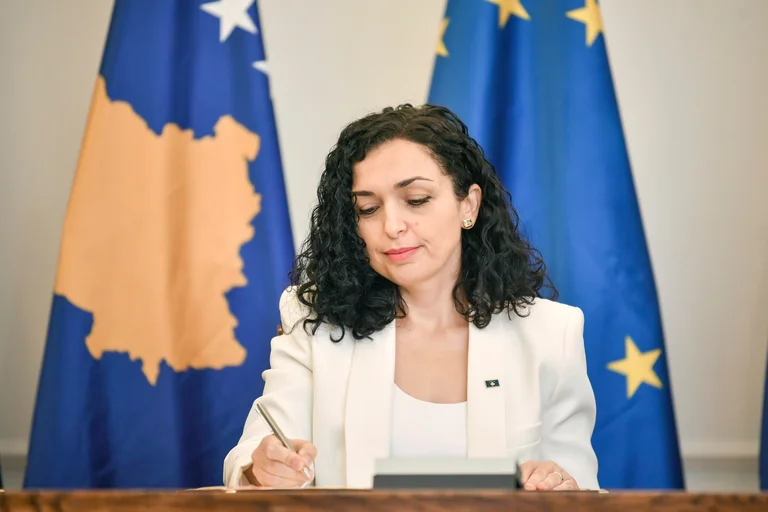
(3 months ago)Kosovo President Vjosa Osmani with (no) her move on the composition of the CEC will determine the legality of the new parliamentary elections, which will be held in June in the event of failure to elect Kosovo's new president. Legalisation of extraordinary elections will depend on what [...] will decide.
The legalisation of the extraordinary elections will depend on what Osmani will decide over the next three days, until April 4th, when he is also expected to complete the mandate in the position of the first state.
In this situation, any president's decision regarding the composition of the CEC is expected to have a direct impact on the credibility of the election process and on the public perception of this institution's impartiality.
If Osmani does not take advantage of the remaining days in the presidency and appoint the second member of the PDK to this institution, the “-resolved situation” will remain in the hands of the new resident who will go to the first state office: President's Duty Officer Albulen Haxhiun.
Haxhiu, could be at risk for “with the violation of the Constitution and the up to date institutional practice, if she decides to act differently and meet her party's request, the Vetevendosje Movement.
Her party's eventual preference would directly affect the constitutional functioning of the CEC and major questions would be raised for the legality of this institution's decision-making, especially in the event of early elections for the Kosovo Assembly.
So Osmani has in her hands the fate of future elections, respecting the Constitution and the institutional practice followed by itself.
Ensuring the constitutional functioning of the established institutions with this constitution, as is the CEC, is the competence of the president of the Republic.
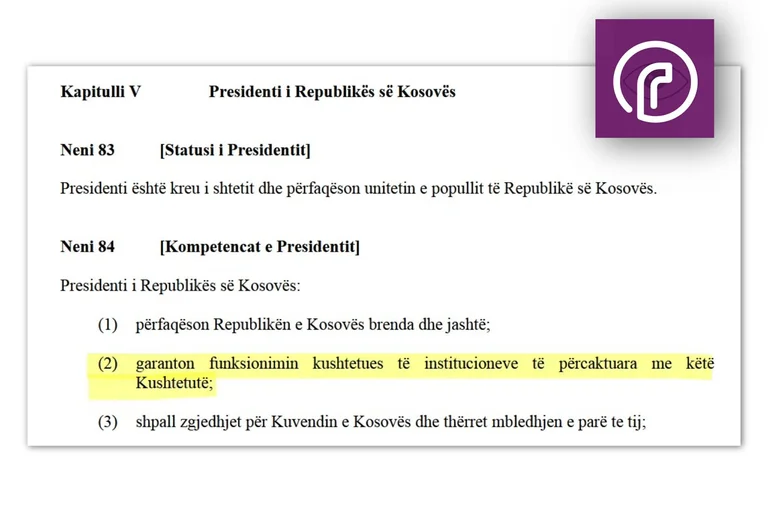
In the event that the failure to ensure the constitutional functioning of the CEC, the legitimacy of the elections could be seriously damaged, as decision-making could be questioned because of the controversial composition. This could create a topic for complaints, institutional crisis and rejection of results by political subjects.
In addition to the Constitution of Kosovo (ani 139), even the institutional practice followed by Osmani for appointing members of the Central Election Commission favour the Democratic Party of Kosovo with two members in the CEC.
On March 26th 2026, President Osmani has named only 9 of the 10 representatives of the parliamentary groups in the new CEC composition, while for the position of 1 member, it has been addressed to the Constitutional Court with the requirement for clarification that “the remaining seats for members of the CEC in cases where we have less than six (6) parliamentary groups that have no right to participate in the division of the reserved” countries.
Osman's request has been dismissed as unacceptable by the Constitutional Court, but this proves that for the country's president it has not been sufficiently clear paragraph 4 of Article 139 of the Constitution of Kosovo, stressing that “if fewer groups are represented in the country, the group or larger groups can name additional members”.
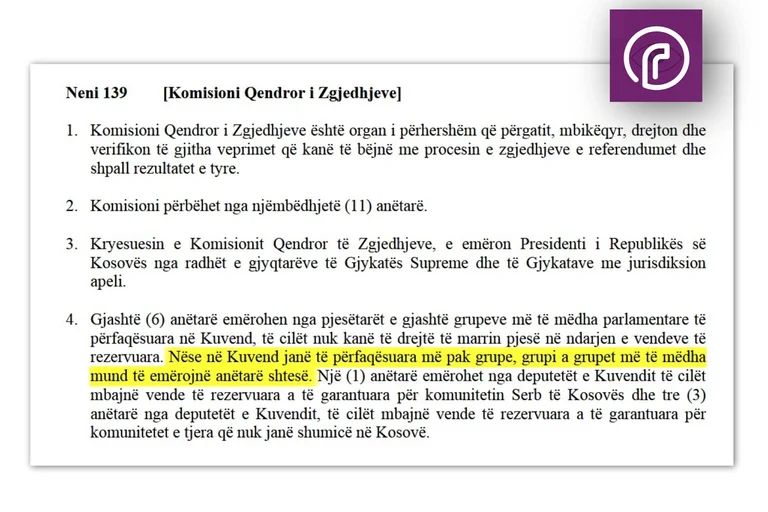
Even after the February 14, 2021, elections, this situation was unclear for Osman, who had been directed to the Constitutional Court for clarification, but even then her request had been dropped unacceptable.
Osmani had decided that the PDK would appoint the 2nd member in the CEC, meanwhile, had refused Vetevendosje's request to be represented by 3 members, creating clear institutional practice in sharing the seats in this institution.
Civil Society Seeks Resumption of Constitution and Practice
The largest network of civil society organisations monitoring the CEC and electoral processes, “Democracy in Action” have rejected the President's decision to refer to the issue of appointing members of the Central Election Commission (KQZ), to the Constitutional Court, as this move delays the completion of the institution at a moment when its function is essential for the integrity of electoral processes.
On March 25th, DnV has estimated that this issue alone is clearly measured in the constitutional framework and that the practice followed in 2021 is in line with the Code of Good Practice in the Venice Commission's Election Affairs that has guaranteed the institution's balanced functioning.
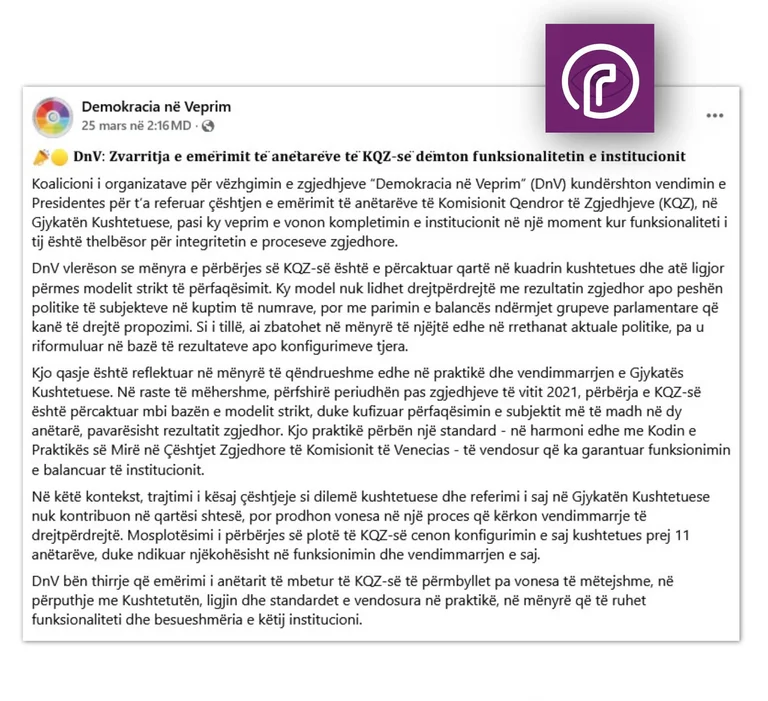
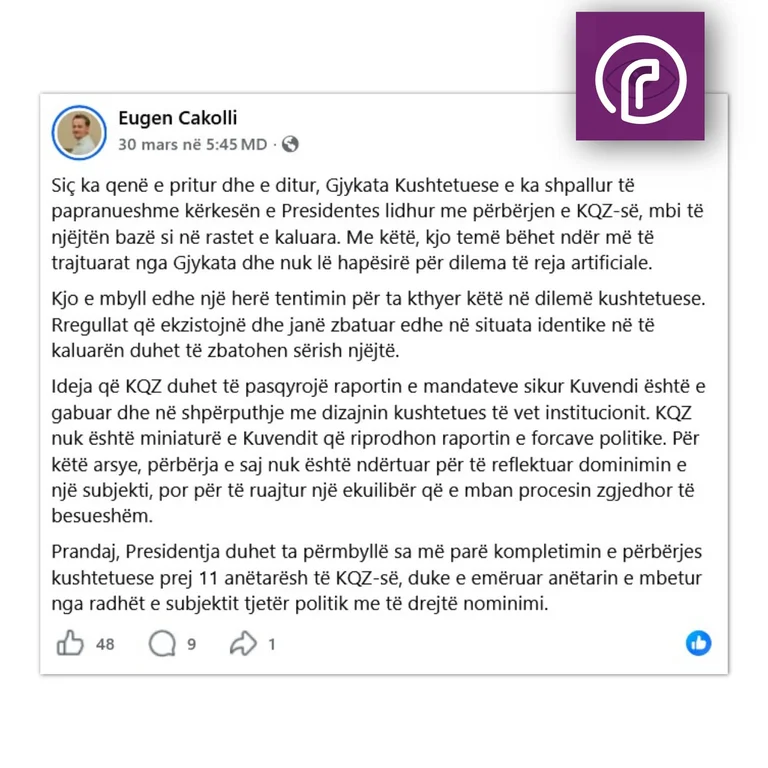
Meanwhile, on March 30th, just hours after the Constitutional Court's ruling, which declared President Osmani's request unacceptable, in his response Eugen Calcoll from this network of organisations, has stressed that the <x0 rules that exist and have been implemented even in identical situations in the past must be implemented again”.
VV claims
In the Vetevendosje Movement, the third member of the CEC is theirs as they do not rule out the possibility of a complaint in the Constitutional if the opposite occurs.
Without constitutional arguments, Vetedosje relies only on the outcome of the elections.
Our arguments are clearly backed by law and that the third member in the CEC is also aware of the outcome we have received in Kosovo's last elections. So the political power should reflect on the composition of the CEC and that's the basis on all of those who have argued in terms of our position, so we ask the president to reflect on this request... Neither is that possibility ruled out (to complain to the Constitution) we will defend our right and defend the vote of citizens regardless of how it manifests itself”, Artan Abrashi said from Vetevendosje for Rtv21.
PDK claims
In the PDK, meanwhile, they say the division of the CEC mandates is clear and have called on the president to quickly appoint the second member of this party to the CEC, Rashit Qalaj.
“President Osmani's request has been unnecessary, in 2021 on the same case has been addressed to the tribunal and there has been answers, and it has also been unnecessary because of the convention's configuration, which is roughly like 2021 VV had 58 today 57 The PDK had 19 today has 22 and Osman at the time had given us two VV mandates, as the constitution says. We expect her to be appointed as soon as possible. Mr. PDK. The package that meets all criteria... If we look at the practice so far and read the situation directly, the mandate belongs to the PDK. They do not divide the mandates on the basis of how many mandates you have in the Assembly, but they are divided by the article 139 constitution and the Law for Elections, and we expect that Mrs. Osmani, we call on him today without wasting time to appoint PDK member”, said Betim Joshi from the PDK.