2 minutes ago
How countries react to the global energy crisis
Periskopi(3 months ago)
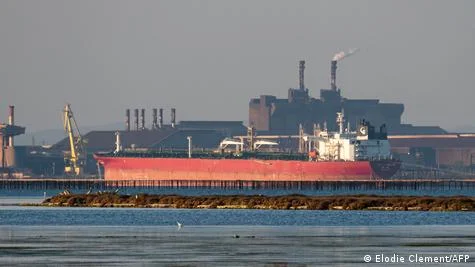
(3 months ago)Energy prices are rising, and Hormuz Strait remains closed. Several countries are presenting measures to reduce consumption from a four-day work week and saving fuel to lower use. With 20 per cent of world oil that cannot pass through the Strait of Hormuz, gross oil prices have [...]
With 20 per cent of world oil that cannot pass through the Strait of Hormuz, gross oil prices have exceeded $100 per barrel, and 400 million barrels of oil reserves have already been released to the market. Countries worldwide are trying to find ways to reduce energy demand.
The International Energy Agency (IEA) has named this “The largest supply extension in the history of the global oil market” and has outlined several ways in which countries can reduce consumption. But because each country has its own infrastructure and energy and transport challenges, those that have already responded are doing so in very different ways. Others have not yet acted.
The IEA says road transport represents about 45 per cent of the global oil demand, so it is no wonder that many countries are heading towards lowering consumption there.
Renationalizing Fuel
In Sri Lanka, private drivers can get only 15 liters of gasoline a week through a QR code-based system.
One third of the gas stations are closed in Cambodia. Myanmar introduced a system “-chift” based on vehicle registration numbers. That means that cars with numbers can buy fuel one day and couple numbers the next.
In New Zealand, the government is considering restoring “car-free days”. Drivers would choose the day of the week when they would not be allowed to lead.
China is pursuing a slightly different approach, abandoning a planned fuel price increase as prices at the pump rose 20 per cent since the start of the war.
Slovenia earlier this week became the first EU member state to present fuel rationing, with private drivers limited to 50 liters a week, while businesses and farmers are limited to 200 litres. While Slovakia has introduced measures against oil collection, Slovenia remains an exception in Europe.
EU, Germany slow in response
The International Transport Union (IRU) has called on the European Union to act quickly. “If oil supplies are interrupted, the consequences will immediately be felt on all EU logistical networks, slowing supply chains and impacting the distribution of goods in businesses, shops and families”, said IRU Secretary General Umberto de Preto.
The EU's co-ordinated operation is essential to stabilise the fuel market, as well as to avoid individual national responses and ensure that logistics chains continue to operate. ”
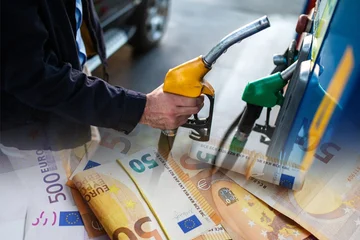
With the EU reluctant to find a common position, each country must make its own decisions. With gas and oil prices at over 2 euros per litre -- an increase of 18% in two weeks -- Germany is under pressure.
A law that would allow gasoline stations to raise prices only once a day has been proposed. German Economy Minister Catherine Reache said calls for fuel prices restrictions, discounts or a tax on additional profits were being considered.
Despite the crisis, Berlin has fully ruled out a return to Russian gas, in which the country was based before the invasion of Ukraine.
Work From Home to Fuel
Besides saving fuel, encouraging people to work from home more often is a common strategy. Pakistan has introduced a four-day work week to civil servants. The Dominican Republic is also encouraging companies to reduce the time employees spend at the workplace.
In Africa, Egypt is trying to reduce energy consumption by ordering commercial centres and restaurants to be closed no later than 9:00, and all government institutions by 6:00. Similarly, Bangladesh and Thailand have placed maximum temperatures in government buildings at 25 and 26 degrees Celsius to save in air conditioning costs.
Kenya has responded with an export ban, as well as strict fuel savings. Zambia has threatened fines for anyone who collects gasoline, with Africa, like Asia, which depends heavily on Middle Eastern oil.
Stop flights, start using public transportation
The IEA has also urged people to avoid air travel, with American carrier United Airlines already warning that it could increase ticket prices by 20 per cent.
Another recommendation is to use public transportation as much as possible. This is, of course, easier in some countries than in others, and incentives such as Germany's 2025 policy for a widely available 9 euro transport ticket can be introduced into different countries.
Using liquid oil gas (LPG) is also the focus of attention. The IEA has advised that LPG (a mixture of propane and domestic softs) be redirected by transportation to essential domestic functions, especially cooking.
This is important for India, the second largest importer and the third largest LPG user. Imports in India were halved in March, and restaurants, hotels and cafes are trying to adapt. Some businesses have lowered both hours and service levels, while government officials say supplies will take priority for 300 million families using LPG for cooking. / REL